Head to head · the world's biggest geyser park vs New Zealand's geothermal town
Yellowstone vs Rotorua: Which Is the Better Geothermal Trip?
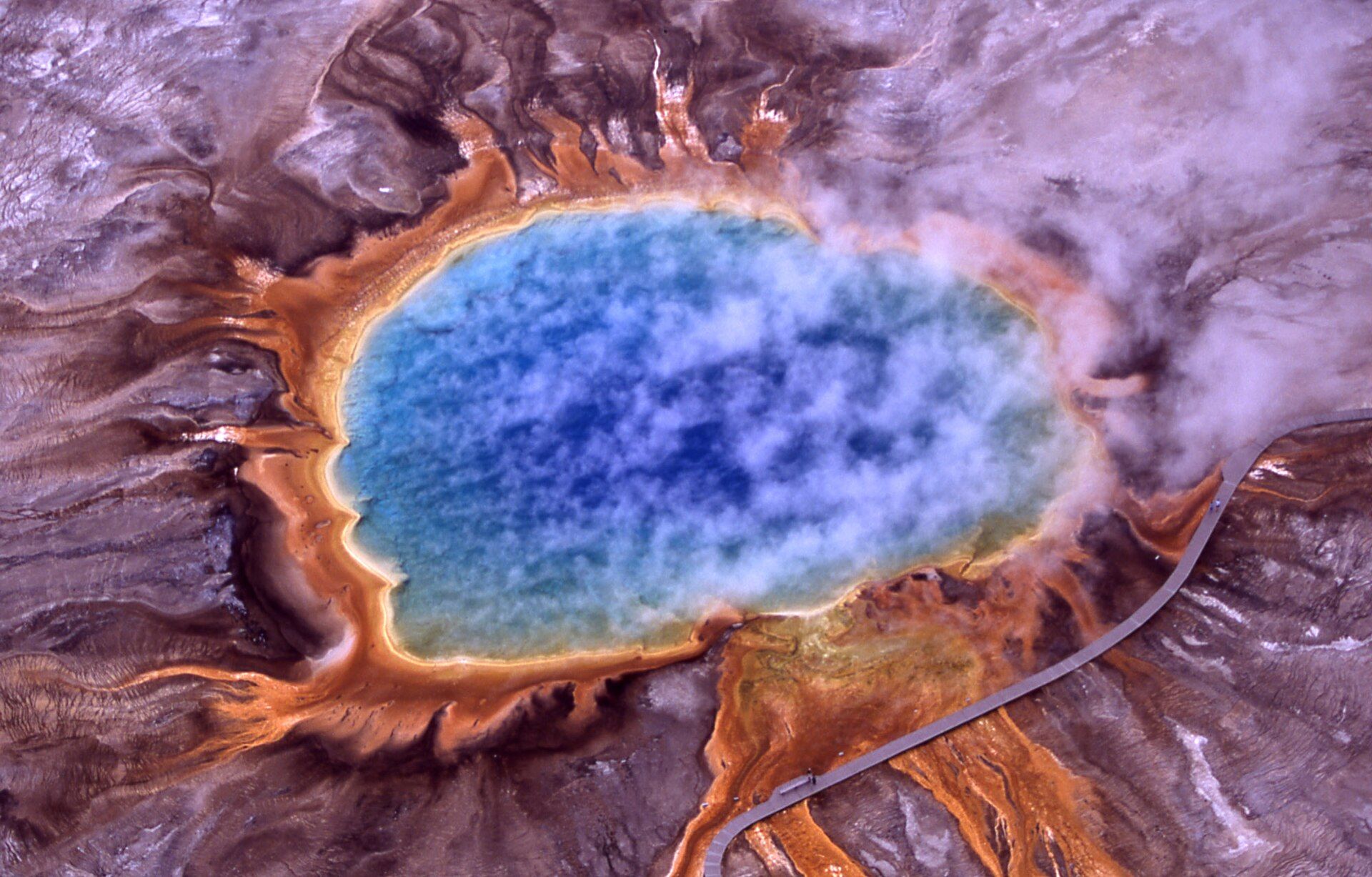
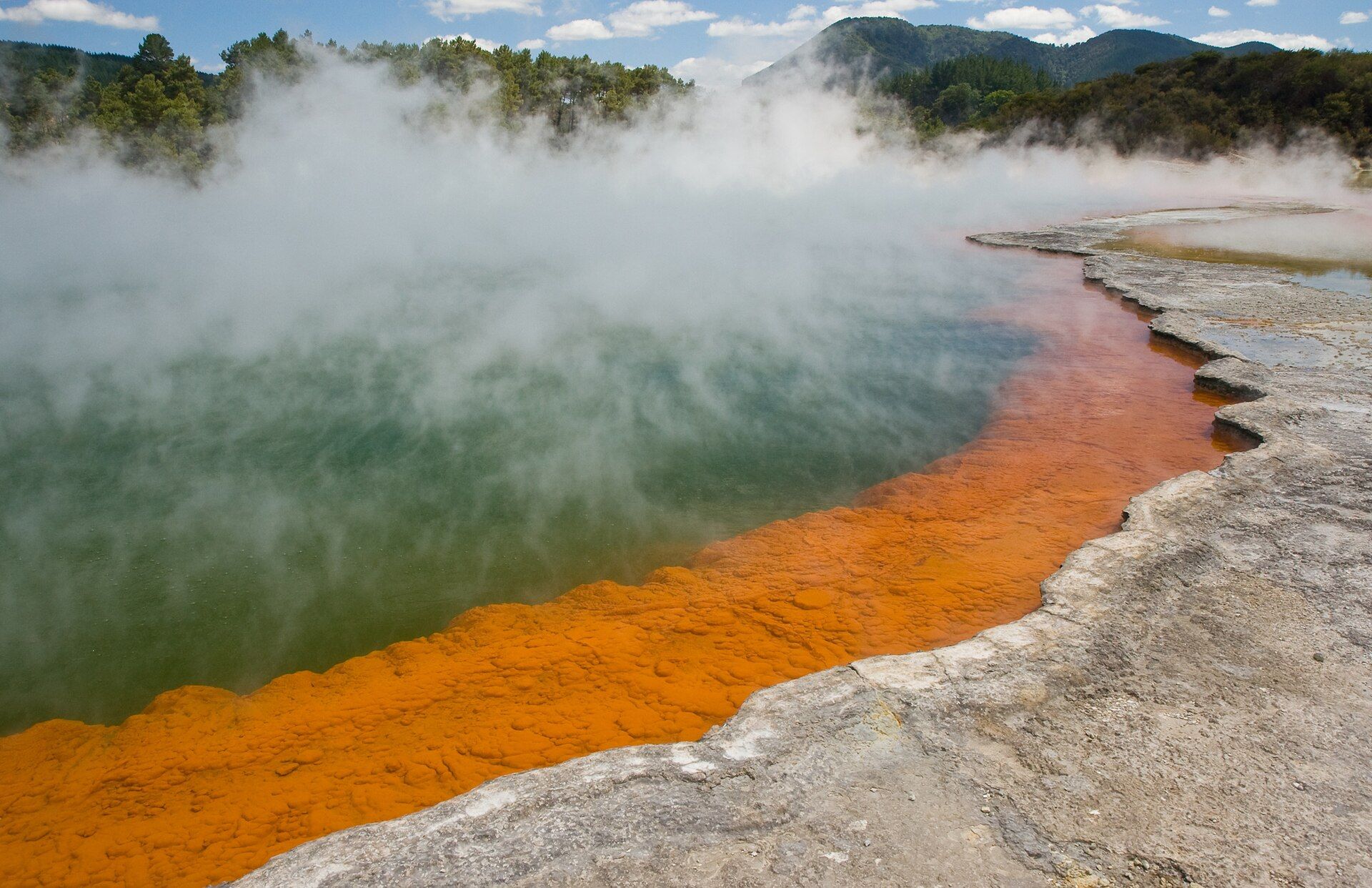
Both are places where you walk on boardwalks past ground that boils. The difference is scale. Yellowstone sits over a mantle hotspot and holds more than 10,000 hydrothermal features — over half of all the geysers on Earth — including Old Faithful and the Grand Prismatic Spring, spread across a park where the major basins are 30 minutes to an hour or more apart. Rotorua is a town on one of the most active geothermal fields on Earth, with the Pōhutu geyser, boiling mud and the coloured pools of Wai-O-Tapu in separately ticketed parks 15–30 minutes apart.
Season decides a lot. Yellowstone's interior roads close to cars for winter, roughly November to April, and the plateau sits above 2,400 m; May–September is the main season. Rotorua's features perform year-round, and cold mornings simply make the steam more dramatic.
Yellowstone
Geysers, bison and a supervolcano
The world's first national park (1872), over a volcanic hotspot: more than 10,000 hydrothermal features, Old Faithful, Grand Prismatic — and bison, grizzlies and wolves.
- Over half of Earth's geysers
- Big-mammal watching in Lamar and Hayden valleys
- A whole park: canyon, waterfalls, lakes
Rotorua
A geothermal town you can do in a day
Geysers, mud pools and mineral pools in the Taupō Volcanic Zone, around a town at the heart of Te Arawa Māori culture.
- Compact: parks 15–30 minutes apart
- Year-round, any weather
- Māori culture and geothermal hāngī
Head to head
| What matters | Yellowstone | Rotorua |
|---|---|---|
| Scale Edge: Yellowstone | More than 10,000 hydrothermal features — over half of Earth's geysers — across several basins. | Several geothermal parks around one town; Pōhutu erupts up to about 30 m several times a day. |
| Signature sights Edge: Toss-up | Old Faithful and the Grand Prismatic Spring, the largest hot spring in the United States. | Pōhutu geyser, Wai-O-Tapu's orange-rimmed Champagne Pool and chartreuse Devil's Bath, boiling mud. |
| Wildlife Edge: Yellowstone | Free-roaming bison, elk, grizzly bears and wolves reintroduced in 1995; carry bear spray. | Not a wildlife destination — the draw is the ground itself. |
| Season Edge: Rotorua | Roughly May–September; most interior roads close to cars about November–April (snowcoach or guided snowmobile only). | Year-round; spring and autumn are mild and less crowded, cold mornings give the best steam. |
| Time needed Edge: Rotorua | 3 days minimum; a week without rushing. Long drives and wildlife jams between sights. | Half a day for one park; two days for more than one. |
| Getting there Edge: Rotorua | Fly to Bozeman (then 1h30–2h to the North or West entrance) or Jackson (about 1 h to the South Entrance). | About 3 h by road from Auckland, or a 50-minute flight. |
| Tickets Edge: Yellowstone | One park entrance fee, valid several days. | Each geothermal park is separately owned and ticketed, several by Māori trusts; no single pass. |
| Crowds Edge: Toss-up | Old Faithful and Grand Prismatic are congested through midsummer, lots full by mid-morning; early and late are quieter. | Wai-O-Tapu is busiest around the daily induced Lady Knox geyser; Waimangu is quieter all day. |
| Culture Edge: Rotorua | The park that started the national-park idea. | Te Arawa Māori have cooked and bathed with the geothermal heat for centuries; cultural experiences and hāngī in town. |
Which should you choose?
Choose Yellowstone if…
…you have at least three days between May and September and want the full package — the world's biggest geyser fields plus bison, wolves and bears.
Choose Rotorua if…
…you are in New Zealand any time of year, have half a day to two days, and want geysers and coloured pools together with Māori culture, without long drives.
The honest verdict
Yellowstone is the bigger thing in every way: more geysers than anywhere else, and wildlife Rotorua can't match. But it needs days, a car and the right season — most of the interior is closed to cars through winter.
Rotorua is the easier geothermal trip: compact, open in any weather and month, and woven into living Māori culture. It is a stop on a New Zealand itinerary rather than a trip in itself.
At both, the rule is the same: stay on the boardwalks. The crust beside them is thin, and the water below is boiling.
Wonders mentioned here

Added