Head to head · Victoria's sea stacks vs New South Wales' blue valleys
Twelve Apostles vs Blue Mountains: Which Australian Day Trip Is Better?
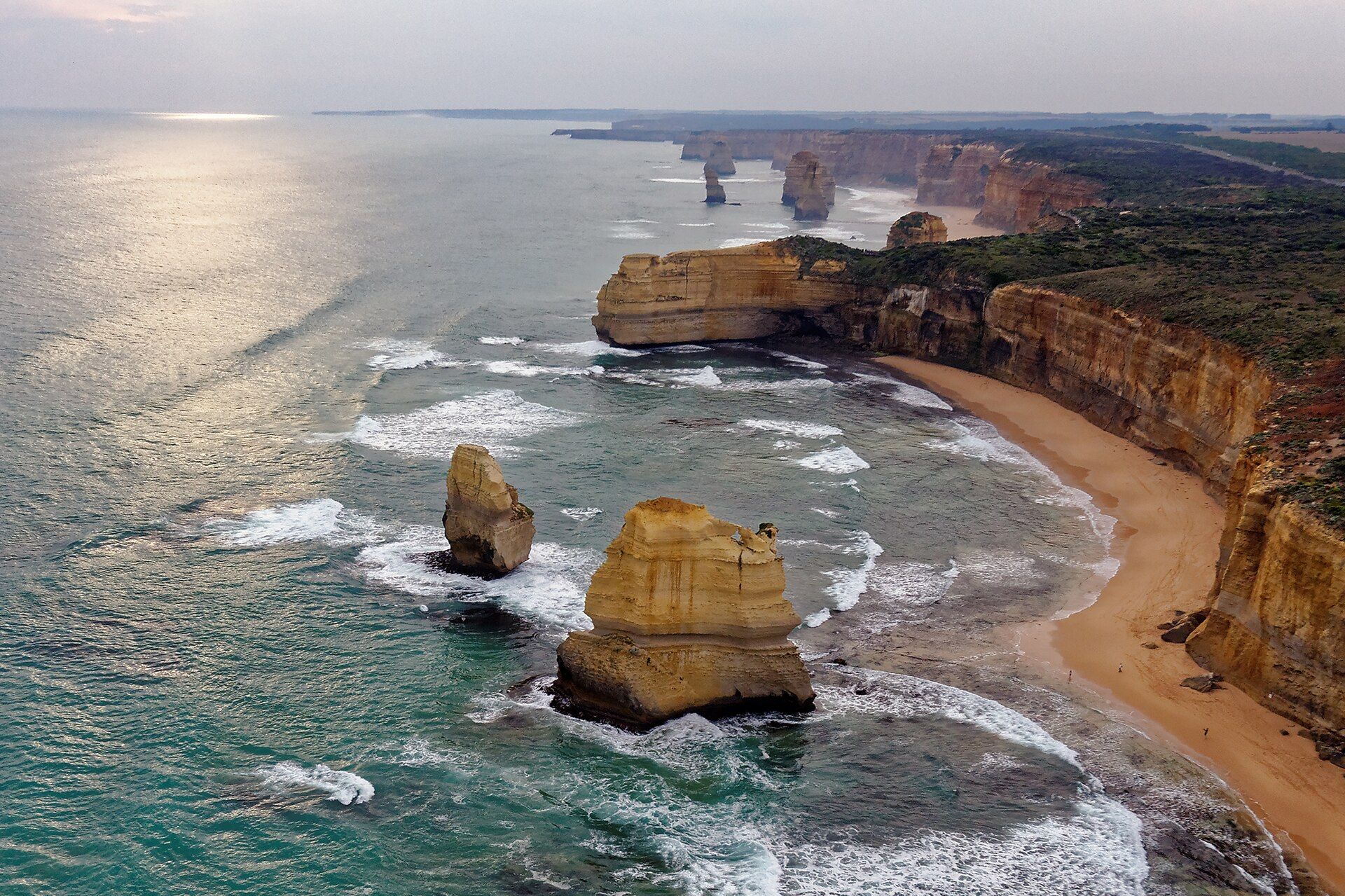
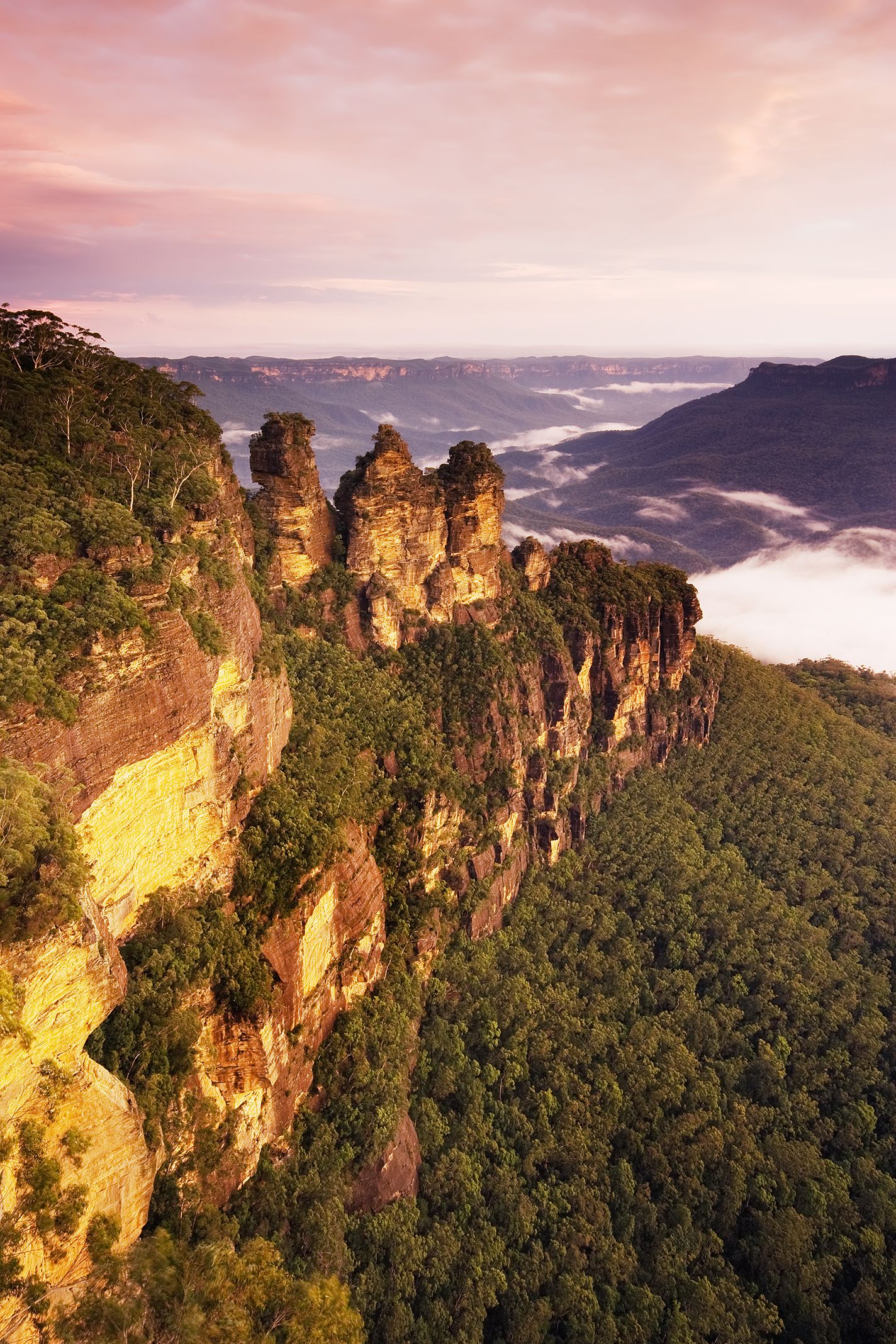
These are the classic big-scenery day trips from Australia's two largest cities, so the real choice is usually which city you are in. The Twelve Apostles are limestone sea stacks up to about 45 m tall rising from the Southern Ocean in Port Campbell National Park, about three hours' drive from Melbourne along or inland of the Great Ocean Road — actively eroding, with some stacks collapsing within living memory. The Blue Mountains are a sandstone plateau cut by deep eucalypt valleys that shimmer blue with oil haze, part of the Greater Blue Mountains World Heritage Area, about two hours from Sydney by train to Katoomba.
They also ask for different days. The Apostles are a long drive for a short, easy visit: flat clifftop boardwalks from a visitor centre, ideally timed for sunset or sunrise. The Blue Mountains are a short trip for a long day: the free Three Sisters lookout at Echo Point, then anything from clifftop strolls to the steep Giant Stairway into the Jamison Valley, with Scenic World's railway and cableway for the ride back up.
Twelve Apostles
Sea stacks on the Great Ocean Road
Limestone stacks off the cliffs of Port Campbell National Park, viewed free from boardwalks, with the Gibson Steps down to the beach when tide and sea allow.
- Free, flat boardwalk viewing
- Sunset and sunrise light on the stacks
- Part of the Great Ocean Road drive
Blue Mountains
Cliffs and blue eucalypt valleys by train
A World Heritage sandstone plateau above Katoomba and Leura, with the Three Sisters, waterfalls, valley walks and Scenic World.
- Train from Sydney, no car needed
- Walks for every fitness level
- Fills a full day, easily two
Head to head
| What matters | Twelve Apostles | Blue Mountains |
|---|---|---|
| Getting there Edge: Blue Mountains | Drive about 3 h from Melbourne, direct or inland via Port Campbell; longer on the scenic Great Ocean Road. | Train Sydney → Katoomba, roughly 2 h; walk or bus to Echo Point. |
| Time at the site Edge: Toss-up | A few hours, or overnight to catch both sunset and sunrise. | A full day, easily two. |
| Effort Edge: Toss-up | Easy: flat boardwalks, with an optional steep descent of the Gibson Steps. | Easy to moderate: flat clifftop lookouts, or steep, stepped valley trails like the Giant Stairway. |
| Cost Edge: Toss-up | Boardwalks and lookouts are free. | Echo Point and the Three Sisters view are free; Scenic World rides are paid. |
| Best season Edge: Toss-up | Year-round; the site's best months are November–March, and winter storms bring wild seas and wilder weather. | Spring (September–November) and autumn (March–May); summer can be hot with bushfire risk. |
| Weather risk Edge: Toss-up | Fully exposed to a cold Southern Ocean wind; Gibson Steps beach access closes when the sea is up. | Cooler and mistier than Sydney, and cloud can close the view without warning; total fire bans can shut bushwalks in summer. |
| Crowds Edge: Toss-up | Main boardwalk busy in the afternoon and at sunset as coaches from Melbourne arrive; sunrise is far quieter. | Echo Point and Scenic World busy midday and at weekends; the longer trails quickly empty out. |
| Facilities Edge: Blue Mountains | Visitor centre with toilets; food and lodging in Port Campbell. | Full facilities in Katoomba and Leura, at Echo Point and at Scenic World. |
| The shot Edge: Toss-up | The stacks off the cliffs in sunset or sunrise light, ideally with surf and cloud. | The Three Sisters from Echo Point at first or last light, blue haze in the valley behind. |
Which should you choose?
Choose Twelve Apostles if…
…you are in Melbourne with a car, want an easy coastal spectacle, and can stay a night near Port Campbell to see the stacks at sunset and again at a quiet sunrise.
Choose Blue Mountains if…
…you are in Sydney without a car, want to walk as much or as little as you like, and are going in spring or autumn rather than a hot, fire-prone summer.
The honest verdict
If you are only in one city, take its trip: the two are a long way apart, and neither is worth a detour from the other. Sydney visitors get the easier logistics — a train, a free lookout and a day of walks. Melbourne visitors get the bigger drive but a short, easy and very photogenic stop.
As a day trip, the Blue Mountains give more for the time spent travelling: about two hours each way for a full day on the plateau, against about three hours each way for a few hours at the Apostles. That's why the Apostles reward an overnight in Port Campbell instead.
Check fire warnings before a summer Blue Mountains walk, and the tide and sea before counting on the Gibson Steps beach.
Wonders mentioned here
Added