Head to head · The Arctic and Antarctic expedition trips
Svalbard vs Antarctica: Arctic or Antarctic Expedition — Which Should You Choose?
Svalbard and the Antarctic Peninsula are the two polar expeditions most travellers can actually book, and they sit at opposite ends of the planet. Svalbard is a High Arctic archipelago roughly halfway between mainland Norway and the North Pole, about 60% glacier, and one of the best places on Earth to see polar bears in the wild. The Antarctic Peninsula is the mildest, most reachable arm of the frozen continent, where ice-draped mountains fall into channels full of icebergs and shorelines hold tens of thousands of penguins.
The choice comes down to which animals you want to see, how far you are willing to travel to start, and when you can go. Their seasons are opposite — Svalbard's boat season is June–August, Antarctica's is roughly November–March — so the calendar often decides for you.
Svalbard
Polar bears, walrus and glaciers, a flight from Oslo
Svalbard is a High Arctic archipelago of glaciers, sharp peaks and ice-choked fjords, most of it inside national parks and nature reserves. Wildlife includes polar bears, walrus, Arctic fox, reindeer, and in summer huge seabird colonies and whales. You fly to Longyearbyen, roughly 3 hours from Oslo and often via Tromsø. Beyond the settlement, travel is by expedition ship in summer or snowmobile and dog sled in winter, always guided, under the Governor of Svalbard's wildlife and safety rules.
- Polar bears and walrus — the Arctic's signature animals
- Easy to reach: a scheduled flight to Longyearbyen, no sea crossing to start
- Two seasons: boat expeditions in summer, snowmobile and dog sled in late winter and spring
Antarctic Peninsula
Penguin colonies, blue icebergs and whales at the far south
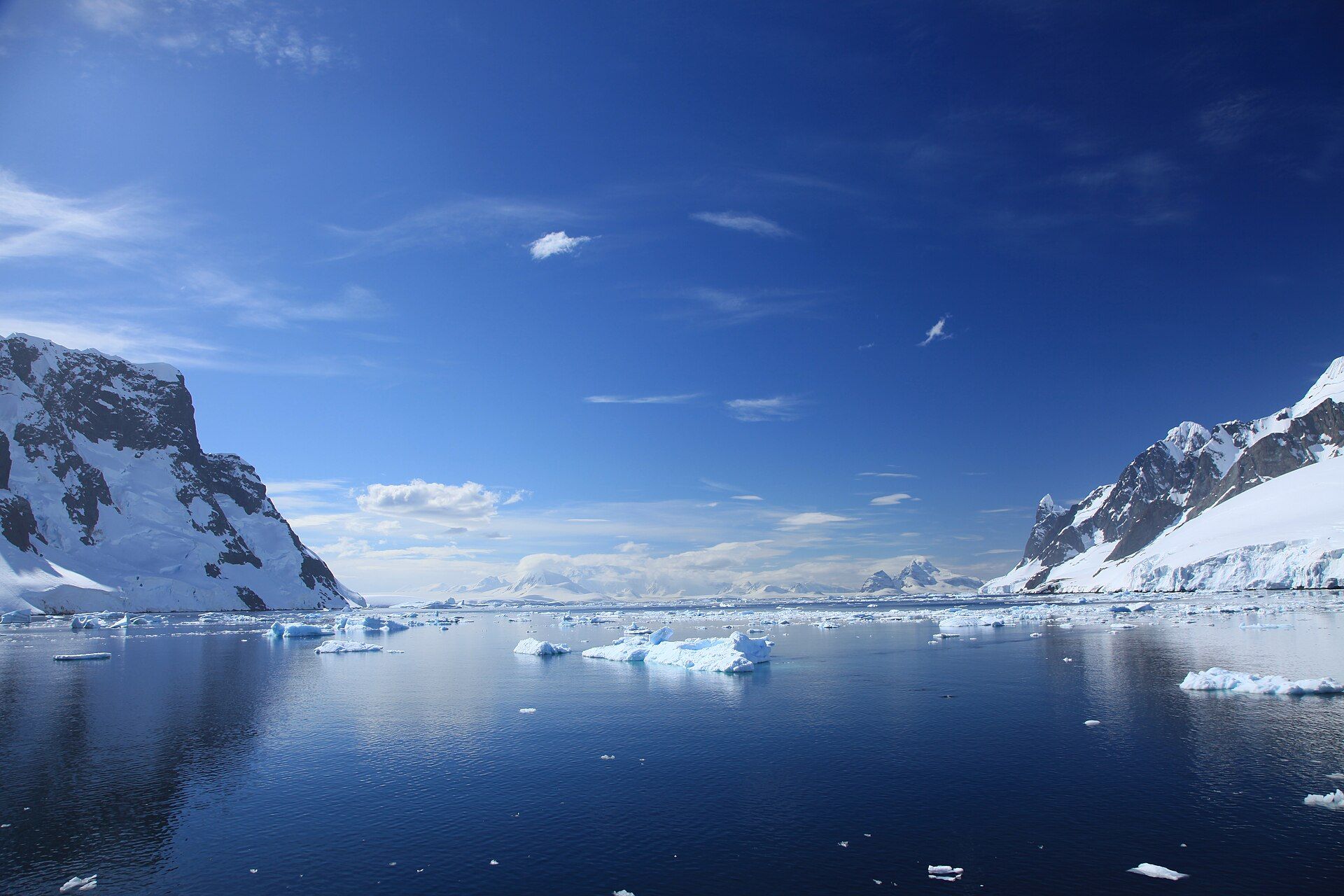
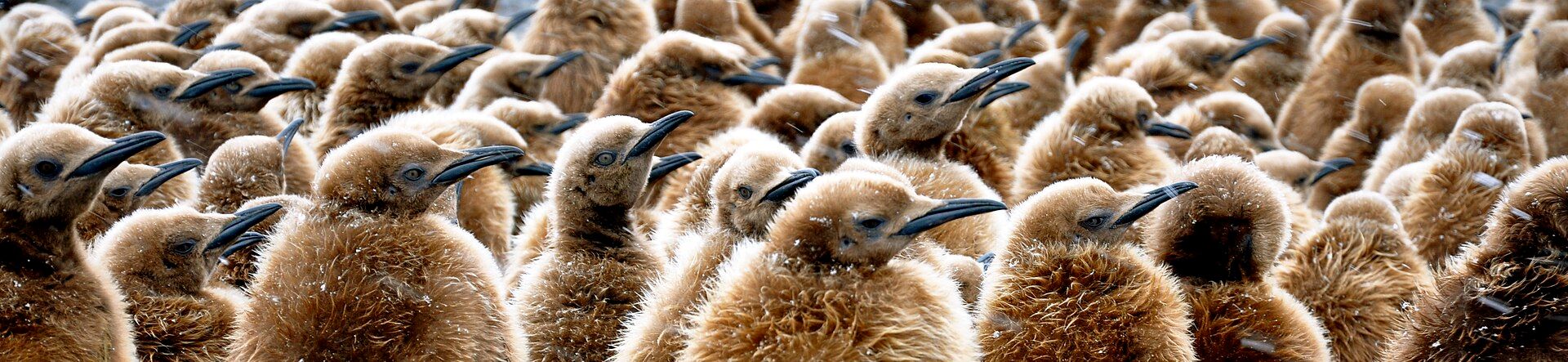
The Antarctic Peninsula reaches north toward South America and is the mildest part of the Antarctic. Its channels are crowded with sculpted icebergs, its shorelines with gentoo, chinstrap and Adélie penguins, and humpback, minke and orca whales feed in the plankton-rich water while seals haul out on the floes. It is reached almost entirely by expedition ship from Ushuaia — about two days across the Drake Passage each way — or by a fly-cruise from Punta Arenas to King George Island. There are no towns, only research stations, and the whole continent is governed by the Antarctic Treaty.
- Penguin colonies of tens of thousands, plus whales and seals at close range
- Iceberg-filled channels and ice-draped mountains on a continental scale
- Strictly managed landings (IAATO rules) keep sites uncrowded
Head to head
| What matters | Svalbard | Antarctic Peninsula |
|---|---|---|
| Signature wildlife Edge: Toss-up | Polar bears, walrus, Arctic fox, reindeer, summer seabird colonies and whales. Bear sightings are never guaranteed. | Gentoo, chinstrap and Adélie penguin colonies, humpback, minke and orca whales, seals on the floes. |
| Scenery Edge: Toss-up | Glaciers over about 60% of the land, sharp mountains, frozen fjords and pack ice. | Ice-hung mountains falling sheer into the sea and channels choked with blue icebergs. |
| Getting there Edge: Svalbard | Fly Oslo → Longyearbyen, roughly 3h, often via Tromsø — most of a day from mainland Europe. | Fly Buenos Aires → Ushuaia (about 3h30), then about two days across the Drake Passage each way; or fly the Drake from Punta Arenas to King George Island in around 2h. |
| Sea crossing Edge: Svalbard | None to get there; voyages start from Longyearbyen. | The Drake Passage can be rough — strong seasickness medication is on the packing list. |
| Season Edge: Toss-up | June–August for boat expeditions, wildlife and the midnight sun; March–May for snow travel and dog sledding. | Austral summer, roughly November–March — the only window ships operate. Penguin chicks and whales peak mid-to-late season. |
| Rules Edge: Toss-up | Leaving Longyearbyen brings polar bear protection requirements and, for much of the archipelago, notification or insurance obligations — check the Governor of Svalbard's current guidance. | Operators work under IAATO rules on landing numbers, wildlife distances and biosecurity; gear is vacuumed and boots scrubbed between landings. There is no independent access. |
| Trip length Edge: Svalbard | 4–7 days; expedition cruises run several days to two weeks. | 10–12 days for a typical voyage; fly-cruises compress it to about a week. |
| On shore Edge: Svalbard | Longyearbyen has hotels, restaurants and shops; beyond it there is essentially nothing. | Only the ship — no towns, just a handful of research stations. Every landing is a wet step from a Zodiac. |
Which should you choose?
Choose Svalbard if…
…you want polar bears and walrus, have a week or less, would rather fly straight in than cross a rough sea, and can travel in the northern summer or late winter.
Choose Antarctic Peninsula if…
…penguins, icebergs and whales are the point, you can give it 10–12 days (or pay for a fly-cruise), and you can travel between November and March.
The honest verdict
Choose Svalbard if the polar bear is the animal you came for, or if time is short. It is the easier expedition to start — a scheduled flight to Longyearbyen and no Drake Passage — and it works in two seasons: boats in June–August, snowmobiles and dog sleds in March–May. Go with a licensed operator; walking out of the settlement unaccompanied is neither legal nor sensible.
Choose the Antarctic Peninsula for penguins in their tens of thousands, iceberg-filled channels and whales — a bigger, wilder spectacle that asks more of you: a longer trip, a two-day sea crossing each way unless you fly, and a season limited to roughly November–March.
On both, ice and weather set the day's plan and landings are cancelled routinely. Because the seasons are opposite, the two can be done in the same year: Svalbard in the northern summer, Antarctica in the austral summer.
Wonders mentioned here
Added