Head to head · Africa's two great dune deserts
Sahara vs Namib Desert: Golden Erg Chebbi or the Red Dunes of Sossusvlei?
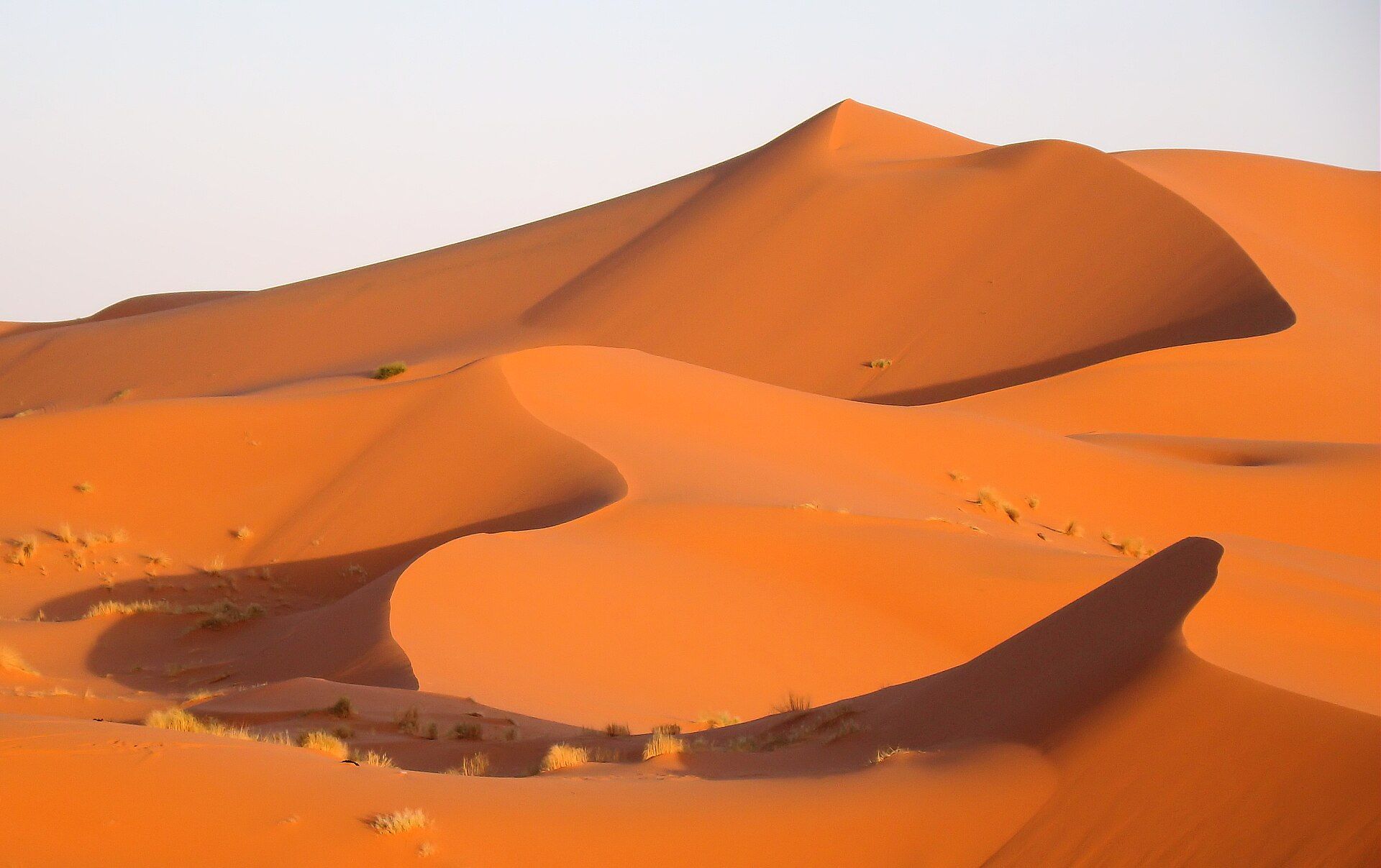
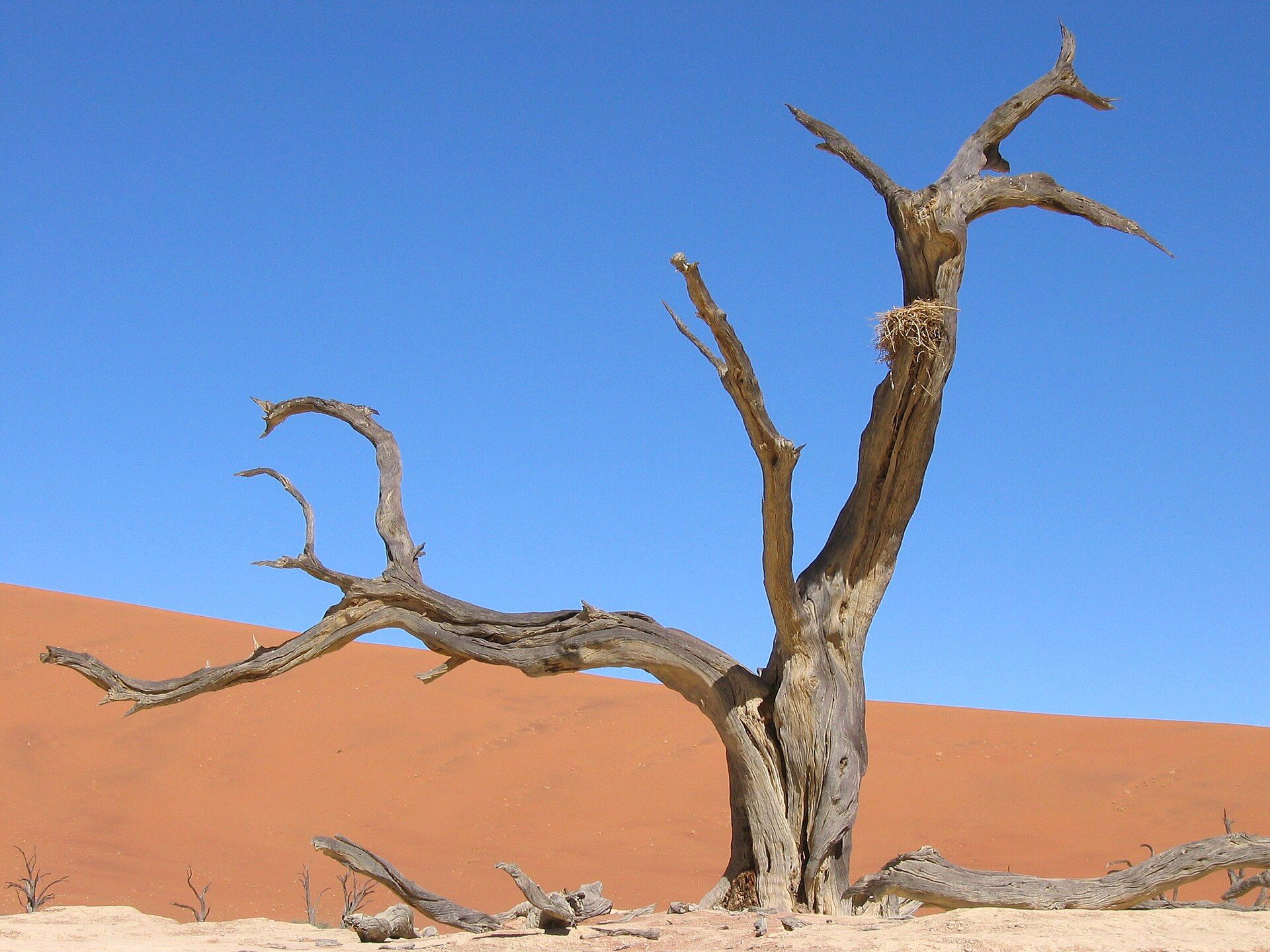
Short answer: the Sahara is the largest hot desert on Earth, the Namib one of the oldest — and the Namib's dunes are taller and redder. At Morocco's Erg Chebbi, golden dunes rise to about 150 m and the classic trip is a camel ride to a night in a desert camp. At Sossusvlei in Namibia, iron-rich sand oxidised over millions of years to rust-red forms dunes over 300 m high ('Big Daddy'), beside the white clay pan of Deadvlei and its roughly 900-year-old dead camelthorn trees.
The trips feel different: Erg Chebbi is an overnight experience — camps, stars, camels — reached on a long two-day drive from Marrakech. Sossusvlei is a dawn photography and dune-climbing trip inside a national park, most of a day's drive from Windhoek, mostly on gravel.
Seasons: October to April for Erg Chebbi (summer is dangerously hot); roughly April to October for comfortable climbing at Sossusvlei.
The Sahara (Erg Chebbi)
The largest hot desert on Earth
The Sahara spans roughly 9.2 million km² across North Africa. Erg Chebbi near Merzouga in southeastern Morocco is one of its great sand seas, with wind-piled dunes up to about 150 m that glow gold and rose at dawn and dusk, and some of the clearest night skies anywhere.
- A night in a desert camp under a dark sky
- Camel treks with local Amazigh guides
- No permit for the standard Erg Chebbi and Erg Chigaga circuits
- Combines easily with Marrakech, Fez and the Atlas
Namib Desert (Sossusvlei & Deadvlei)
Red dunes over 300 m in one of the oldest deserts
In Namib-Naukluft National Park, part of the Namib Sand Sea UNESCO World Heritage Site, rust-red dunes rise to some of the greatest heights anywhere — 'Big Daddy' tops 300 m. Beside them, Deadvlei's white clay pan holds blackened camelthorn trees about 900 years old, too dry to rot.
- Some of the tallest dunes on Earth
- Deadvlei: the most photographed desert scene on the planet
- Deep red sand against blue sky
- A UNESCO World Heritage Site; no guide required
Head to head
| What matters | The Sahara (Erg Chebbi) | Namib Desert (Sossusvlei & Deadvlei) |
|---|---|---|
| Dunes Edge: Namib Desert (Sossusvlei & Deadvlei) | Golden dunes up to about 150 m in the Erg Chebbi sand sea. | Rust-red dunes over 300 m — among the tallest anywhere. |
| Signature experience Edge: Toss-up | Camel ride over the dunes at sunset, a night in camp and a sky full of stars. | Climbing a red dune at sunrise, then walking into the white pan of Deadvlei. |
| Best season Edge: Toss-up | October to April; summer is dangerously hot. | Roughly April to October, the cooler months. |
| Getting there Edge: Namib Desert (Sossusvlei & Deadvlei) | Marrakech → Merzouga over the Atlas, roughly 8–10 hours, normally split over two days (Fez is about 7–8 hours). | Windhoek → Sesriem, roughly 5–6 hours largely on gravel, then about an hour to Sossusvlei — the last stretch by 4x4 or park shuttle. |
| Rules and access Edge: The Sahara (Erg Chebbi) | Open access with local operators; no permit for the standard circuits. | Namib-Naukluft park entry at Sesriem; guests staying inside the gate get in earlier for sunrise light. |
| Crowds Edge: Namib Desert (Sossusvlei & Deadvlei) | The Merzouga dune edge is busy and commercialised; Erg Chigaga is quieter. | A steady stream at Deadvlei in the morning, but the dune field spreads people out. |
Which should you choose?
Choose The Sahara (Erg Chebbi) if…
Travellers in Morocco who want the classic Sahara night — camels, a desert camp and stars — as part of a wider trip.
Choose Namib Desert (Sossusvlei & Deadvlei) if…
Photographers and road-trippers who want the tallest, reddest dunes and the surreal Deadvlei, and will drive a long way for dawn light.
The honest verdict
For scenery, the Namib wins: taller dunes, deeper colour and Deadvlei. For the experience of the desert itself — a camp, a camel and a night sky — the Sahara at Erg Chebbi is the classic.
Both reward only the low light at either end of the day; midday flattens the dunes in both. Carry far more water than you think you need.
Wonders mentioned here
Added