Head to head · terraced springs
Pamukkale vs Hierve el Agua: The World's Two Great Terraced Springs
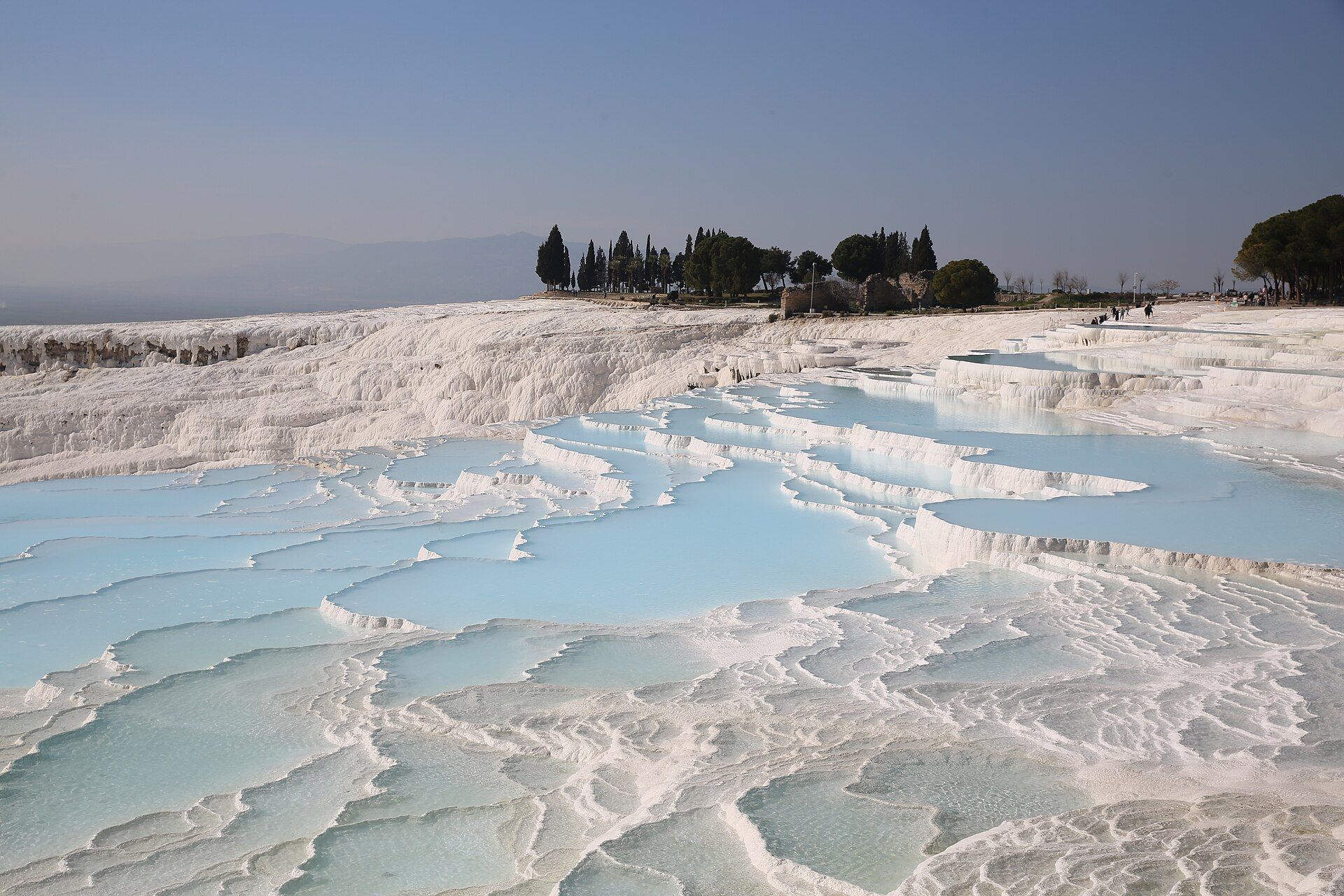
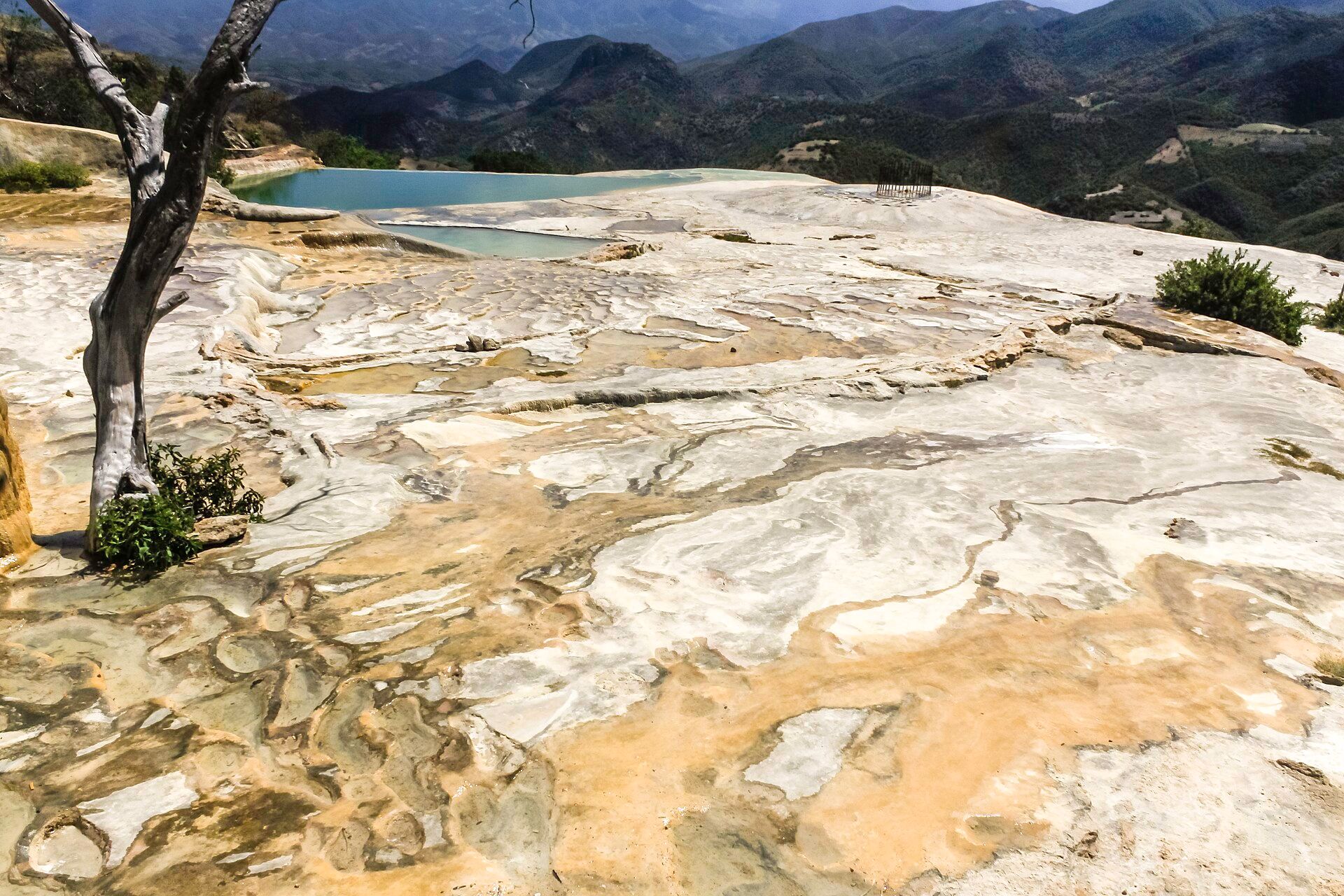
They look, in photographs, like cousins: pale mineral terraces stepping down a hillside, filled with still blue water. Turkey's Pamukkale is a vast white 'cotton castle' of travertine built by hot calcium-rich springs; Mexico's Hierve el Agua is a pair of mineral springs that have petrified into what looks like a frozen waterfall spilling off a cliff. But they are very different in scale, feel, and what you can actually do there.
Here's how Pamukkale and Hierve el Agua compare across what shapes a visit, and how to decide which mineral wonder to build a trip around.
Pamukkale
Turkey's cotton castle
A dazzling hillside of brilliant white travertine terraces in southwestern Turkey, built up over millennia by warm, calcium-laden spring water. Visitors walk barefoot down the terraces and bathe in the shallow pools, and the ancient Roman spa city of Hierapolis, with its own thermal 'antique pool' full of fallen columns, sits right on top. It is a major, well-served attraction on Turkey's tourist trail.
- A huge field of brilliant white terraces
- Warm pools you can actually bathe in
- The Roman ruins of Hierapolis on the same site
- Easy to reach and fully set up for visitors
Hierve el Agua
Mexico's petrified waterfall
A set of mineral springs high in the mountains of Oaxaca, Mexico, where calcium-rich water has, over thousands of years, formed cascades of rock down a cliff face that look exactly like a waterfall frozen in stone. Spring-fed infinity pools sit at the cliff edge with a vast valley view. It is smaller and more remote than Pamukkale, reached by a mountain road, with a wild, high-desert setting.
- The unique 'petrified waterfall' rock cascades
- Cliff-edge spring pools with an enormous valley view
- A dramatic mountain-and-desert setting
- Far fewer crowds than Pamukkale
Head to head
| What matters | Pamukkale | Hierve el Agua |
|---|---|---|
| The formation Edge: Toss-up | A broad hillside of gleaming white terraces — bigger and whiter. | Cliff-side rock 'waterfalls' of petrified mineral — smaller but stranger. |
| Bathing Edge: Pamukkale | Warm terrace pools plus the Roman antique thermal pool — a real soak. | Natural spring pools at the cliff edge, cool and shallow, with the view. |
| Setting & extras Edge: Toss-up | Paired with the ancient city of Hierapolis right on the site. | Wild Oaxacan mountains; often combined with mezcal towns and Mitla ruins nearby. |
| Crowds Edge: Hierve el Agua | Busy — one of Turkey's most visited sights, especially midday. | Much quieter, though popular with day trips from Oaxaca city. |
| Access Edge: Pamukkale | Easy — near Denizli, on the standard Turkey tourist circuit with its own airport. | A winding mountain drive from Oaxaca city; access has occasionally closed in local disputes. |
| Best season Edge: Toss-up | Spring and autumn for mild weather; summer is hot and busiest. | The dry season, roughly November to April, for clear valley views and safe roads. |
Which should you choose?
Choose Pamukkale if…
…you want the bigger, whiter spectacle, a genuine warm-water soak, and a ruin-rich, easy-to-reach site as part of a Turkey trip.
Choose Hierve el Agua if…
…you want something rarer and wilder — a petrified waterfall and cliff-edge pools with a huge view — on a quieter visit from Oaxaca.
The honest verdict
Pamukkale is the grander and more developed of the two: bigger terraces, warmer pools, Roman ruins, and easy access, but also the crowds that come with fame.
Hierve el Agua is smaller and more remote, but its petrified rock cascades and cliff-edge pools over a vast Oaxacan valley are genuinely one of a kind and far less busy.
Choose Pamukkale for scale, soaking, and history on a Turkey itinerary; choose Hierve el Agua for strangeness, solitude, and a spectacular setting on a Mexico one.
Wonders mentioned here
Added