Head to head · A mile-deep canyon vs the buttes of the Navajo Nation
Grand Canyon vs Monument Valley: Is Monument Valley Worth the Extra Drive?
Short answer: if you can only do one, the Grand Canyon is closer to the airports and the bigger spectacle — about 1½ hours from Flagstaff and 4 to 5 hours from Las Vegas. Monument Valley is worth the extra drive (about 3 hours from Flagstaff, 6 to 7 from Las Vegas) if you want the classic red buttes of the American West and can stay a night for dawn and dusk.
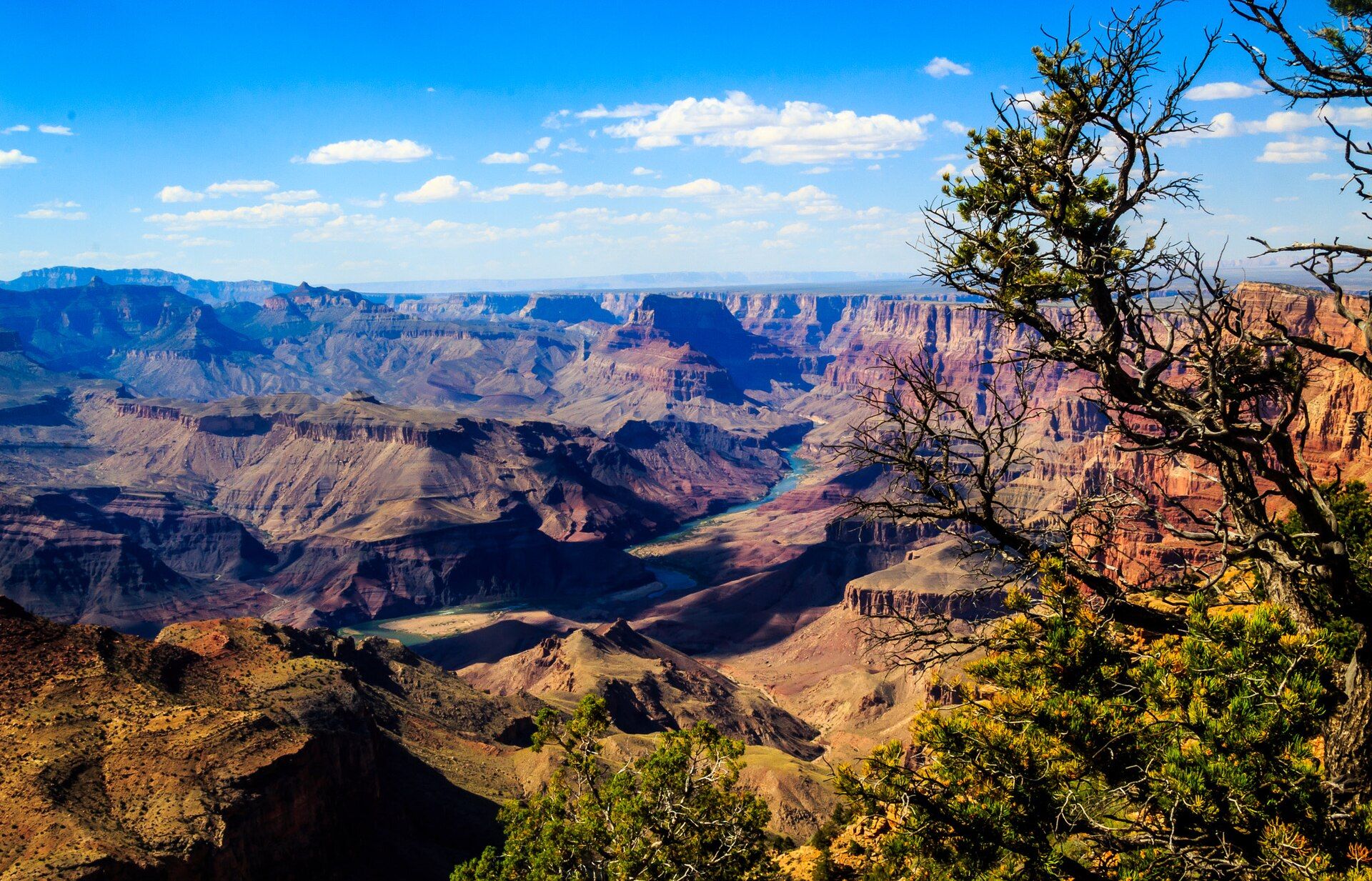
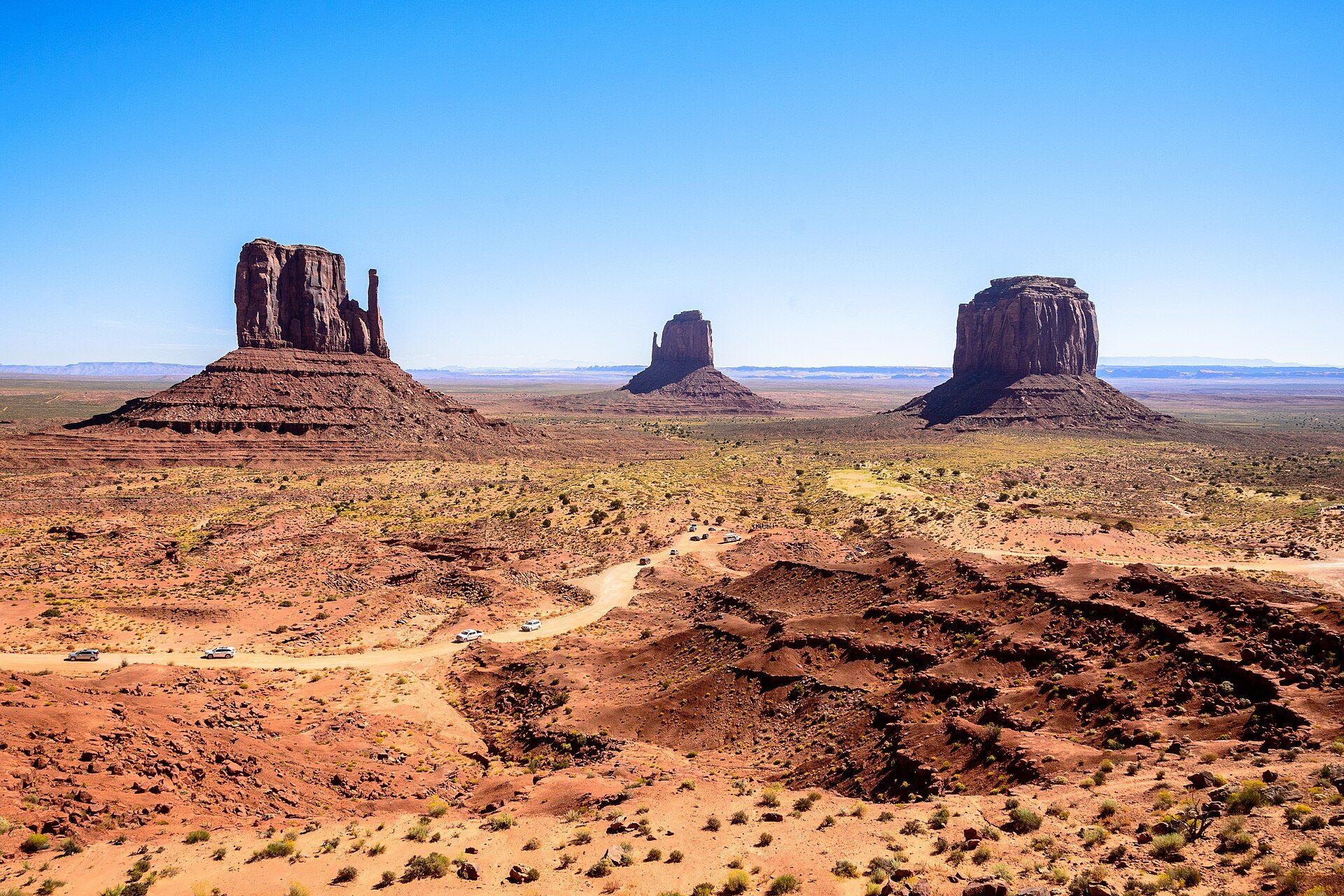
The two are opposite views. At the Grand Canyon you stand on the rim and look down about 1.8 km into a 446 km chasm. At Monument Valley you stand on the desert floor and look up at isolated sandstone buttes rising 250 to 300 metres — what is left after some 50 million years of erosion stripped away the plateau around them.
Grand Canyon
The view down a mile of rock
A national park canyon about 446 km long, up to 29 km wide and some 1.8 km deep, exposing rock nearly two billion years old at the Colorado River. The South Rim is open year-round; the North Rim roughly mid-May to mid-October.
- Paved, largely flat rim paths with shuttle buses between viewpoints
- Full services at Grand Canyon Village
- Rim viewpoints, inner-canyon trails and river trips for every level
Monument Valley
The buttes of the Navajo Nation
Monument Valley Navajo Tribal Park on the Arizona–Utah border: red sandstone buttes and mesas rising 250–300 m from the flats, coloured by iron oxide. A 27 km (17-mile) unpaved scenic loop can be self-driven; the backcountry is open only with Navajo guides.
- The defining silhouettes of the American West, glowing at sunrise and sunset
- A self-drive loop of 2–3 hours, or guided trips into the backcountry
- Navajo land and culture — a lived-in place, not only scenery
Head to head
| What matters | Grand Canyon | Monument Valley |
|---|---|---|
| Getting there Edge: Grand Canyon | About 1½ hours from Flagstaff; 3½–4½ hours from Phoenix; 4–5 hours from Las Vegas. | About 3 hours from Flagstaff; 5–6 hours from Phoenix; 6–7 hours from Las Vegas. |
| Entry and passes Edge: Grand Canyon | National park entrance fee per vehicle, valid several days; national park passes apply. | A Navajo tribal park with its own entry fee, opening hours and rules — a national parks pass does nothing here. Bring cash for the gate and for guides. |
| The scenery Edge: Toss-up | Looking down into layered red, ochre and violet walls, miles across. | Looking up at lone buttes on an open plain — the Mittens catch the low light at dawn and dusk. |
| Roads and walking Edge: Grand Canyon | Paved rim roads and largely flat rim paths with accessible sections; steep, hot trails below the rim. | A rough, rutted dirt loop with washboard and soft sand — low-clearance cars struggle, and some rental agreements forbid it. |
| Best months Edge: Toss-up | March–May and September–November; summer is hot and crowded, and the South Rim snows in winter. | April–May and September–October; summer is very hot, and at around 1,700 m it snows and freezes in winter. |
| Services Edge: Grand Canyon | Extensive at Grand Canyon Village: lodging, food, shuttles and a medical clinic. | A visitor centre, a hotel and dining at the overlook; nothing at all on the loop. |
Which should you choose?
Choose Grand Canyon if…
…you have limited time, want the bigger spectacle with easy paved access, or are using a national parks pass.
Choose Monument Valley if…
…you have already seen the Grand Canyon, or are on a longer Southwest road trip and can stay a night for both dawn and dusk on the buttes.
The honest verdict
For a first visit to the Southwest with one stop, choose the Grand Canyon: it is closer to Flagstaff, Phoenix and Las Vegas, the roads are paved, and the view is bigger than anything else in the region.
Monument Valley earns its longer drive when you stay nearby and see the buttes at both ends of the day — a midday drive-through misses the light that makes it. Check current opening status with Navajo Parks and Recreation before you go; the park has closed for extended periods before.
On a Flagstaff-based road trip the two fit together: the South Rim one day, Monument Valley the next, ideally in April–May or September–October, when both are in season.
Wonders mentioned here
Added