Head to head · great canyons
Grand Canyon vs Fish River Canyon: America's and Africa's Great Chasms
They are the signature canyons of two continents: Arizona's Grand Canyon, the mile-deep, rainbow-walled chasm that defines the American Southwest, and Namibia's Fish River Canyon, a vast, arid gorge of switchback bends that is the largest canyon in Africa. Both are immense — but they offer very different experiences.
Here's how the Grand Canyon and Fish River Canyon compare across what actually shapes a visit, and how to decide which to build a trip around.
Grand Canyon
The rainbow chasm of the Southwest
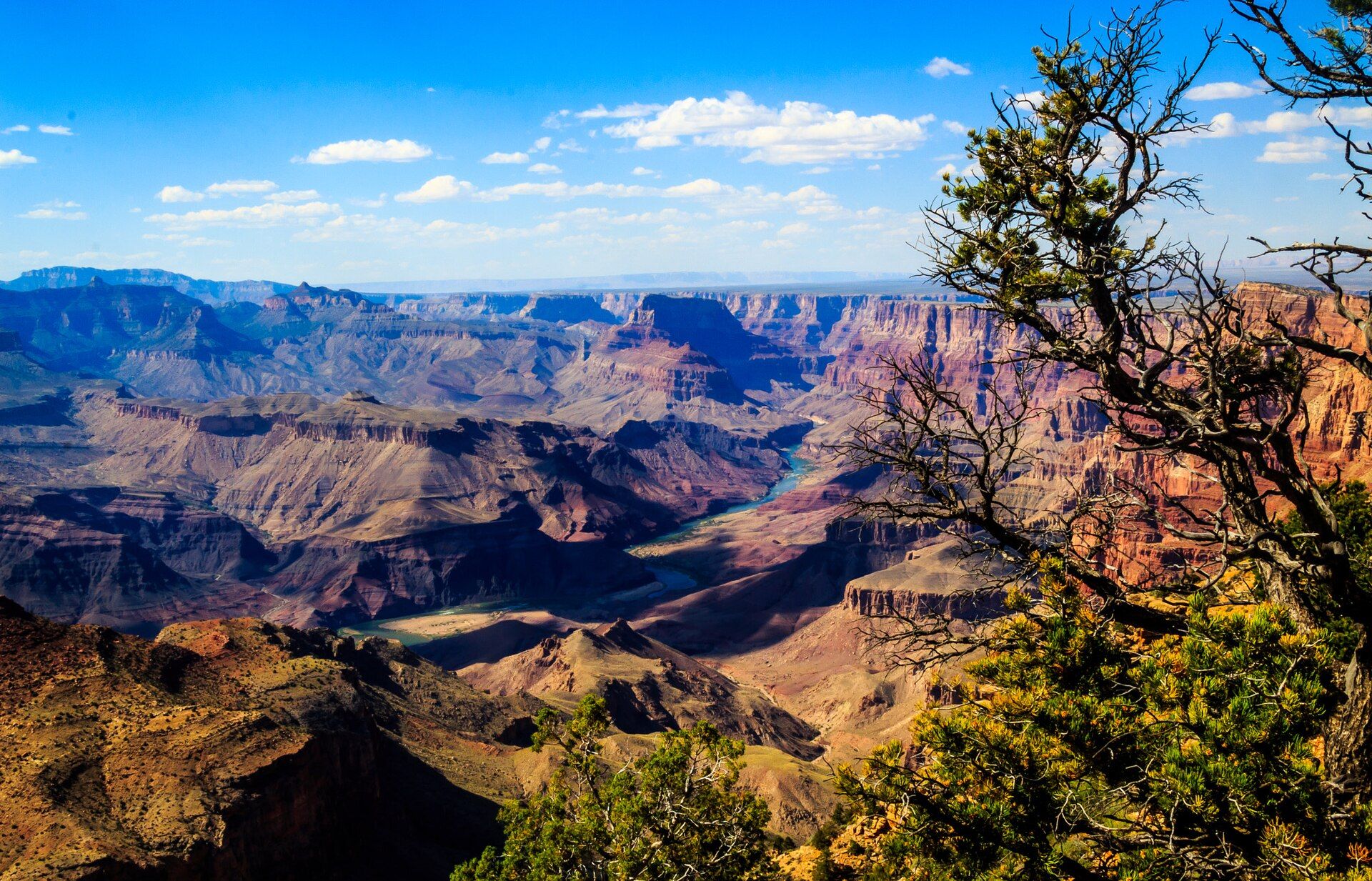
A mile deep and up to 29 kilometres wide, the Grand Canyon exposes two billion years of Earth's history in bands of rose, gold, and violet rock, cut by the Colorado River. It is one of the most visited and best-served natural wonders on Earth, with rim villages, shuttle roads, viewpoints, and famous rim-to-river trails, from a five-minute overlook to a multi-day descent.
- Staggering depth, width, and layered colour
- Superb infrastructure — rims, trails, lodges, shuttles
- Options from a roadside overlook to a rim-to-river hike
- Sunrise and sunset colour that few landscapes match
Fish River Canyon
Africa's great desert gorge
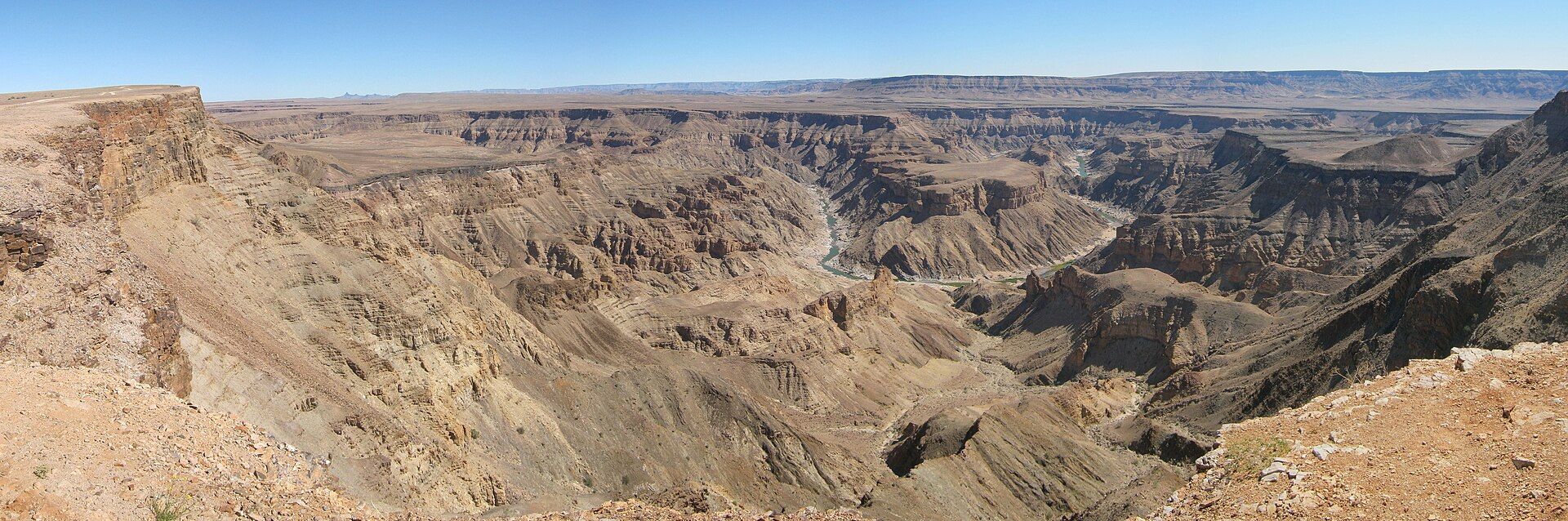
The largest canyon in Africa and one of the largest on Earth, Fish River Canyon winds in vast switchbacks through the stony desert of southern Namibia. It is raw, remote, and almost empty — a handful of viewpoints on the rim and a famously tough multi-day hike along the canyon floor, open only in the cooler months. There is little development and few crowds; the reward is scale and solitude under huge desert skies.
- Immense scale and dramatic switchback bends
- Deep solitude — very few visitors
- A serious, celebrated multi-day wilderness hike
- Vast desert skies and stargazing
Head to head
| What matters | Grand Canyon | Fish River Canyon |
|---|---|---|
| Depth & colour Edge: Grand Canyon | About a mile deep with vivid, layered rock — the more colourful of the two. | A deep but more monochrome desert gorge of grey and ochre stone. |
| Crowds & development Edge: Toss-up | Very developed and popular — busy at the main rim viewpoints. | Remote and quiet, with minimal facilities and few people. |
| Ease of seeing it Edge: Grand Canyon | Easy — paved roads, shuttles, and overlooks for all abilities. | A long drive to a few rim viewpoints; the floor is a hard expedition. |
| Hiking Edge: Toss-up | Everything from easy rim walks to a strenuous rim-to-river trek. | A single famous multi-day canyon-floor hike, permit-controlled and tough. |
| Access Edge: Grand Canyon | Fly to Las Vegas, Phoenix, or Flagstaff, then an easy drive. | Fly to Windhoek, then a long drive south through the desert. |
| Best season Edge: Toss-up | Spring and autumn for comfort; summer is hot on the floor, winter cold on the rim. | May to September only — the cooler, safe months; the floor hike runs in this window. |
Which should you choose?
Choose Grand Canyon if…
…you want the greatest canyon spectacle with real infrastructure — easy viewpoints, a range of hikes, and the famous layered colour — often as part of a Southwest road trip.
Choose Fish River Canyon if…
…you want scale with solitude, huge desert silence and skies, and either a few rim views on a Namibia trip or one of Africa's great multi-day wilderness hikes.
The honest verdict
This is the world's most famous canyon versus Africa's largest: the Grand Canyon wins on colour, accessibility, and sheer visitor experience, while Fish River Canyon wins on solitude and raw desert wildness.
For an unforgettable, easy-to-reach spectacle, choose the Grand Canyon; for emptiness, silence, and a tougher adventure, choose Fish River Canyon.
Most travellers see one as part of a wider region — the Southwest for the Grand Canyon, a Namibia desert circuit for Fish River — so the trip around it often decides.
Wonders mentioned here
Added