Head to head · Turkey's two UNESCO landscapes
Cappadocia vs Pamukkale: Which Should You Visit in Turkey?
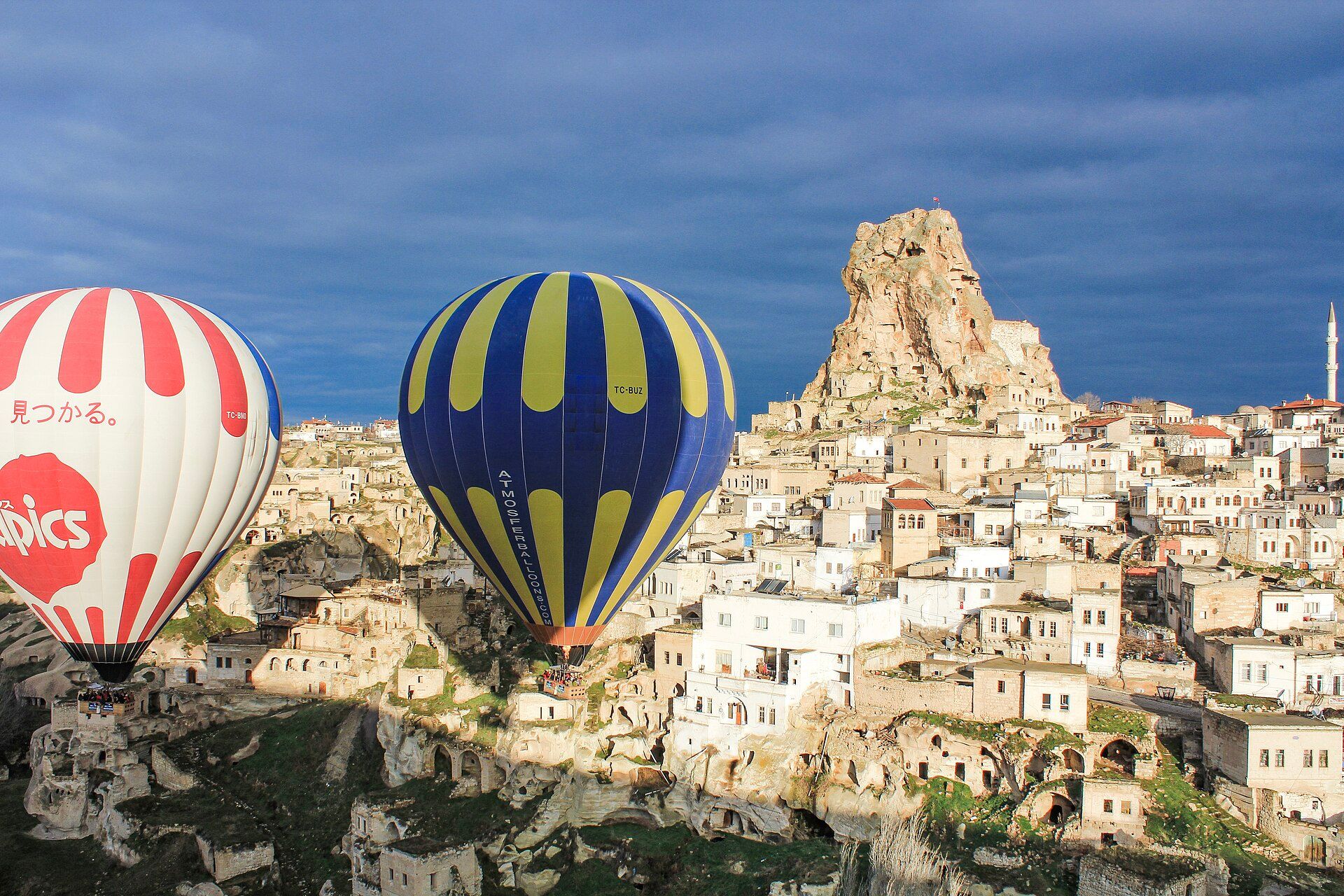
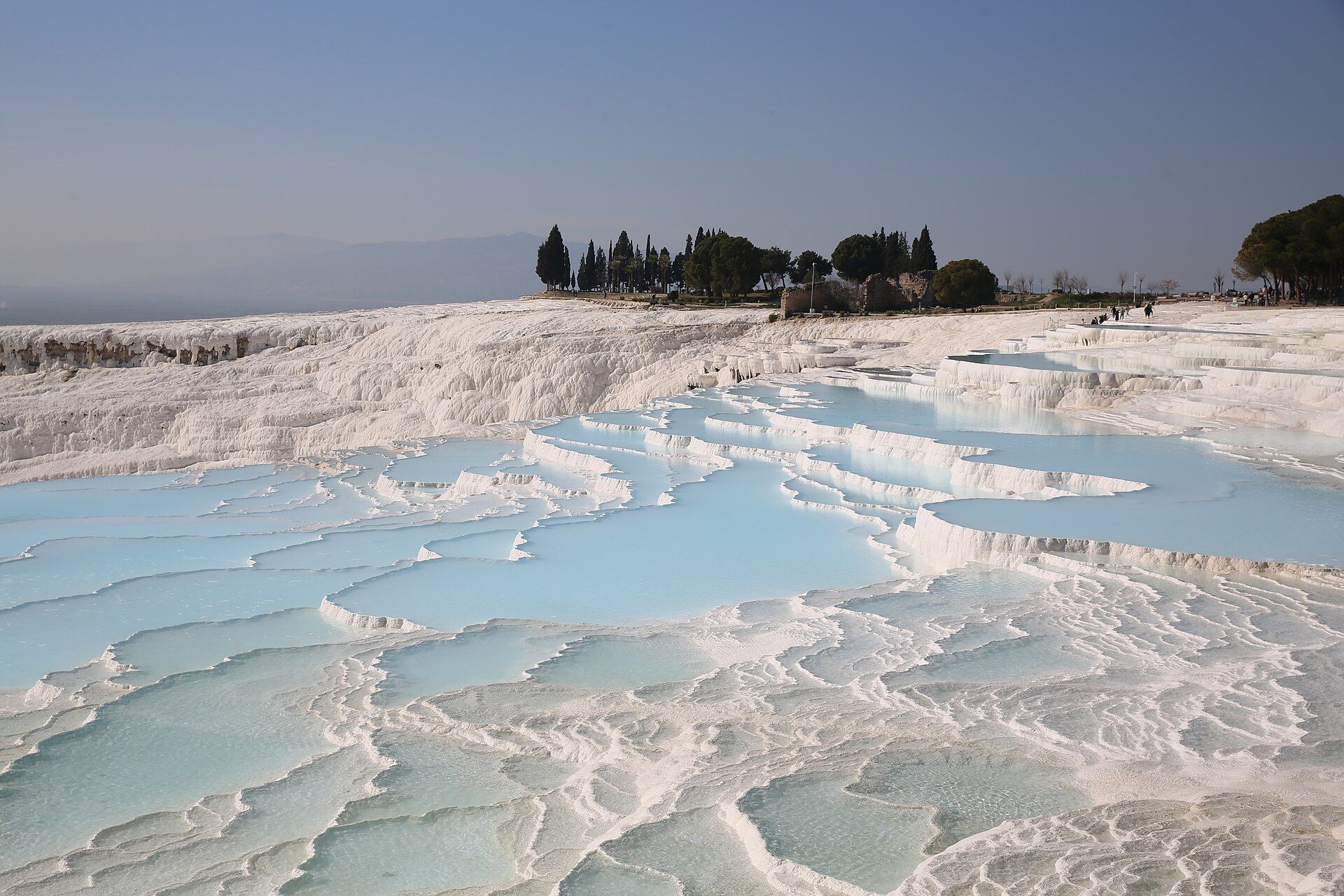
Cappadocia and Pamukkale are the two natural landscapes almost every first trip to Turkey considers, and both are UNESCO World Heritage Sites. Cappadocia is a region in central Anatolia of volcanic tuff worn into thousands of fairy chimneys, with cave dwellings, rock-cut churches and underground cities carved into it. Pamukkale is a single hillside in the southwest, near Denizli, where mineral hot springs have built brilliant white travertine terraces below the ruins of the ancient spa city of Hierapolis.
They sit in different regions, so linking them means a long transfer. The useful question is how much time each needs, and what kind of visit you want: a few slow days in one landscape, or one striking half-day stop.
Cappadocia
Fairy chimneys, cave hotels and sunrise balloons
Eruptions buried central Anatolia in soft ash that hardened into tuff, and wind and water then wore it into tapering cones and pillars, many protected by harder caps. People carved homes, frescoed churches and whole underground cities into the rock. You base yourself in Göreme or Ürgüp, reached from Nevşehir or Kayseri airports. The valleys are open access; the Göreme Open Air Museum and the underground cities charge entry. Balloon flights are regulated and grounded by the civil aviation authority in wind or poor visibility, so cancellations are common.
- A whole region to explore over several days, with free valley walks
- Sunrise balloons, from a basket or from a ridge
- Geology and human history together: cave churches and underground cities
Pamukkale
White travertine pools above an ancient spa city
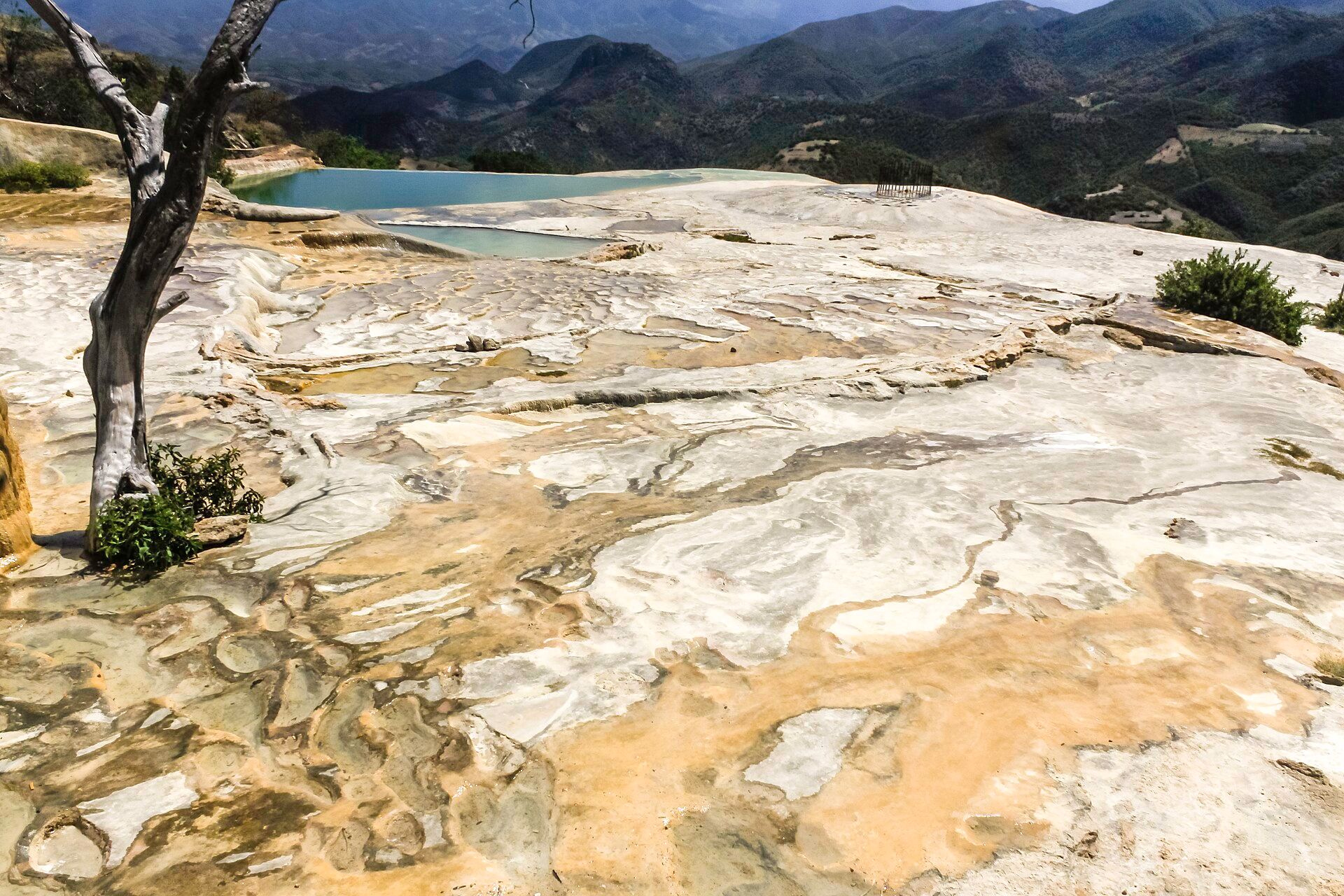
Warm, calcium-rich spring water runs down the hillside and, as it cools, deposits calcium carbonate as white terraces and scalloped pools. The terraces and the ruins of Hierapolis above them share one ticketed site. You must walk the terraces barefoot, and the water is rotated between terraces to protect them, so some pools in photographs may be dry when you visit. Bathing in the antique thermal pool among the ruins costs extra. It is under an hour from Denizli, and half a day covers it.
- A one-of-a-kind white hillside you can walk on barefoot
- Hierapolis and its thermal pool on the same ticket site
- Needs only half a day, so it fits a coast-based trip
Head to head
| What matters | Cappadocia | Pamukkale |
|---|---|---|
| The landscape Edge: Toss-up | Valleys of fairy chimneys, pinnacles and carved cliffs spread over a whole region. | One dazzling white hillside of travertine terraces and shallow pools, with Roman-era ruins above. |
| Time needed Edge: Pamukkale | 2–3 days, deliberately allowing for a balloon flight that may not fly on your first morning. | Half a day, including the ruins and the pool. |
| Things to do Edge: Cappadocia | Balloon flights, valley hikes, cave hotels, the Open Air Museum and underground cities. | Walk the terraces barefoot, explore Hierapolis, bathe in the antique pool. |
| Getting there Edge: Toss-up | Fly to Nevşehir or Kayseri and stay in Göreme or Ürgüp; about half a day from Istanbul. | Under an hour from Denizli, which has an airport; many visitors arrive on day tours from the coast. |
| Best season Edge: Toss-up | April–June and September–October for mild weather and more reliable balloon flights. Summer is hot; winter can bring snow. | April–June and September–October. The white terraces are dazzling and hot in bright summer sun. |
| Crowds Edge: Cappadocia | Sunrise viewpoints fill with people watching the balloons; the valley trails below are largely empty. | Heavy in the middle of the day when coach tours arrive. Early and late are calmer and cooler. |
| What can go wrong Edge: Toss-up | Balloons grounded by weather. Keep spare mornings rather than booking your last one. | The pool you came to photograph may be dry that day because of water rotation. |
Which should you choose?
Choose Cappadocia if…
…you have two or three days, want to slow down in one place, like walking, and want the chance of a balloon sunrise and the cave churches and underground cities.
Choose Pamukkale if…
…you are based on the Aegean or Mediterranean coast, have only a day to spare, or want a single striking landscape plus an ancient site in one visit.
The honest verdict
If you can only fit one, Cappadocia is the bigger experience and repays the extra days. Pamukkale is memorable but compact.
If your trip is centred on the southwest coast, Pamukkale is the easy choice: a half-day visit from Denizli, often done as a day trip. Cappadocia needs its own flights or a long transfer.
With ten days or more in Turkey, do both. Build in a spare morning in Cappadocia for the balloons, and arrive at Pamukkale early or late to miss the midday tour buses. Check current entry arrangements with the site operators before you go.
Wonders mentioned here
Added