Head to head · The largest hot desert vs Asia's great cold desert
Sahara vs Gobi Desert: Hot Sand Sea or Cold Stony Desert — Which to Visit?
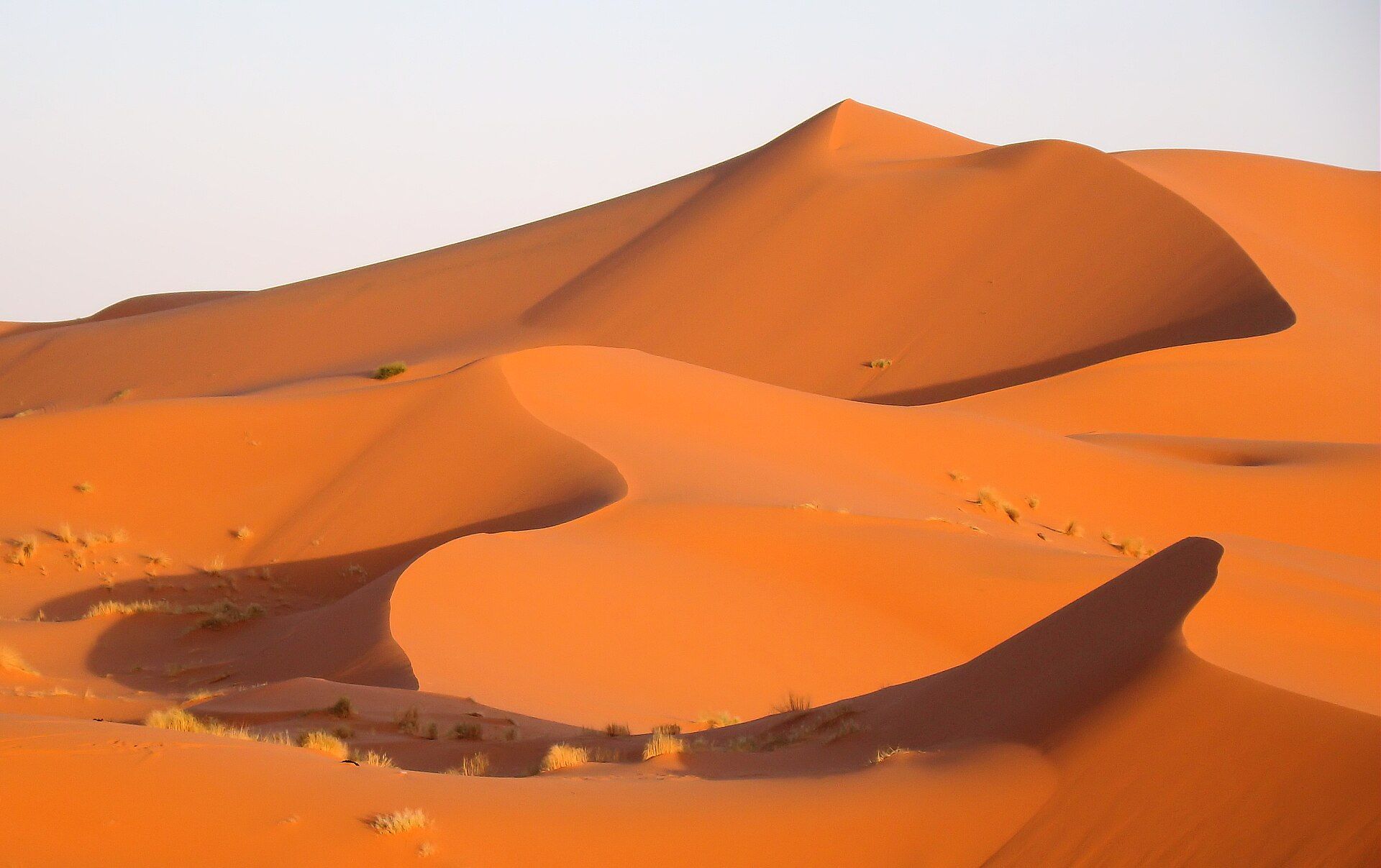
The Sahara and the Gobi are the two deserts most people name first, and they are opposites. The Sahara is the largest hot desert on Earth, about 9.2 million km² across North Africa, and its most visited corner — Erg Chebbi in southeastern Morocco — is a true sand sea with dunes up to about 150 m. The Gobi, across southern Mongolia and northern China, is a high, cold desert where much of the ground is stony plain rather than sand, summers are scorching and winters fall far below freezing.
That makes their seasons opposite too. The Sahara is visited from October to April, because summer is dangerously hot. The Gobi is visited from about May to September, because winter is extremely cold. A Sahara trip can be two or three days out of Marrakech or Fez; the Gobi takes four or five days of 4x4 driving between sights that are far apart.
Sahara (Erg Chebbi)
The classic sand sea
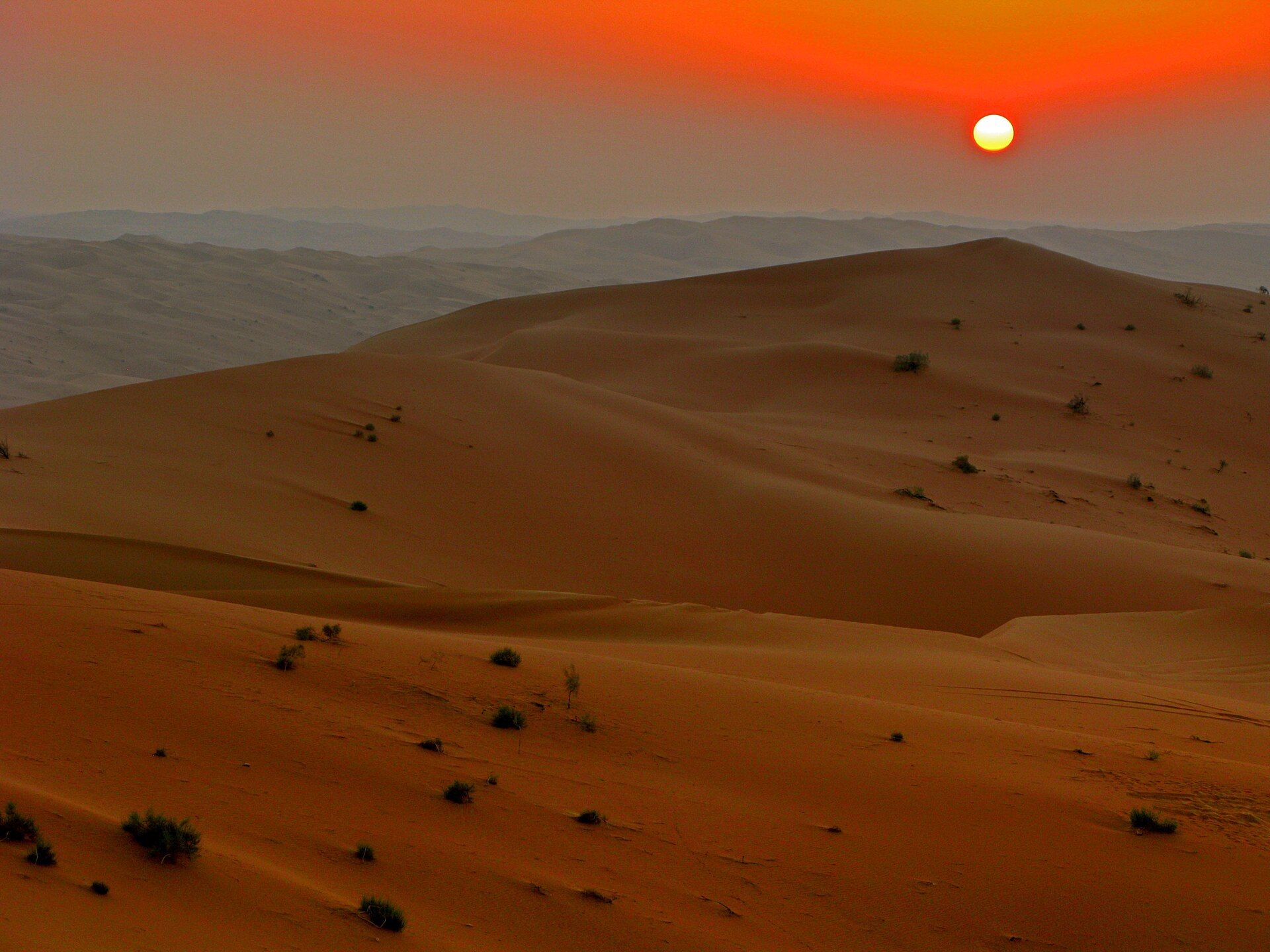
Wind has piled Erg Chebbi's dunes up to about 150 m, and they ripple, migrate and glow gold and rose at dawn and dusk. Fossil aquifers surface as palm oases, and the dry, dark sky makes for some of the best stargazing anywhere.
- Sunrise and sunset on towering orange dunes
- A night in a desert camp under very dark skies
- Reachable in two days by road from Marrakech, or 7–8 hours from Fez
Gobi
Dunes, ice canyons and dinosaur cliffs
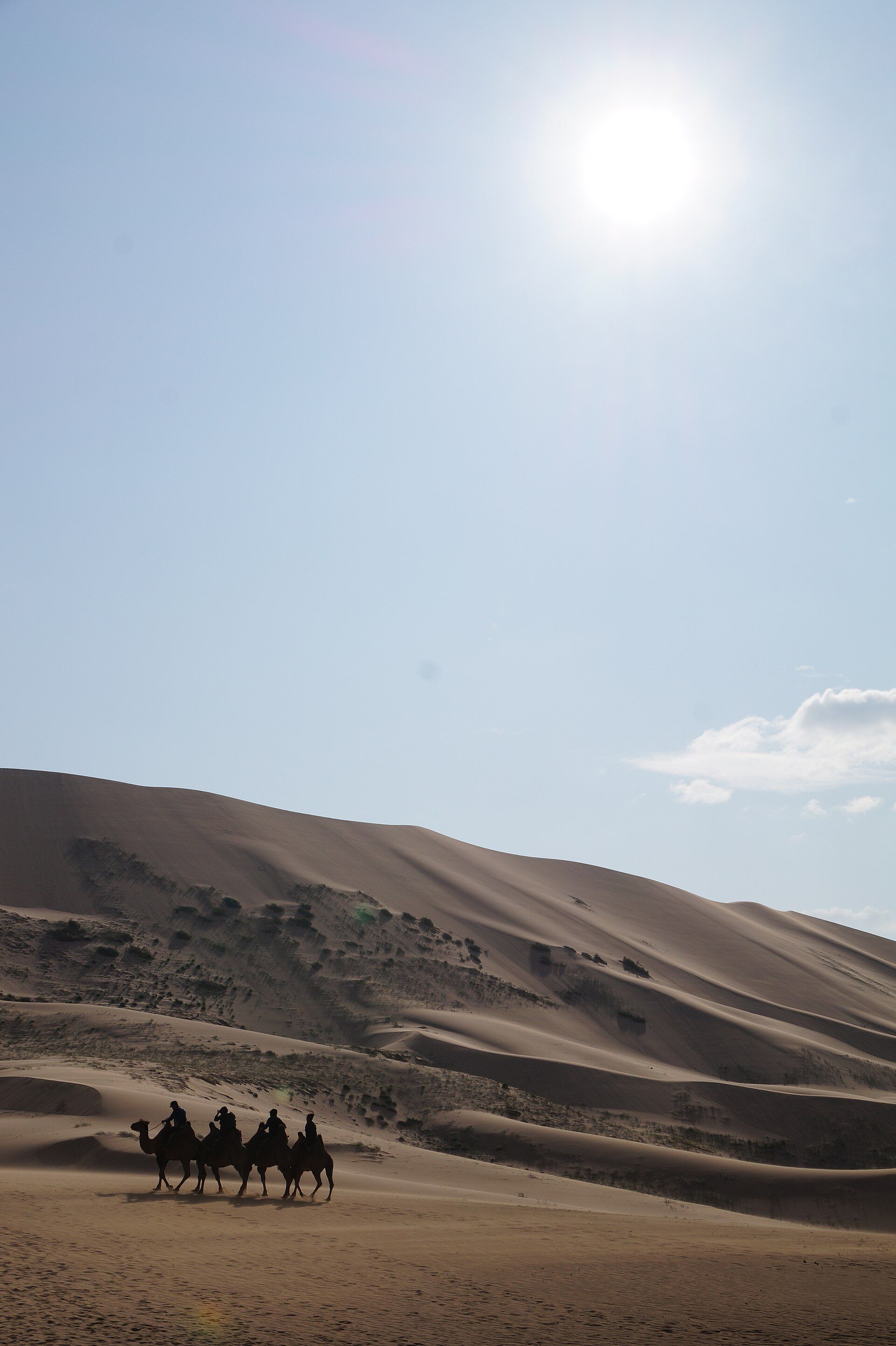
A high, cold desert of gravel plains and mountains with the Khongoryn Els singing dunes, which rise to about 300 m, the Yolyn Am ice canyon, and the Bayanzag Flaming Cliffs, where the first dinosaur eggs were found. Wild Bactrian camels and snow leopards live here alongside nomadic herders.
- One of the richest dinosaur fossil beds on Earth
- Variety: dunes, an ice canyon and red cliffs on one trip
- Nights in ger camps with very few other visitors
Head to head
| What matters | Sahara (Erg Chebbi) | Gobi |
|---|---|---|
| Landscape Edge: Toss-up | Classic sand sea: high, rippled dunes, oases and palm groves. | Mostly stony plain and mountains, with separate highlights — dunes, an ice canyon, red fossil cliffs — far apart. |
| Dunes Edge: Gobi | Erg Chebbi's dunes reach about 150 m. | Khongoryn Els rises to about 300 m, and the sand 'sings' in the wind. |
| Climate Edge: Toss-up | Hot desert: summer is dangerously hot; spring and autumn nights are cool and clear. | Cold desert: hot by day in summer, extremely cold in winter, and chilly at night all year at altitude. |
| Best season Edge: Toss-up | October to April. | Roughly May to September. |
| Getting there Edge: Sahara (Erg Chebbi) | Fly to Marrakech or Fez. Marrakech → Merzouga over the Atlas via Ouarzazate is about 8–10 hours, normally split over two days; Fez → Merzouga about 7–8 hours. Then 1–2 hours by camel or 4x4 into the erg. | Fly Ulaanbaatar → Dalanzadgad (about 1h30) or drive several days overland, then an organised 4x4 trip between the sights — there are tracks, not roads, and self-driving is not advised. |
| Time needed Edge: Sahara (Erg Chebbi) | One or two nights in a desert camp; two days each way from Marrakech if not rushed. | Four or five days to link the main sights. |
| Crowds Edge: Gobi | The Merzouga dune edge is busy and heavily commercialised; Erg Chigaga, further out, is much quieter. | Very sparse — ger camps and the odd tour vehicle, with vast emptiness between. |
Which should you choose?
Choose Sahara (Erg Chebbi) if…
…you are travelling between October and April, want the classic image of high sand dunes and a desert camp, and have only a few days — it combines easily with a Morocco trip.
Choose Gobi if…
…you are travelling in summer, want dinosaur fossils, singing dunes and an ice canyon on one trip, and are happy with four or five days of long 4x4 drives and ger camps.
The honest verdict
Let the month decide. From October to April, go to the Sahara; from May to September, the Gobi is the desert in season and the Sahara is dangerously hot.
If you want the textbook sand-sea desert with the least effort, the Sahara at Erg Chebbi delivers it in a few days. If you want variety and emptiness — and the fossils — the Gobi is the more unusual trip.
Neither needs a permit for the standard circuits, but both are done with local operators: in Morocco, check current advice for any route toward the Algerian frontier; in Mongolia, book a driver and guide rather than self-driving.
Wonders mentioned here
Added Updated