Head to head · New Zealand's two volcanic highlights on the North Island
Rotorua vs Tongariro: Geothermal Parks or the Alpine Crossing — Which to Do?
Both sit in the same volcanic belt of New Zealand's North Island, and both show it off — but one is a set of flat boardwalks and the other is a long alpine day. Rotorua is a town on one of the most active geothermal fields on Earth: the Pōhutu geyser, boiling mud pools and the coloured pools of Wai-O-Tapu, seen from easy, ticketed parks about three hours by road from Auckland. Tongariro, New Zealand's oldest national park and a dual natural-and-cultural World Heritage Site, is crossed by the Tongariro Alpine Crossing: about 19.4 km, one way, 6–8 hours past the Red Crater and the Emerald Lakes.
So the choice is mostly about weather and legs. Rotorua's geothermal features perform in any weather — cold, grey mornings make the steam more dramatic. The Crossing is exposed alpine terrain where the forecast and the volcanic alert level decide whether you go at all, and it is in summer condition roughly November–April.
Rotorua
Steam, geysers and colour from the boardwalk
Geyser, mud pools and mineral pools in separately ticketed geothermal parks around a town that smells of sulphur — plus Te Arawa Māori culture and geothermally cooked hāngī.
- Easy, flat boardwalks
- Works in any weather, any month
- Māori cultural experiences in town
Tongariro
A day's walk across a volcano
Three volcanic cones over a plateau of lava fields and vents; the Alpine Crossing passes the Red Crater and the mineral-green Emerald Lakes.
- One of the world's most celebrated day hikes
- Dual natural and cultural World Heritage
- Skiing on Ruapehu in winter
Head to head
| What matters | Rotorua | Tongariro |
|---|---|---|
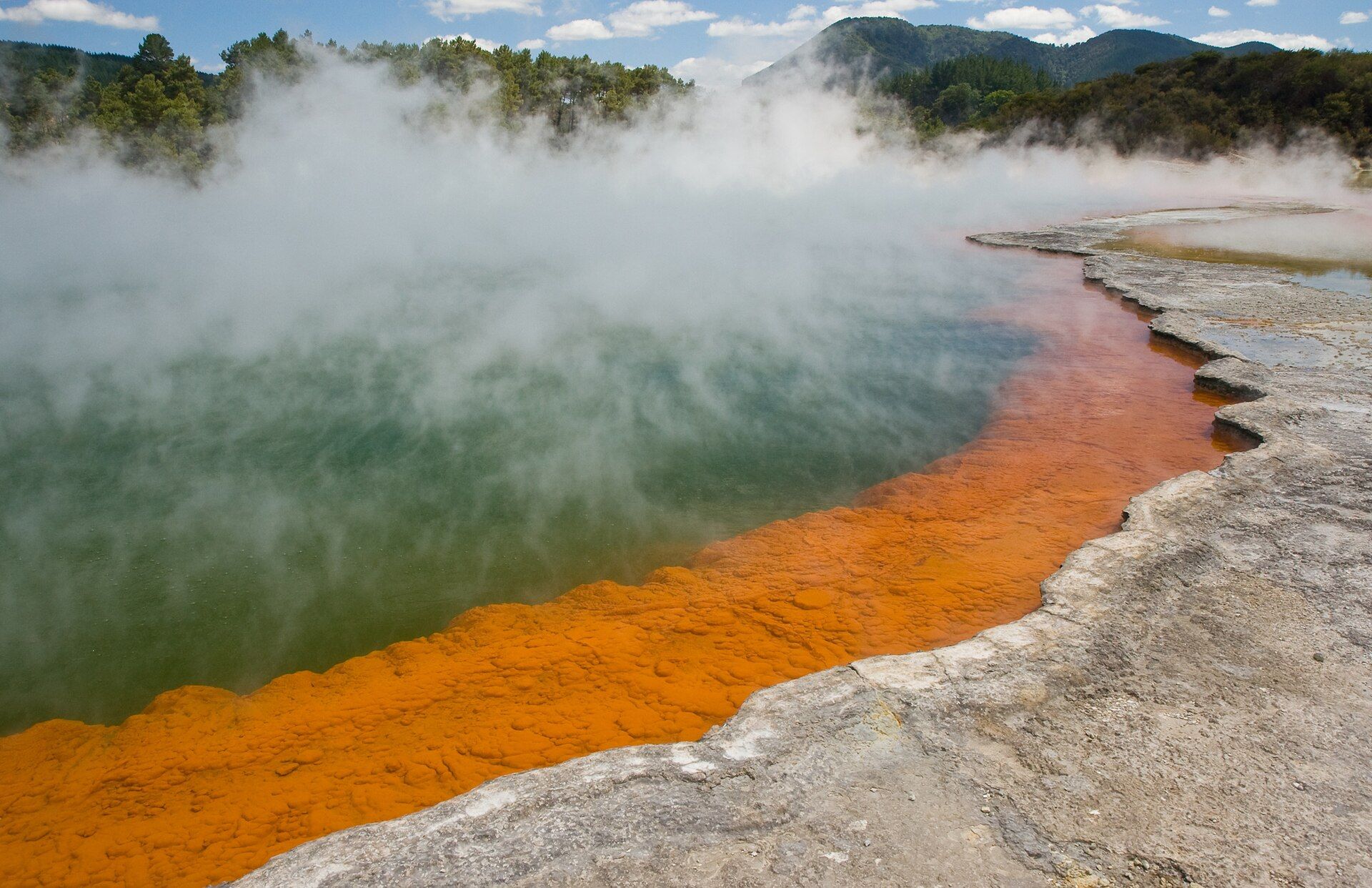
| What you see Edge: Toss-up | The Pōhutu geyser (up to about 30 m, several times a day), boiling mud, Wai-O-Tapu's orange-rimmed Champagne Pool and green Devil's Bath. | Red Crater, old lava flows, steaming vents and the Emerald Lakes, with the cone of Ngauruhoe beyond. |
| Effort Edge: Rotorua | Easy: flat boardwalks and gravel paths, hot and sulphurous. | Strenuous: about 19.4 km one way, 6–8 hours, a big climb and loose scree. |
| Getting there Edge: Rotorua | About 3 h by road from Auckland, or a 50-minute flight to Rotorua; the parks are 15–30 minutes apart. | About 4–5 h by road from Auckland or Wellington, then a booked shuttle — the Crossing starts and ends in different places and the Mangatepopo car park has a strict time limit. |
| Weather and safety Edge: Rotorua | Performs in any weather. Stay on the marked paths — thin crust over boiling mud causes serious burns. | Exposed alpine route that turns dangerous fast; check the mountain forecast and the volcanic alert level, either of which can close it. |
| Best months Edge: Rotorua | Year-round; spring and autumn (roughly Sep–Nov and Mar–May) for mild weather and thinner crowds. | Roughly November–April for summer conditions; in winter it is a serious alpine environment. |
| Time needed Edge: Toss-up | Half a day from Auckland for one park; two days to see more than one. | A full day for the Crossing, plus the drive. |
| Tickets and passes Edge: Toss-up | Each geothermal park is separately owned and ticketed, several by Māori trusts; no single pass. | A booked shuttle for the one-way walk. |
| Crowds Edge: Toss-up | Wai-O-Tapu is busiest around the daily induced Lady Knox geyser; Waimangu and outlying parks are quieter. | A near-continuous line of walkers on fine summer days; weather and the shoulder seasons thin it. |
| Culture Edge: Toss-up | Heartland of Te Arawa Māori; cultural experiences and hāngī cooked in geothermal steam. | Gifted to the nation in 1887 by Ngāti Tūwharetoa chief Te Heuheu Tūkino IV; local iwi ask that the summit cones not be climbed. |
Which should you choose?
Choose Rotorua if…
…you want geysers and coloured pools without a long hike, are travelling outside summer or with children, or want to pair the landscape with Māori culture and a hāngī.
Choose Tongariro if…
…you are fit, are visiting roughly November–April, can stay flexible for a fine-weather day, and want to walk across an active volcanic landscape rather than look at one.
The honest verdict
If you can only do one, let the season and the forecast decide. Rotorua is the safe bet: it works in rain, in winter and for any fitness level, and a cold grey morning actually improves the steam.
The Tongariro Alpine Crossing is the bigger experience, but only on the right day — summer conditions, a good mountain forecast and a normal volcanic alert level. Book the shuttle, carry full layers even on a fine morning, and keep a spare day in case the weather says no.
They are on the same side of the North Island, so many itineraries do both: Rotorua's parks on arrival, then the Crossing on the first clear day.
Wonders mentioned here

Added