Head to head · Monasteries on pillars or balloons over fairy chimneys
Meteora vs Cappadocia: Which Rock Landscape Should You Visit?
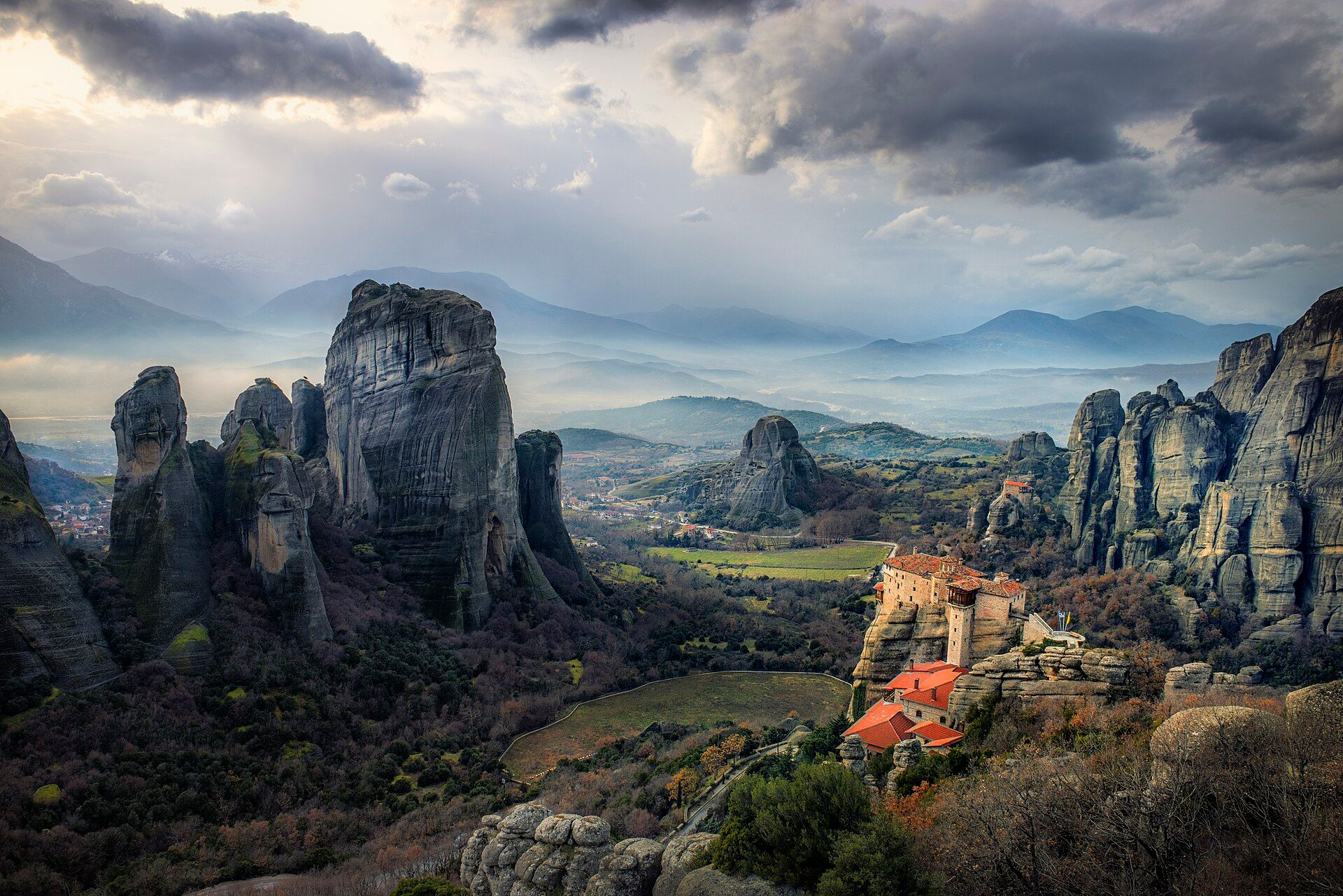
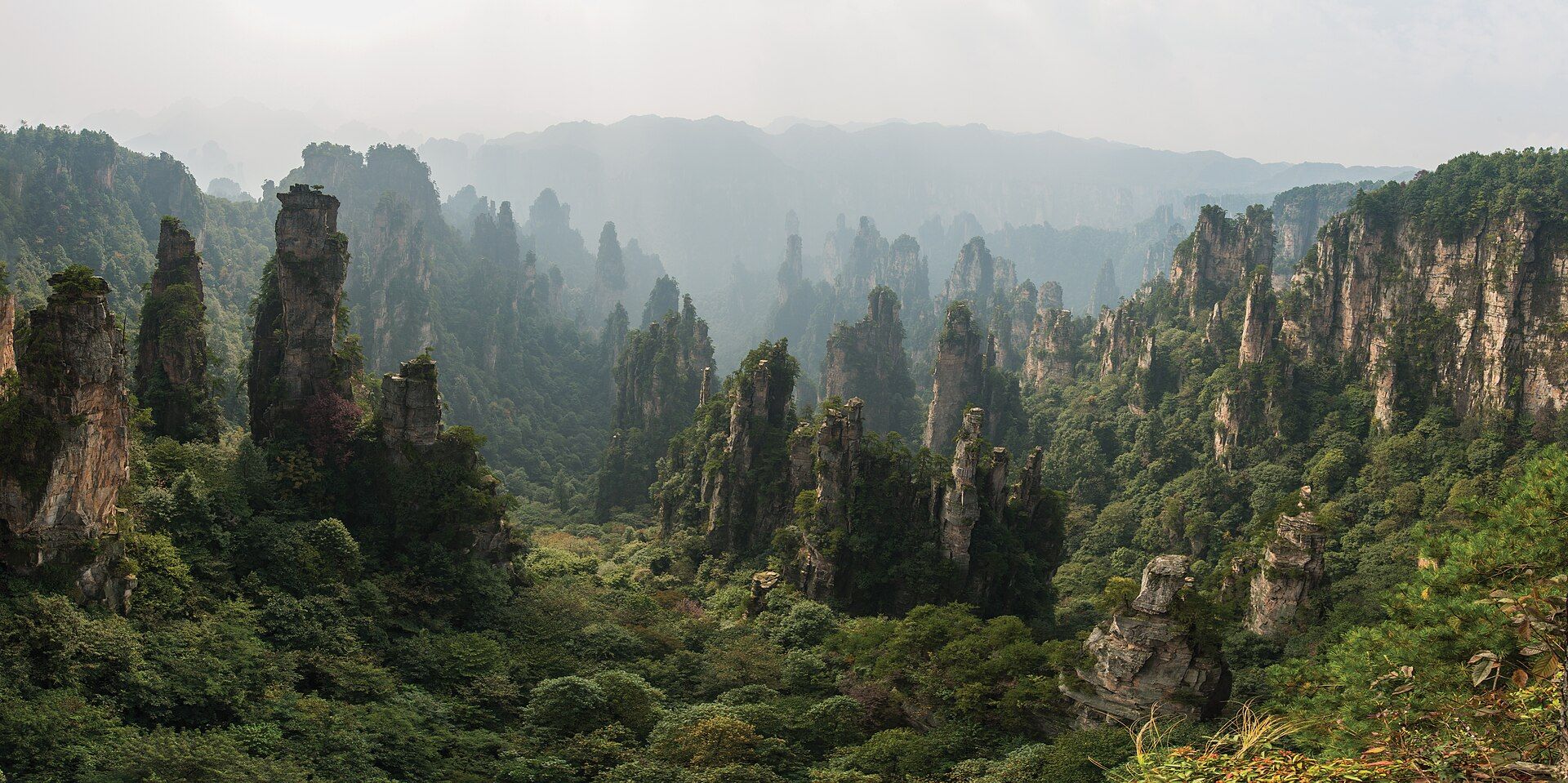
Meteora and Cappadocia are the two great rock landscapes at the eastern end of the Mediterranean, both World Heritage Sites where people built into the stone. The rock is different, and so is the experience. Meteora is a cluster of giant sandstone and conglomerate pillars rising from the plain of Thessaly, several topped by monasteries. Cappadocia is a wide region of soft volcanic tuff worn into thousands of cones and pinnacles, honeycombed with cave homes, rock-cut churches and underground cities.
In practice, Meteora is a compact place you see in a day or two from Kalambaka, built around six working monasteries with their own opening days and dress code. Cappadocia is a larger area based around Göreme, built around valley walks and a dawn balloon flight that may not fly — so it needs more days.
Meteora
Monasteries on 300–400 m rock pillars
Meteora's pillars of sandstone and conglomerate, some rising 300–400 metres, formed from the sediment of an ancient river delta and sea, then were lifted and eroded by water, wind and earthquakes into isolated columns. From the 14th century monasteries were built on the least accessible summits, once reachable only by ropes and ladders. Six still function. It is a mixed natural and cultural World Heritage Site, about five hours from Athens by train.
- Monasteries perched on the summits, with steps up to each
- Compact: the loop road links all six monasteries
- Reachable by train from Athens, no flight needed
Cappadocia
Fairy chimneys, cave churches and dawn balloons
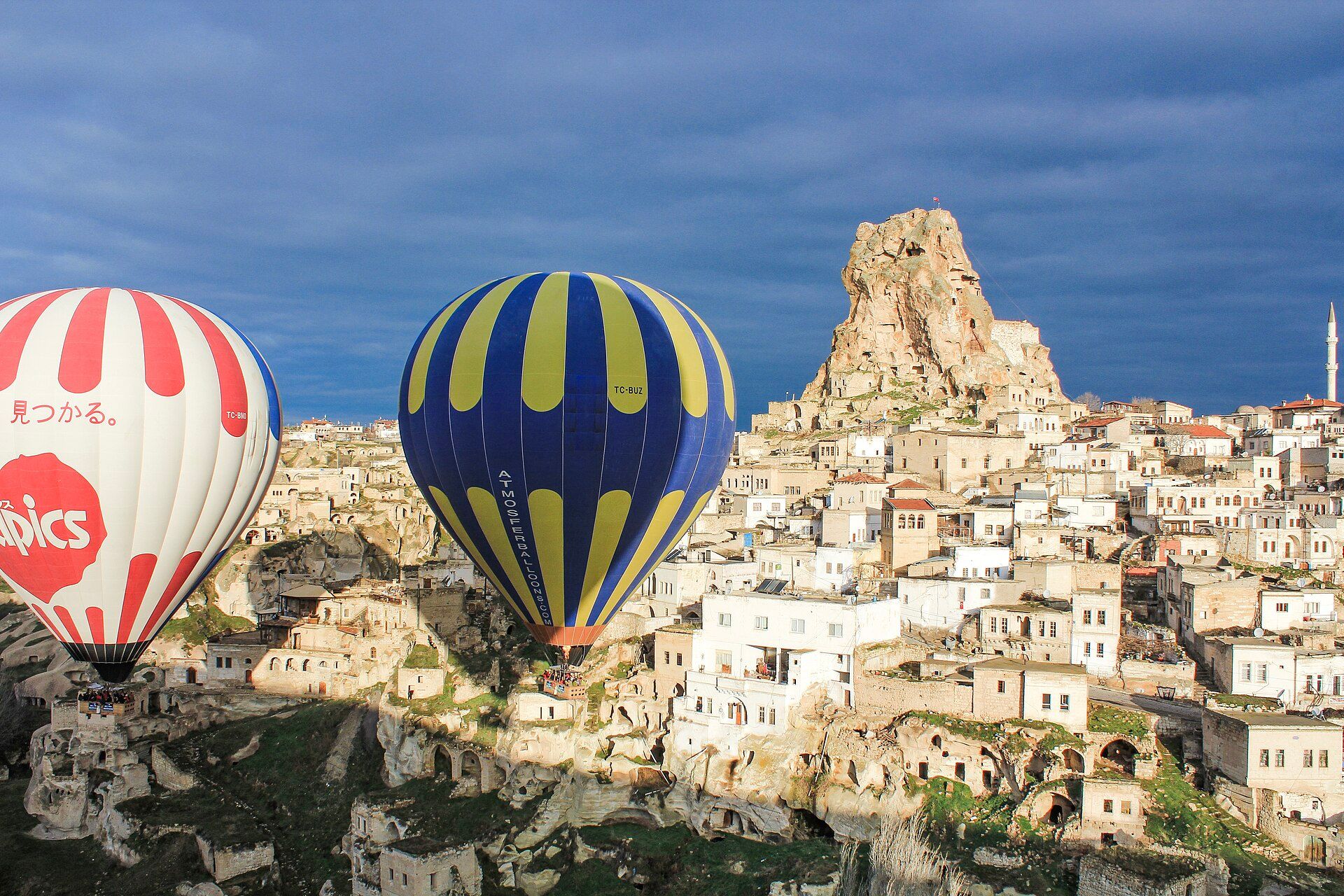
Eruptions buried central Anatolia in volcanic ash that hardened into soft tuff, often under a harder cap. Wind and water wore it into thousands of cones and pinnacles, the 'fairy chimneys'. People carved cave dwellings, frescoed churches and underground cities such as Derinkuyu into the rock, and the Göreme Open-Air Museum preserves rock-cut Byzantine chapels. On calm mornings dozens of hot-air balloons rise over the valleys. Göreme is half a day from Istanbul via Nevşehir or Kayseri.
- Dawn balloon flights over the valleys, weather permitting
- Underground cities and frescoed cave churches
- Quiet valley trails just below the busy viewpoints
Head to head
| What matters | Meteora | Cappadocia |
|---|---|---|
| The rock Edge: Toss-up | Massive sandstone and conglomerate pillars, a cluster of tall towers rising 300–400 m from a flat plain. | Soft volcanic tuff carved into thousands of smaller cones, pinnacles and chimneys across many valleys. |
| What people built Edge: Cappadocia | Monasteries on top of the pillars, six still working, each reached by steep stone steps. | Cave homes, rock-cut churches with frescoes and multi-level underground cities dug into the rock. |
| Signature experience Edge: Cappadocia | Sunrise or sunset at the marked viewpoints on the loop road, with mist between the pillars. | A dawn balloon flight — or watching the launch from a ridge, which costs nothing. |
| Getting there Edge: Toss-up | Train Athens → Kalambaka, roughly 4h30–5h, or drive. Base in Kalambaka or Kastraki. | Fly Istanbul → Nevşehir or Kayseri, roughly 1h15–1h30, then 45 min–1h15 by shuttle to Göreme. |
| Time needed Edge: Meteora | A full day, or two to see all six monasteries (each closes on a different day). | 2–3 days, so a grounded balloon flight can be moved to another morning. |
| Rules and logistics Edge: Toss-up | Strict dress code at every monastery: covered shoulders, long trousers for men, skirts below the knee for women. Check which are open on your day. | Balloon flights are grounded by the civil aviation authority in wind or poor visibility. The underground cities are narrow, low and steep. |
| Best months Edge: Toss-up | April–June and September–October; summer is hot and busy. | April–June and September–October for mild weather and reliable flying days; winter can bring snow. |
Which should you choose?
Choose Meteora if…
…you have a day or two on a Greece trip, want to combine dramatic geology with monasteries on the summits, and would rather take a train than a flight.
Choose Cappadocia if…
…you can give it two or three days, want a balloon flight or to watch one, and are drawn to cave churches, underground cities and long valley walks.
The honest verdict
Choose Meteora for a short, concentrated visit. The pillars are bigger and more vertical, the monasteries on top are the reason the place is famous, and you can see it in a day or two from Athens by train. Plan around the monasteries' closed days and the dress code.
Choose Cappadocia for a longer stay with more to do. The landscape is wider and the rock softer, the cave churches and underground cities are unlike anything at Meteora, and the dawn balloons are one of the best-known sights in travel. Allow spare mornings: flights are often cancelled for wind.
Both are at their best in April–June and September–October. If you only have a weekend, Meteora; if you have three days and want the balloons, Cappadocia.
Wonders mentioned here
Added