Head to head · Mexico's Barranca del Cobre vs Arizona's Grand Canyon
Copper Canyon vs Grand Canyon: Is Mexico's Canyon Really Bigger?
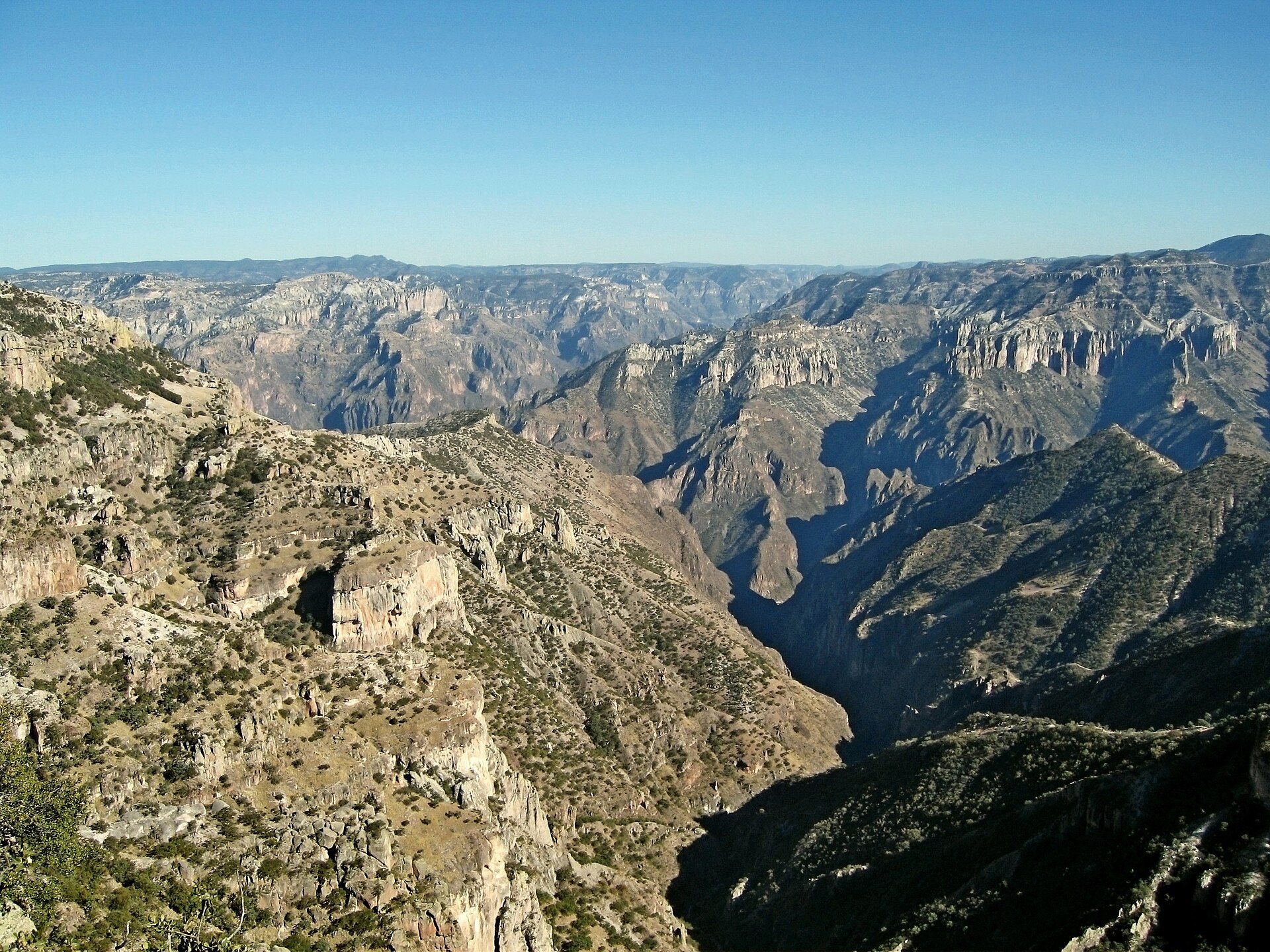
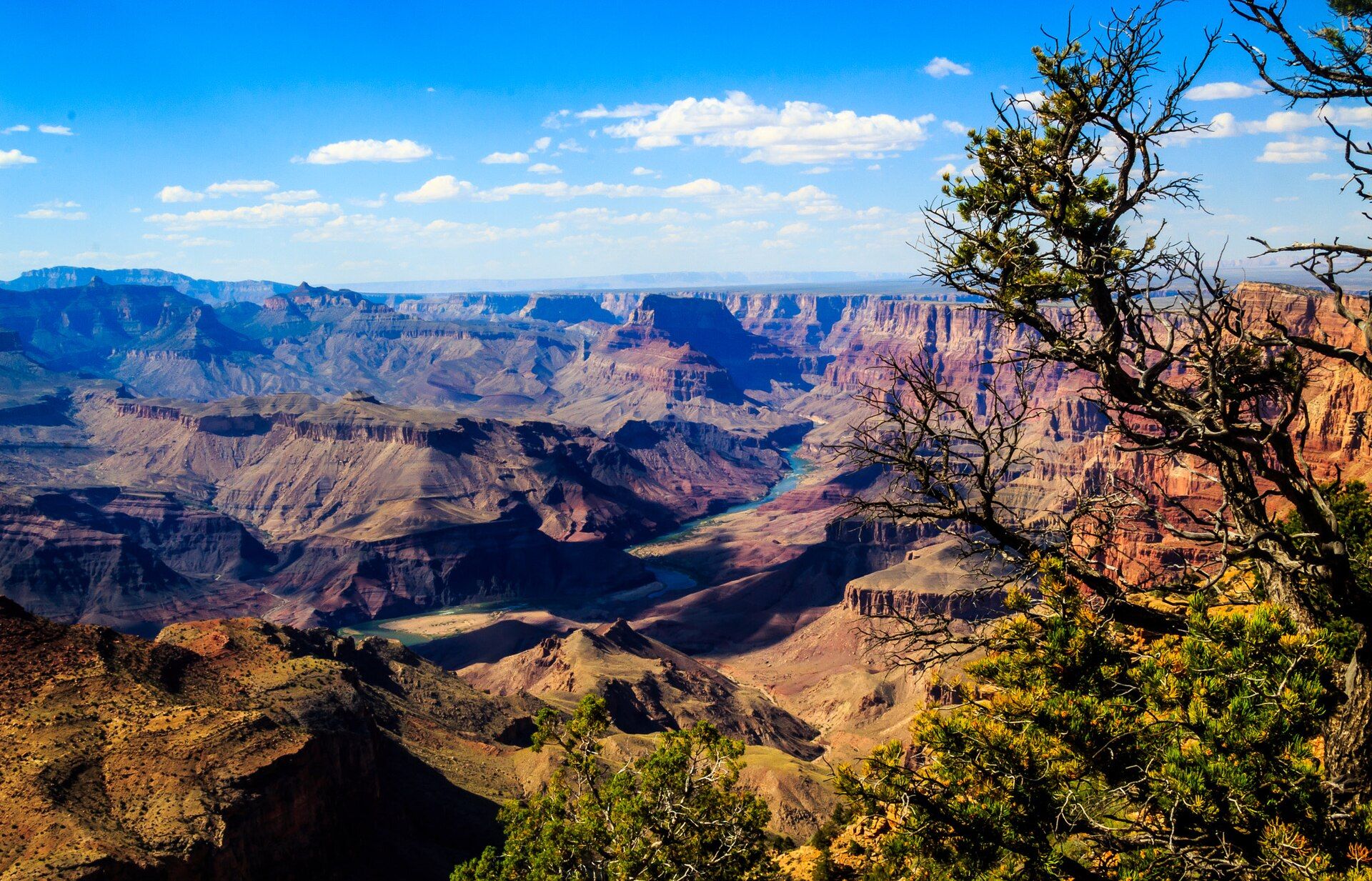
Copper Canyon — Barranca del Cobre — is not one canyon but a system of at least six, carved into the volcanic rock of Mexico's Sierra Tarahumara. Together they form a labyrinth far larger than the Grand Canyon, and several are deeper, plunging well over 1,800 m from pine-forested rims to subtropical valley floors. The Grand Canyon is a single chasm about 446 km long, up to 29 km wide and about 1.8 km (a mile) deep, whose walls lay bare nearly two billion years of rock down to the Vishnu Schist at the river.
So the answer to "which is bigger" is Copper Canyon, by area and in places by depth. The answer to "which is more impressive from the rim" is harder: the Grand Canyon's single, banded wall is the more legible spectacle, while Copper Canyon is a journey — a day on the Chepe railway, breaking at Divisadero or Creel.
Copper Canyon
Six canyons, one railway
A network of at least six canyons in the Sierra Tarahumara of Chihuahua, deeper in places than the Grand Canyon, crossed by the Chepe railway and home to the Rarámuri (Tarahumara) people.
- Larger and in places deeper than the Grand Canyon
- The Chepe railway — one of the world's great train rides
- Far quieter than North America's famous canyons
Grand Canyon
A mile deep, two billion years of rock
A ~446 km chasm up to 29 km wide and ~1.8 km deep, carved by the Colorado River and exposing an almost unbroken rock record; UNESCO World Heritage Site and national park.
- The classic single view: banded walls glowing at sunrise and sunset
- Easy rim access with shuttles, paved paths and full facilities
- Rafting and inner-canyon hikes for those who prepare
Head to head
| What matters | Copper Canyon | Grand Canyon |
|---|---|---|
| Size Edge: Copper Canyon | A system of at least six canyons, together far larger than the Grand Canyon; several drop well over 1,800 m. | ~446 km long, up to 29 km wide, ~1.8 km deep. |
| What you see Edge: Toss-up | Green-tinged volcanic gorges falling from pine forest to subtropical valleys, with cliff-edge villages. | Layer upon layer of red, ochre and violet strata down to rock nearly two billion years old. |
| How you see it Edge: Toss-up | From the Chepe railway between Los Mochis and Chihuahua, then rim viewpoints, a cable car, guided hikes or horseback trips from Divisadero or Creel. | From rim viewpoints and paved paths on the South Rim, with shuttle buses; below the rim on steep trails or a rafting trip. |
| Getting there Edge: Grand Canyon | Fly to Chihuahua or Los Mochis, then a full day on the train to the rim towns. | Drive 3h30–4h30 from Phoenix or 4–5 h from Las Vegas; about 1h30 from Flagstaff. |
| Crowds Edge: Copper Canyon | Far quieter; the train and Divisadero are the busiest points. | South Rim busy spring through autumn, worst around midday at Mather Point and Bright Angel. |
| Best months Edge: Toss-up | October–April for comfortable temperatures on the rim; summer rains green the slopes. | Spring and autumn (March–May, September–November); summer is hot and crowded. The higher North Rim is seasonal — check the NPS for its status. |
| Going below the rim Edge: Toss-up | Hiking into the canyons is best with a local guide; the floors are warm while the rim is cool. | Overnight trips below the rim need a backcountry permit with demand far above supply; never hike to the river and back in one day. |
| Time needed Edge: Grand Canyon | 2–4 days to ride the railway and explore the rim and canyons. | 1–2 days on the rim; 2–3 days to go down to the river. |
| Facilities Edge: Grand Canyon | Hotels and services in Creel, Divisadero and the rail towns; little deep in the canyons. Carry cash. | Extensive at Grand Canyon Village: lodging, food, shuttles and a medical clinic. |
Which should you choose?
Choose Copper Canyon if…
…you want a slow, multi-day journey by train through a canyon country that few people visit, and the Rarámuri culture that lives in it.
Choose Grand Canyon if…
…you want the single most famous canyon view, easy access by road, and the option of going deep with a permit or a raft.
The honest verdict
Copper Canyon is the bigger system, and in places the deeper one — but its scale is spread across at least six canyons, so it reveals itself over days from the train and the rim towns rather than in one look.
The Grand Canyon is the more immediate spectacle: one vast, banded wall that you can stand in front of after a short drive from Flagstaff, with services to match. That also means crowds — go early or late in the day, when the low sun gives the layers their depth.
Pick by trip style: a quiet rail journey through Mexico's Sierra Tarahumara, or an easy, famous road-trip stop in Arizona.
Wonders mentioned here
Added