Head to head · Utah's arch park vs the Navajo Nation's buttes
Arches vs Monument Valley: Which Red-Rock Icon Should You Visit?
Arches and Monument Valley are both red sandstone landscapes on the Colorado Plateau, and both are reached from Moab — Arches sits just north of the town, and Monument Valley is approached from Moab on the north side as well as from Flagstaff and Page in Arizona. They look different, though, and they work differently.
Arches is a US national park protecting more than 2,000 documented natural arches, the densest concentration in the world. Monument Valley is not a national park at all: it is Monument Valley Navajo Tribal Park, on Navajo Nation land, with its own entry fee, opening hours and rules. A national parks pass does not work there.
Arches
2,000+ stone arches, fins and balanced rocks
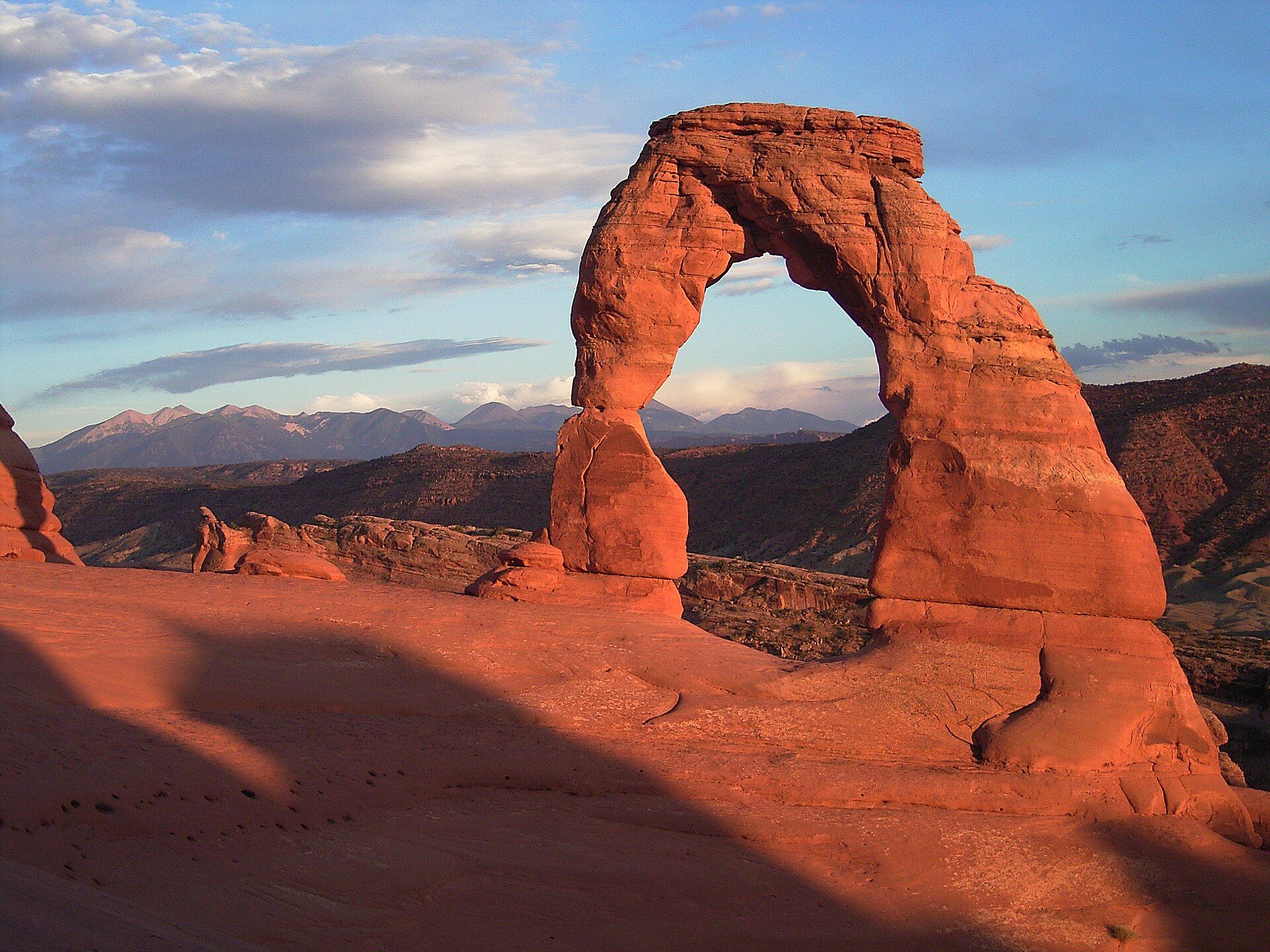
A salt layer deep below buckled Arches' Entrada sandstone into parallel fins; water freezing in the cracks hollows them until a window opens into an arch, which eventually collapses. Delicate Arch, a lone 16-metre span on the lip of a sandstone bowl with the La Sal Mountains behind, is the icon. A paved park road links the trailheads.
- Delicate Arch at sunset (or, almost empty, at sunrise)
- Many famous arches within short walks of a paved road
- Moab as a base for Canyonlands and the rest of red-rock Utah
Monument Valley
Lone buttes on a desert plain
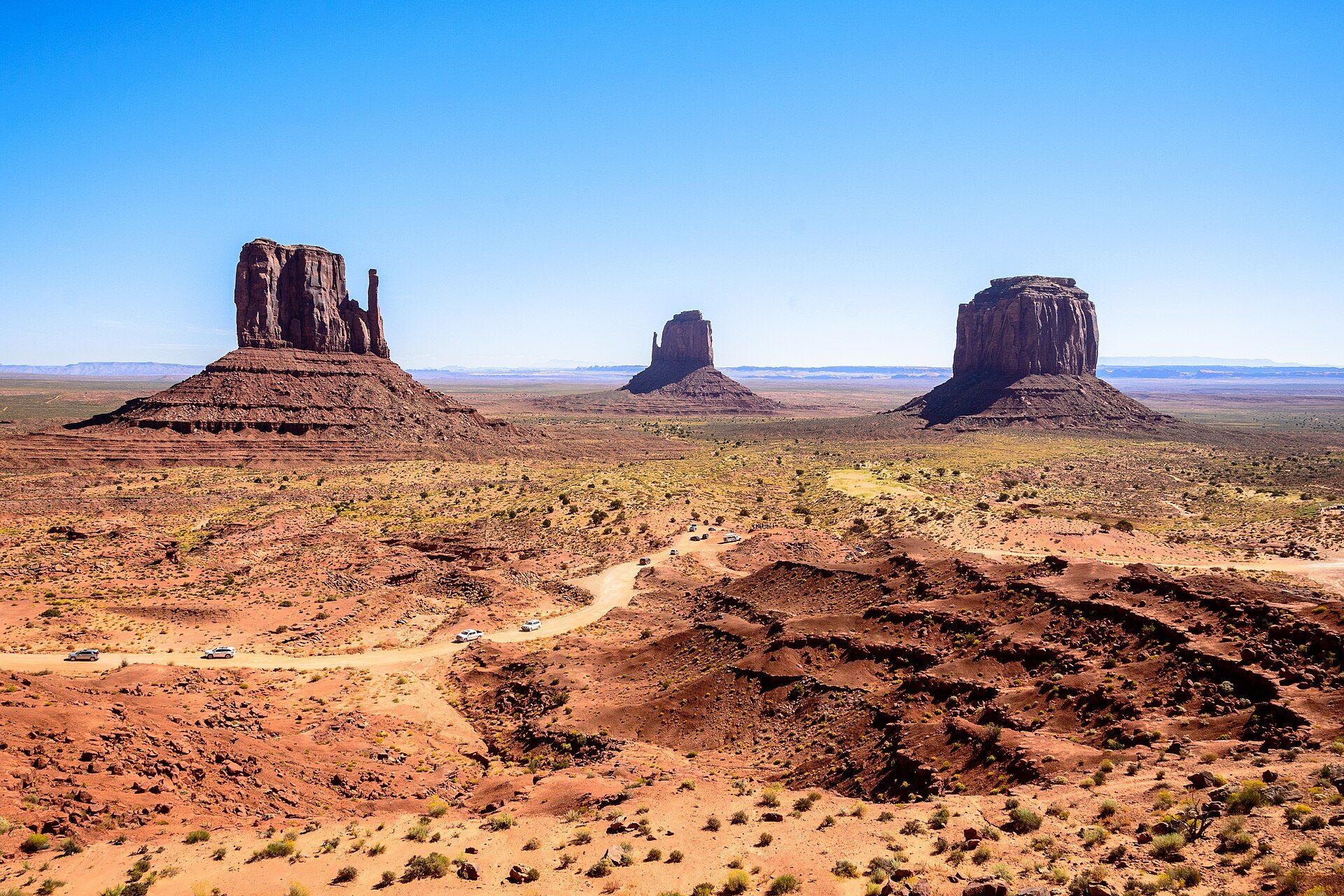
Over some 50 million years, wind and water stripped back a high plateau of layered sandstone, leaving only the hardest remnants as isolated buttes and mesas — several rising 250 to 300 metres straight from the flats. The valley is Navajo land and home to Navajo families, and is managed by the Navajo Nation as a tribal park.
- The Mittens and the classic Western silhouettes at dawn and dusk
- A self-drive 17-mile (27 km) scenic loop
- Navajo-guided trips into the backcountry
Head to head
| What matters | Arches | Monument Valley |
|---|---|---|
| The scenery Edge: Toss-up | Close-up rock architecture: arches, fins, spires and balanced boulders you walk among. | Wide-open views of huge isolated buttes on a flat desert floor, best seen from a distance. |
| Who runs it Edge: Arches | The US National Park Service. Entry fee; the park has used a timed-entry reservation system in its busy months. | Navajo Parks and Recreation. Its own fee and hours; national park passes are not valid. The park has closed to visitors for long periods before, so check that it is open. |
| Roads Edge: Arches | A paved park road to every main viewpoint and trailhead. | The scenic loop is a rough, rutted dirt road with washboard and soft sand; low-clearance cars struggle and some rental agreements forbid it. |
| Walking and guides Edge: Arches | Short walks and slickrock scrambles — Delicate Arch and Devils Garden are the classics. No guide needed; the Fiery Furnace needs a permit or a ranger-led trip. | Little walking on the self-drive loop. The backcountry beyond it can only be visited with a Navajo guide, and photographing people or homes needs permission. |
| Time needed Edge: Monument Valley | A full day; two if you want Delicate Arch at both ends of the day. | The loop takes 2–3 hours; stay a night nearby to see the buttes at dawn and dusk. |
| Season Edge: Toss-up | April–May and September–October. Summer is punishingly hot; winter is quiet, with occasional snow. | April–May and September–October. At around 1,700 m it is very hot in summer and freezing in winter, sometimes with snow on the buttes. |
| Facilities Edge: Arches | Visitor centre at the entrance; Moab, next to the park, has every service. | A visitor centre, hotel and dining at the rim — and nothing at all on the loop. Bring cash for the gate and guides, and plenty of water. |
Which should you choose?
Choose Arches if…
…you want to walk among the rock formations, prefer paved roads, or are basing yourself in Moab for a few days.
Choose Monument Valley if…
…you want the classic Western panorama, have a vehicle you are happy to take on a dirt loop, and would like to see the land with a Navajo guide.
The honest verdict
For a first red-rock trip with short walks and easy logistics, Arches is the simpler choice: paved roads, Moab's services next door, and dozens of arches within a short walk.
Monument Valley is the better choice for the landscape itself — the view of lone buttes on the plain is unlike anything inside Arches — but treat it as a visit to Navajo land with its own rules, not as another national park.
Both reward the first and last hours of light. Check the NPS for Arches' timed-entry dates and Navajo Parks and Recreation for Monument Valley's current opening status before you go.
Wonders mentioned here
Added