Balabac Islands
📍 Balabac, southern Palawan
A remote cluster of islands off Palawan's southern tip, ringed by blindingly white and faintly pink sandbars, clear shallow lagoons, and some of the last dugong (sea cow) habitat in the country.
What makes it marvelous
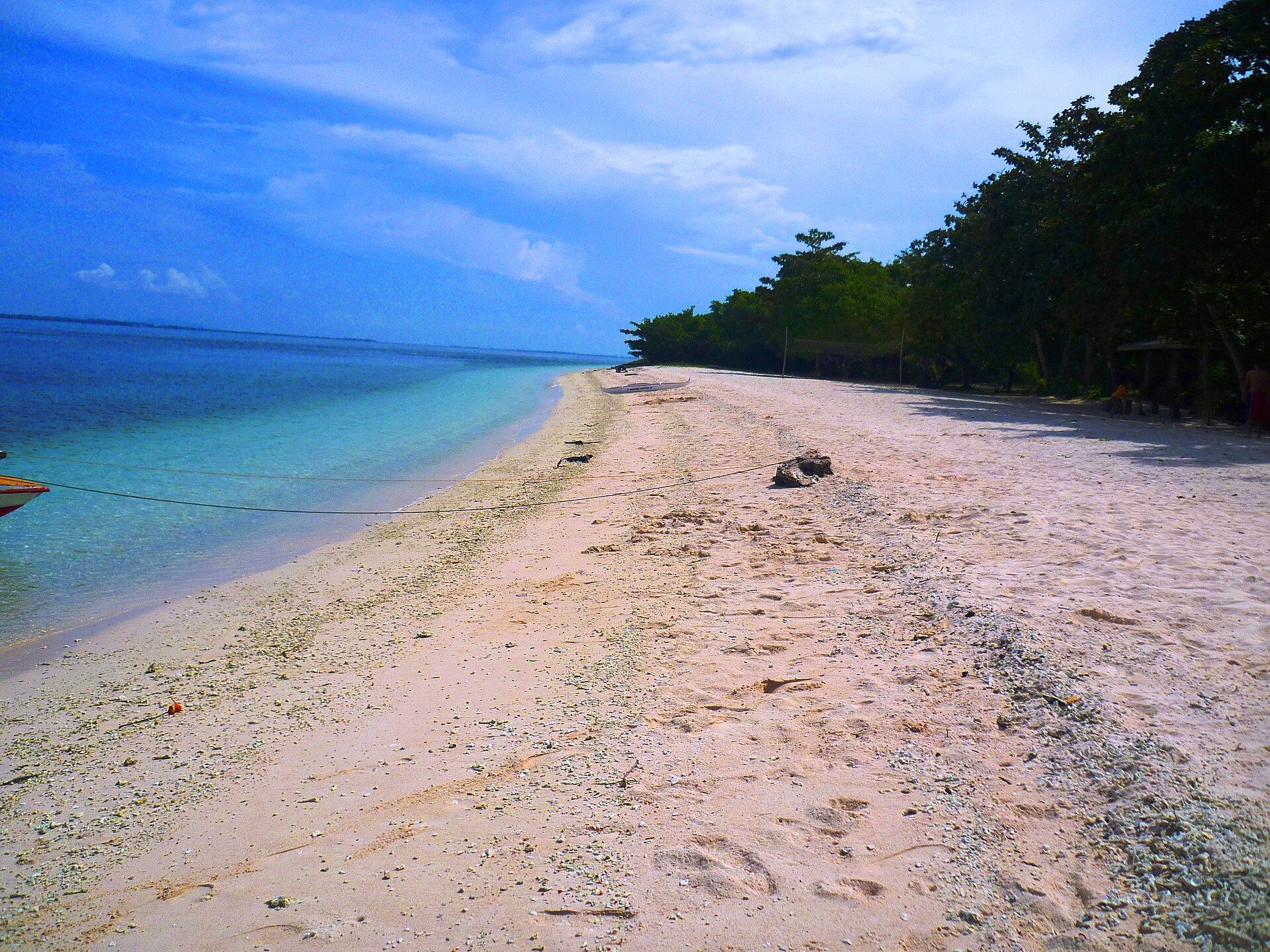
Balabac sits where the Sulu and South China Seas meet, a scatter of coral islands fringed by immense sandbars — Onuk, Punta Sebaring, and others — whose sand can take on a soft pink blush from crushed red coral and shells. The clear, shallow seagrass meadows here shelter dugongs — slow, seagrass-grazing marine mammals that can exceed 300 kilograms — alongside turtles and healthy reefs. Its remoteness has kept it largely pristine.
Why visit
It's the Philippines at its most untouched: long empty sandbars, water in impossible gradients of turquoise, and a real (if never guaranteed) chance to see a dugong grazing the seagrass. Island-hopping here feels like reaching the edge of the map.
What to know before you go
🗓️ Best time
The dry season (roughly March–May) for calm seas on the long boat crossings; the area is exposed and trips are weather-dependent.
🧭 Getting there & access
A long journey: from Puerto Princesa overland to Rio Tuba, then several hours by boat to Balabac. Multi-day island-hopping tours with local operators are the norm; infrastructure is basic.
Good to know
- Come with time and flexibility — crossings are long and weather-dependent.
- Keep your distance from dugongs and turtles; never chase or touch them.
- Pack in supplies and pack out all waste; facilities are minimal.
Plan your visit
Moderate🧭 Getting there
From Puerto Princesa (PPS), Palawan
- Fly → Puerto Princesa
- Van Puerto Princesa → Rio Tuba — roughly 5h–7h on a long southern road
- Boat Rio Tuba → Balabac town — about 2h30–4h across open water, weather permitting
- Island-hopping by small boat from Balabac town
- Total travel
- A very long day, and often an overnight in Rio Tuba
- Time at site
- Three or four days minimum, given what it costs to get there
- Access
- No permit is needed to travel, but the practical constraints are real. Crossings are cancelled in rough weather with no alternative, so build in spare days at both ends. Balabac sits close to the maritime border and travel advisories for the southern Palawan and Sulu Sea area have varied over the years — check your government's current advice and the local coastguard position before committing. Most visitors travel with a local operator, which is also how boat and homestay logistics actually get solved.
🎒 What to bring & consider
- Malaria precautions taken seriously — Balabac is one of the few places in the Philippines where malaria still circulates. Talk to a travel clinic well before you go, and bring good repellent and long sleeves for dusk
- Cash for the whole trip in small notes: there is no reliable ATM once you leave Puerto Princesa
- A power bank and torch, since island electricity is generator-run and scheduled for a few hours
- Sun and salt protection for long open-boat days with no shade at all
- Spare days in the itinerary, because the sea decides when you leave and when you get back
👁️ What to expect
- Crowds
- Almost none. This is still one of the least visited corners of Palawan, which is the whole appeal.
- Conditions
- Long, hot boat days on open water. Basic homestays. Sandbars that appear and vanish with the tide.
- Facilities
- Minimal — homestays, small eateries, limited power and patchy signal. Nothing resembling a resort.
- The view
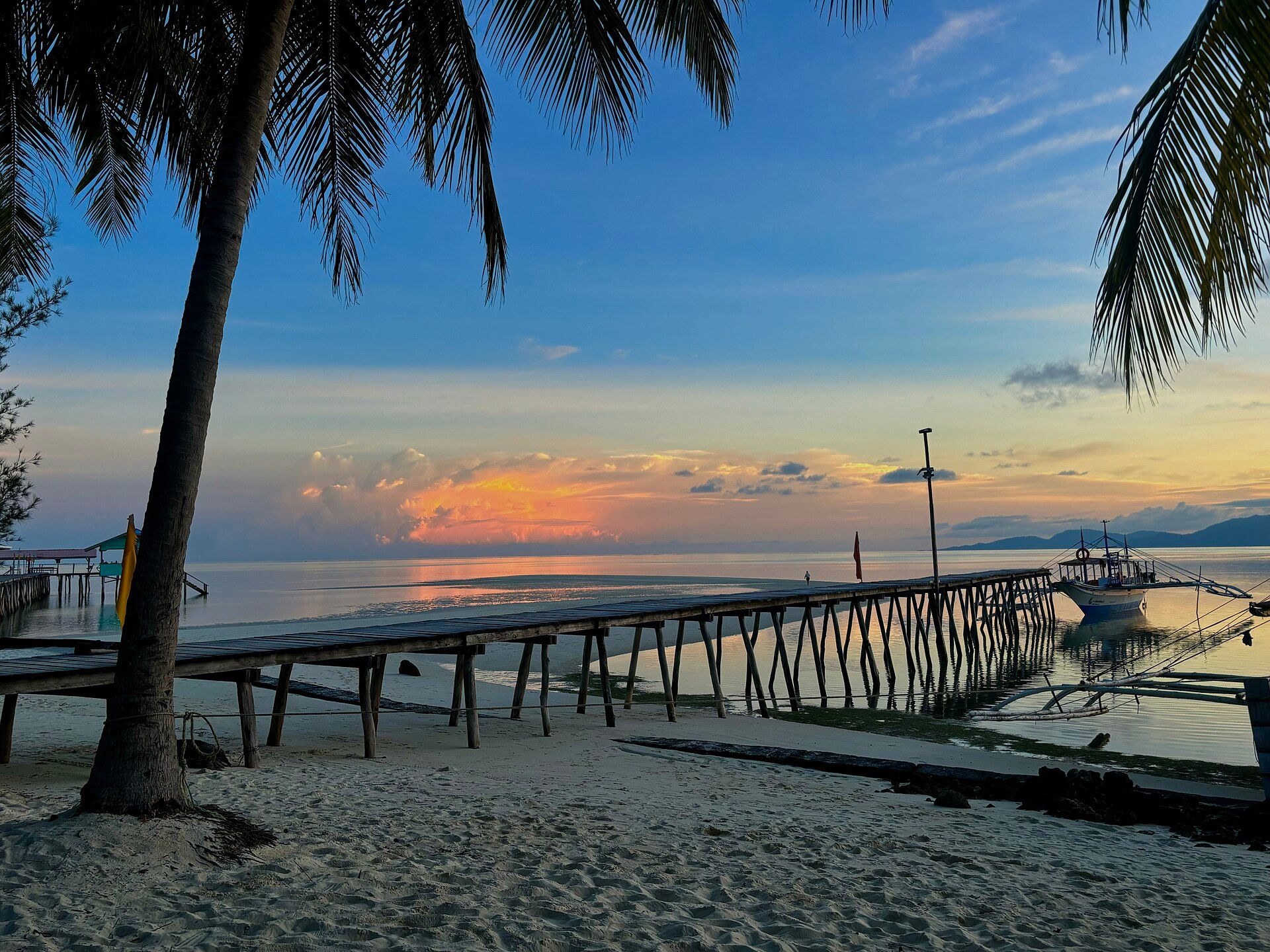
- Onuk Island's sandbar and stilt cottages over impossibly clear shallows. Access to Onuk is controlled locally and arranged through the operator rather than turned up to, and the tide dictates whether the sandbar is there at all.
Times and requirements are approximate and change with season, weather, and local rules — confirm permits, fares, and schedules with operators before you travel.
Natural riches of the area
- Extensive white-and-pink coral sandbars
- Seagrass meadows sheltering dugongs and turtles
- Healthy fringing coral reefs
- Rich fishing grounds at the meeting of two seas
Local food
- Fresh grilled seafood
- Reef fish, squid, and shellfish landed daily and grilled simply.
- Lato & kinilaw
- Crunchy sea grapes and vinegar-cured raw fish, coastal staples.
- Coconut & tropical fruit
- Fresh buko and Palawan cashews to round out island meals.
Balabac is where the Philippine map runs out. At Palawan’s southern tip, where the Sulu and South China Seas meet, a scatter of coral islands is fringed by some of the most beautiful sandbars in the country — vast, blinding white, and in places faintly pink from crushed red coral and shells. The water shifts through every shade of turquoise, and the sandbars run for hundreds of metres into the shallows.
Beneath the surface lies the real treasure: seagrass meadows that shelter dugongs — slow, plant-eating marine mammals that can exceed 300 kilograms and graze the beds like underwater cattle — along with turtles and living reefs. Getting here takes real effort — hours overland and hours more by boat — and that difficulty is exactly what has kept Balabac so pristine. Visited slowly and gently, it’s one of the last truly wild corners of Palawan.
Balabac Islands: common questions
How do you get to Balabac Islands?
From Puerto Princesa (PPS), Palawan: Fly → Puerto Princesa; Van Puerto Princesa → Rio Tuba — roughly 5h–7h on a long southern road; Boat Rio Tuba → Balabac town — about 2h30–4h across open water, weather permitting; Island-hopping by small boat from Balabac town. Total travel time: A very long day, and often an overnight in Rio Tuba.
When is the best time to visit Balabac Islands?
The dry season (roughly March–May) for calm seas on the long boat crossings; the area is exposed and trips are weather-dependent.
How long should you spend at Balabac Islands?
Three or four days minimum, given what it costs to get there. Total travel time: A very long day, and often an overnight in Rio Tuba.
What should you bring to Balabac Islands?
Malaria precautions taken seriously — Balabac is one of the few places in the Philippines where malaria still circulates. Talk to a travel clinic well before you go, and bring good repellent and long sleeves for dusk Cash for the whole trip in small notes: there is no reliable ATM once you leave Puerto Princesa A power bank and torch, since island electricity is generator-run and scheduled for a few hours Sun and salt protection for long open-boat days with no shade at all Spare days in the itinerary, because the sea decides when you leave and when you get back
Do you need a permit or guide for Balabac Islands?
No permit is needed to travel, but the practical constraints are real. Crossings are cancelled in rough weather with no alternative, so build in spare days at both ends. Balabac sits close to the maritime border and travel advisories for the southern Palawan and Sulu Sea area have varied over the years — check your government's current advice and the local coastguard position before committing. Most visitors travel with a local operator, which is also how boat and homestay logistics actually get solved.
Is Balabac Islands crowded, and what are conditions like?
Almost none. This is still one of the least visited corners of Palawan, which is the whole appeal. Long, hot boat days on open water. Basic homestays. Sandbars that appear and vanish with the tide. Facilities: Minimal — homestays, small eateries, limited power and patchy signal. Nothing resembling a resort.
Added Updated