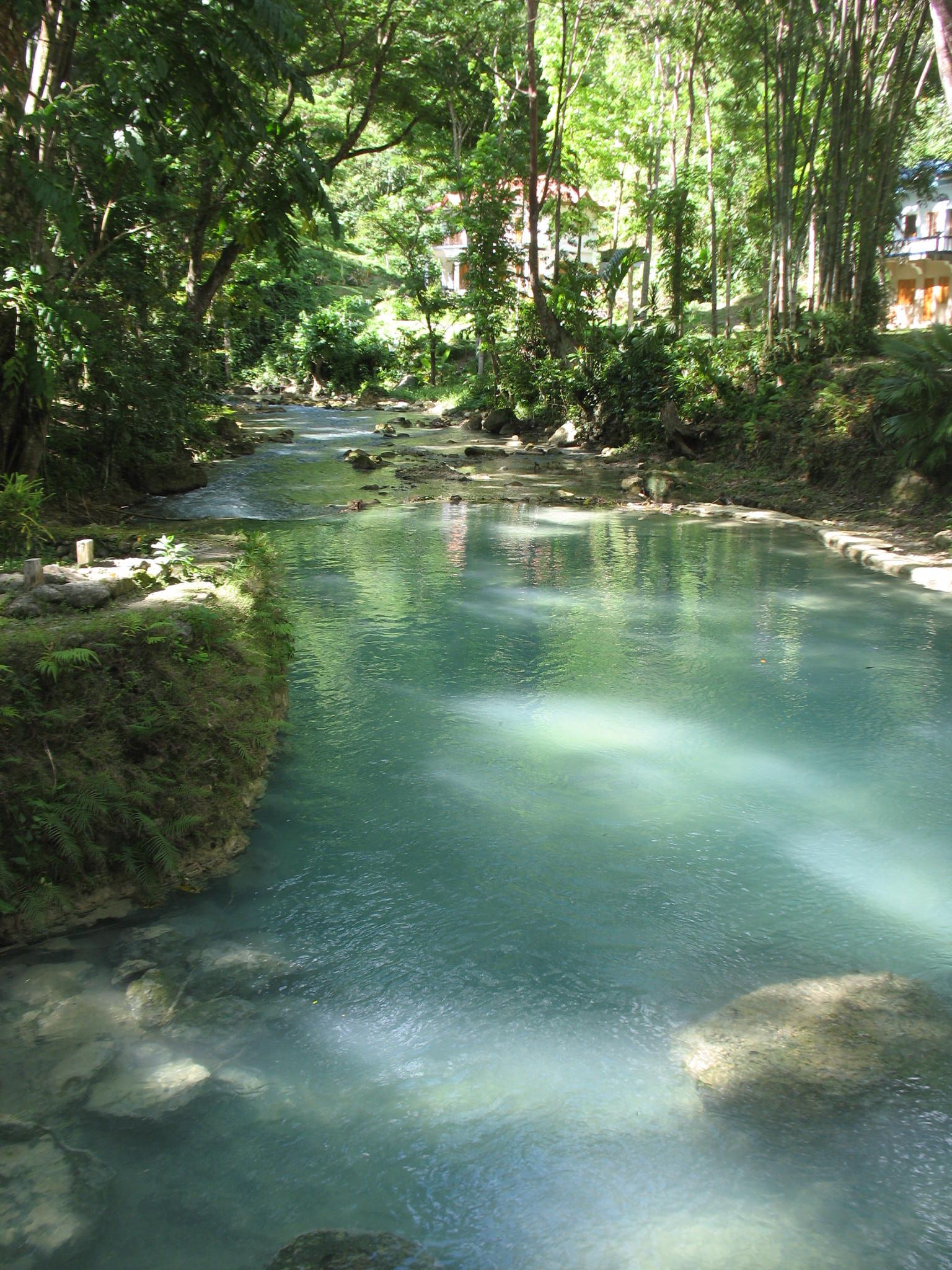
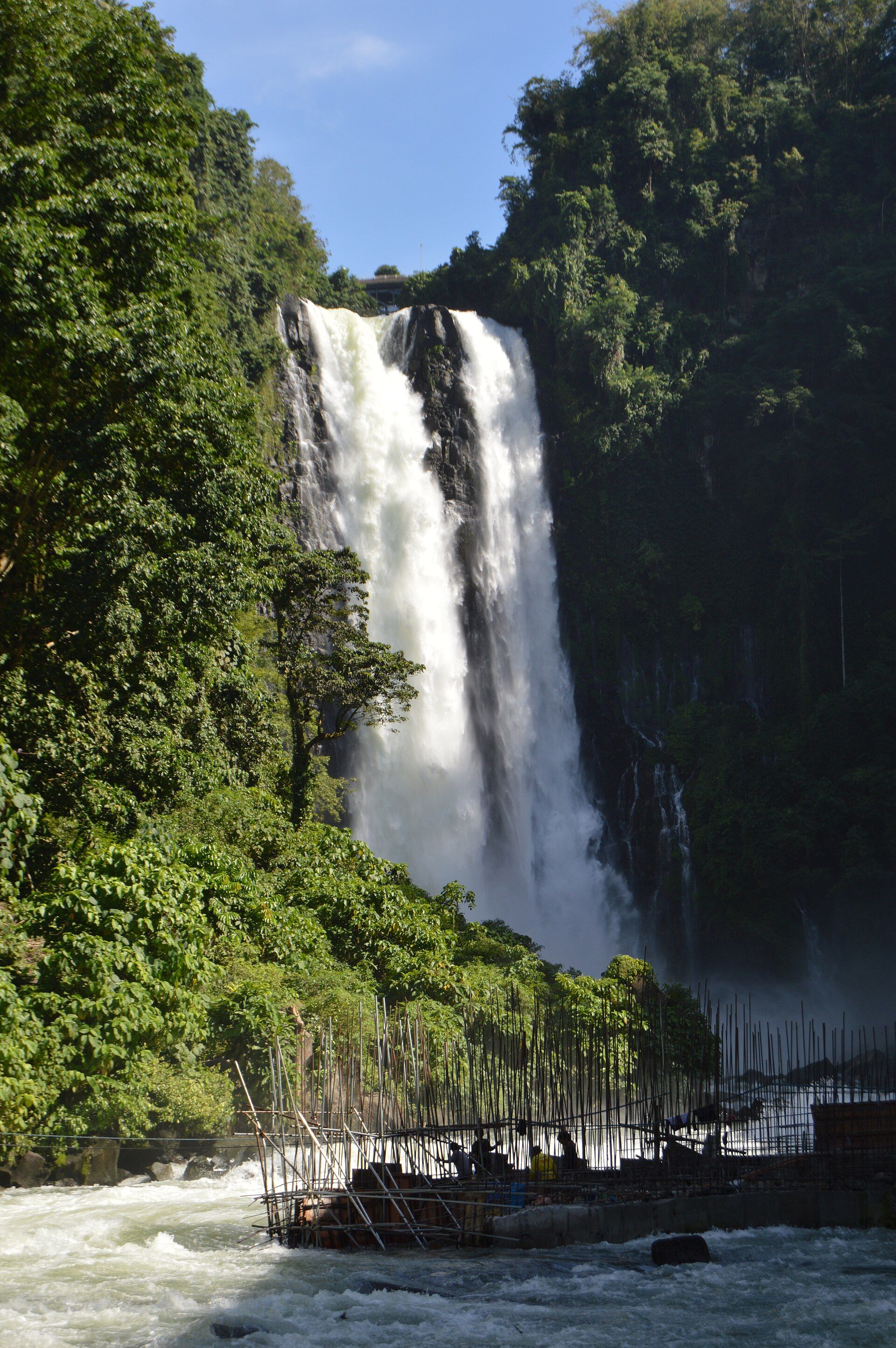
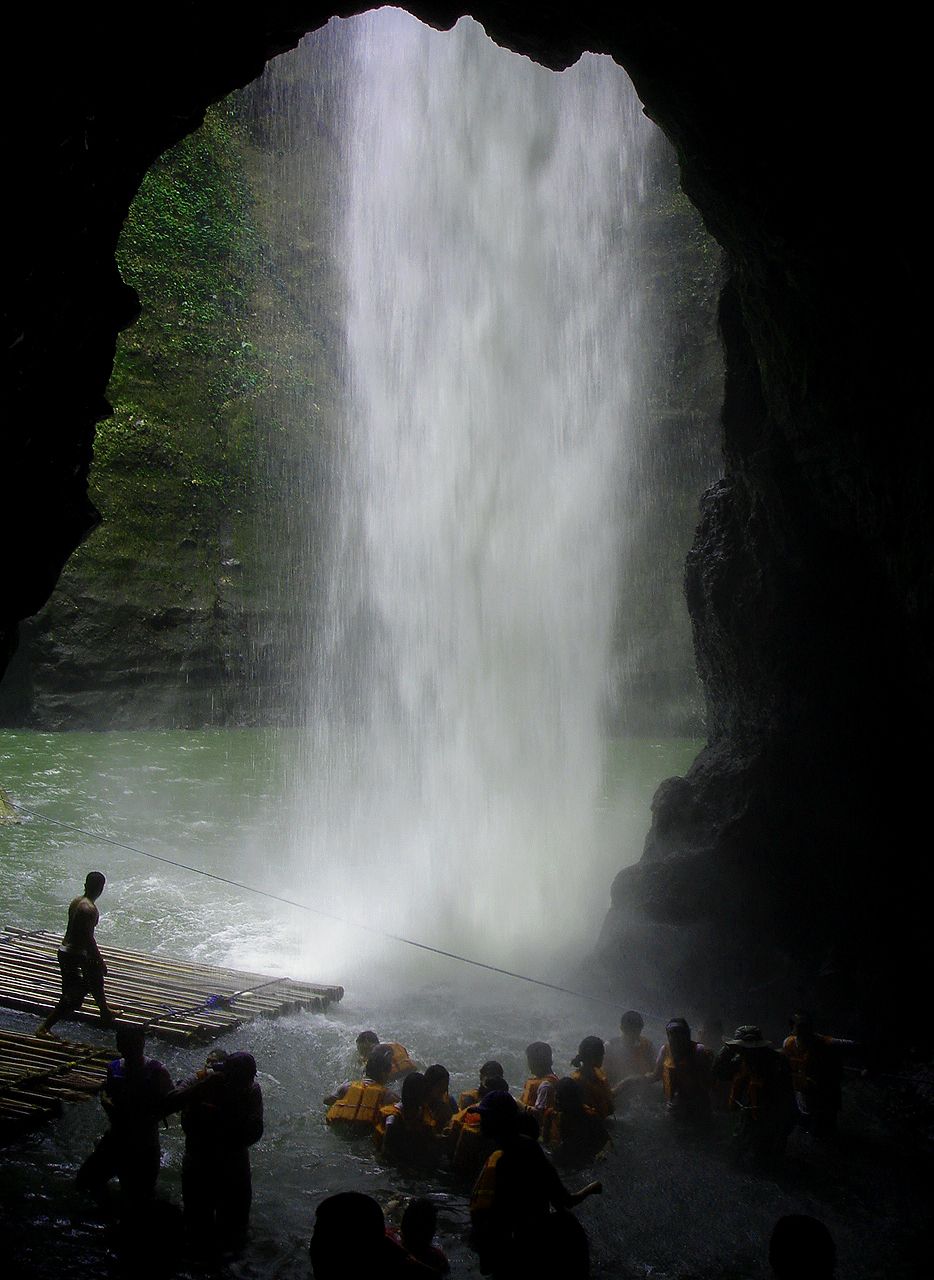
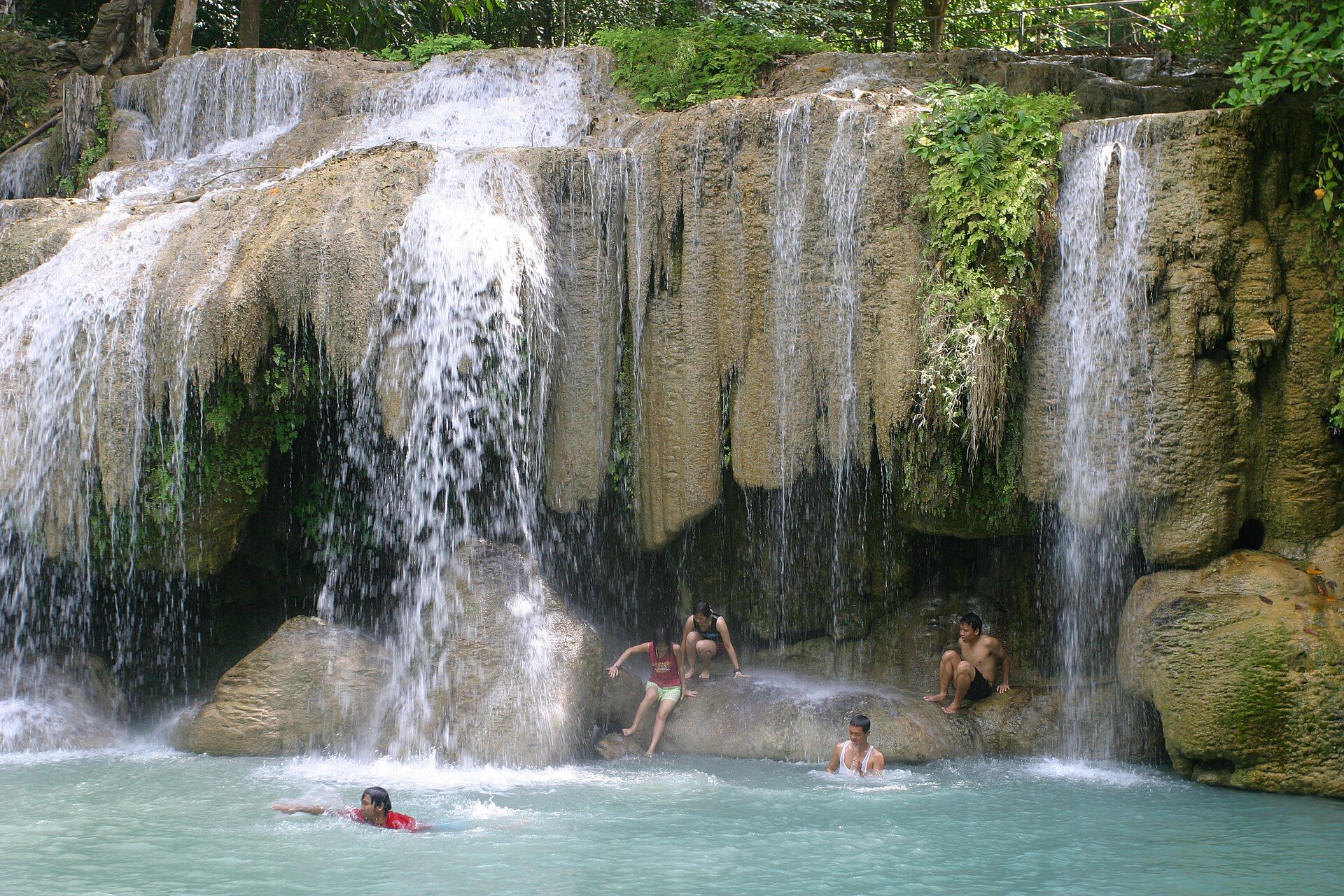
Aliwagwag Falls
📍 Cateel, Davao Oriental, Mindanao
A towering 'stairway' waterfall in eastern Mindanao where the Cateel River tumbles down a long series of cascades — often described as a natural staircase of dozens of tiers dropping through rainforest.
What makes it marvelous
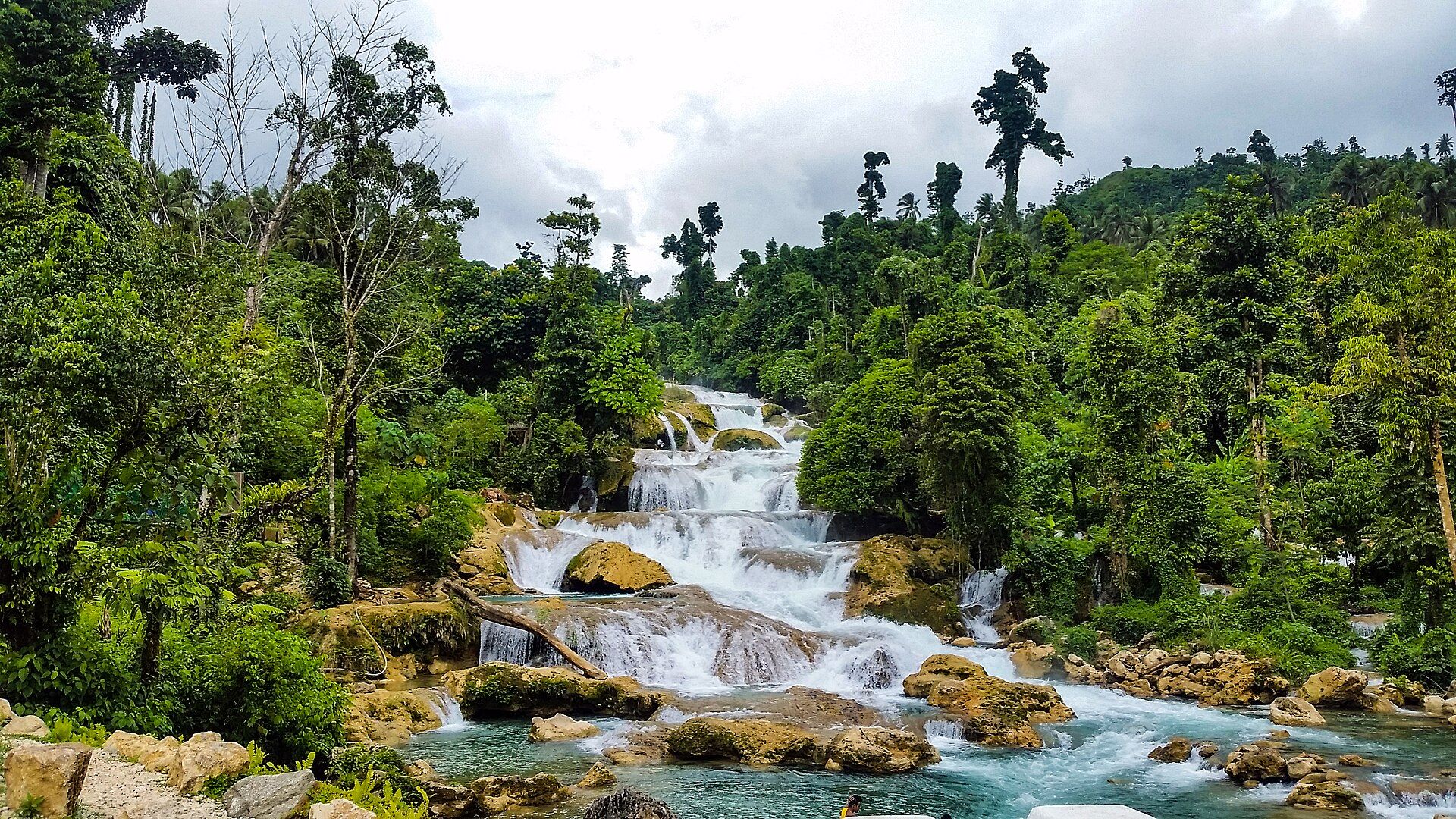
Aliwagwag isn't a single plunge but a spectacular sequence of cascades, the river dropping in tier after tier down a steep, forested slope — locals traditionally counted it as a 'stairway' of many steps, and it ranks among the tallest waterfall systems in the country. Fed by the high rainfall of the Davao Oriental highlands, it runs powerfully through a lush protected landscape rich in Mindanao forest life.
Why visit
The scale and the setting are the draw: a long white staircase of water threading down through green rainforest, with pools, a canopy walk and zipline at the eco-park, and the sense of a wild, less-visited corner of Mindanao.
What to know before you go
🗓️ Best time
Drier stretches for clearer weather and safer water levels; this is a high-rainfall region, so expect showers and strong flow. Avoid the falls during and after heavy rain.
🧭 Getting there & access
From Cateel in Davao Oriental (reached via Mati or Davao), then to the Aliwagwag Protected Landscape eco-park. Entrance and activity fees apply.
Good to know
- Don't enter the river during or after heavy rain — flash floods are a danger.
- Try the canopy walk and zipline for a view over the cascades.
- Roads can be rough; a local guide or driver helps.
Plan your visit
Easy🧭 Getting there
From Davao City (DVO) or Mati, Davao Oriental
- Fly → Davao (DVO)
- Van or bus Davao → Cateel — roughly 6h–8h on a long coastal road
- Habal-habal or van Cateel → Aliwagwag Eco Park — about 30–40 minutes
- Total travel
- A full day of road from Davao, which is the real cost of this one
- Time at site
- Half a day at the park; an overnight in Cateel makes the journey sane
- Access
- A protected landscape with an entrance fee and a developed eco-park at the base. The falls are a long stack of tiers rather than a single drop, and only the lower section is open for swimming. In heavy rain the river swells fast and staff close the pools — the wet season here is genuinely wet. Check conditions with the park before making the drive from Davao.
🎒 What to bring & consider
- A whole day allocated to road travel in each direction, because the distance from Davao is what defeats most itineraries here
- Motion sickness treatment for a winding coastal highway
- Water shoes for slippery river rock at the swimming tiers
- Repellent and quick-dry clothes for humid lowland forest
- Cash, as card acceptance in Cateel is minimal
👁️ What to expect
- Crowds
- Light on weekdays. Domestic families and school groups on weekends and holidays.
- Conditions
- Hot and humid, with easy walkways and viewing decks. Rock is slick everywhere near the water.
- Facilities
- Better than the remoteness suggests — decks, a hanging bridge, zipline, cottages and food stalls.
- The view
- The full stack of tiers from the viewing deck, which needs a wide lens and reasonable flow. In the dry months the volume drops and it reads as a series of streams rather than the staircase it is famous for.
Times and requirements are approximate and change with season, weather, and local rules — confirm permits, fares, and schedules with operators before you travel.
Natural riches of the area
- The Cateel River and high-rainfall highland watershed
- Extensive Mindanao rainforest and canopy
- Rich forest and freshwater biodiversity
- Downstream farmland and coastal fisheries
Local food
- Tuna & fresh seafood
- From the nearby Pacific coast of Davao Oriental.
- Suman & native cacao
- Sticky rice cakes and stone-ground tableya hot chocolate.
- Tropical fruit
- Durian, mangosteen, and marang from the fertile region.
Aliwagwag is a waterfall you take in from top to bottom rather than in a single glance. Instead of one great plunge, the Cateel River descends a long, steep, forested slope in cascade after cascade — a natural staircase of water that tradition counts in dozens of tiers, making it one of the tallest waterfall systems in the Philippines. Fed by the heavy rainfall of the Davao Oriental highlands, it runs strong and loud through deep rainforest.
It sits in a protected landscape well off the usual tourist routes, in a corner of Mindanao richer in forest than in visitors. An eco-park adds a canopy walk and zipline for a view down the staircase of cascades. As with all of the region’s powerful falls, the river demands respect: give it a wide berth during and after heavy rain, when it can flood fast.
Aliwagwag Falls: common questions
How do you get to Aliwagwag Falls?
From Davao City (DVO) or Mati, Davao Oriental: Fly → Davao (DVO); Van or bus Davao → Cateel — roughly 6h–8h on a long coastal road; Habal-habal or van Cateel → Aliwagwag Eco Park — about 30–40 minutes. Total travel time: A full day of road from Davao, which is the real cost of this one.
When is the best time to visit Aliwagwag Falls?
Drier stretches for clearer weather and safer water levels; this is a high-rainfall region, so expect showers and strong flow. Avoid the falls during and after heavy rain.
How long should you spend at Aliwagwag Falls?
Half a day at the park; an overnight in Cateel makes the journey sane. Total travel time: A full day of road from Davao, which is the real cost of this one.
What should you bring to Aliwagwag Falls?
A whole day allocated to road travel in each direction, because the distance from Davao is what defeats most itineraries here Motion sickness treatment for a winding coastal highway Water shoes for slippery river rock at the swimming tiers Repellent and quick-dry clothes for humid lowland forest Cash, as card acceptance in Cateel is minimal
Do you need a permit or guide for Aliwagwag Falls?
A protected landscape with an entrance fee and a developed eco-park at the base. The falls are a long stack of tiers rather than a single drop, and only the lower section is open for swimming. In heavy rain the river swells fast and staff close the pools — the wet season here is genuinely wet. Check conditions with the park before making the drive from Davao.
Is Aliwagwag Falls crowded, and what are conditions like?
Light on weekdays. Domestic families and school groups on weekends and holidays. Hot and humid, with easy walkways and viewing decks. Rock is slick everywhere near the water. Facilities: Better than the remoteness suggests — decks, a hanging bridge, zipline, cottages and food stalls.
Added Updated
More wonders to explore