Nature route · Full loop
Bolivia: Dinosaur Canyons, Sajama & the Salt Flat
Torotoro's canyons and dinosaur tracks, the snow cone of Sajama, then the Salar de Uyuni and the red waters of Laguna Colorada — Bolivia's high country in two weeks, climbing in stages.
A fourteen-day route that ascends in stages: three nights in Torotoro, two in La Paz, two in Sajama National Park below Bolivia's highest mountain, then the classic three-day 4x4 tour from Uyuni across the salt flat to Laguna Colorada.
- Length 14 days
- Stops 4 wonders
- Budget $1,100–3,600 pp
- Region Cochabamba, La Paz, the western Altiplano & the Lípez, Bolivia
Trip map
The route
Stops in travel order — tap any one for the full wonder guide.
-
Torotoro National Park 3 nights
Northern Potosí Department, Bolivia, about 140 km south of Cochabamba
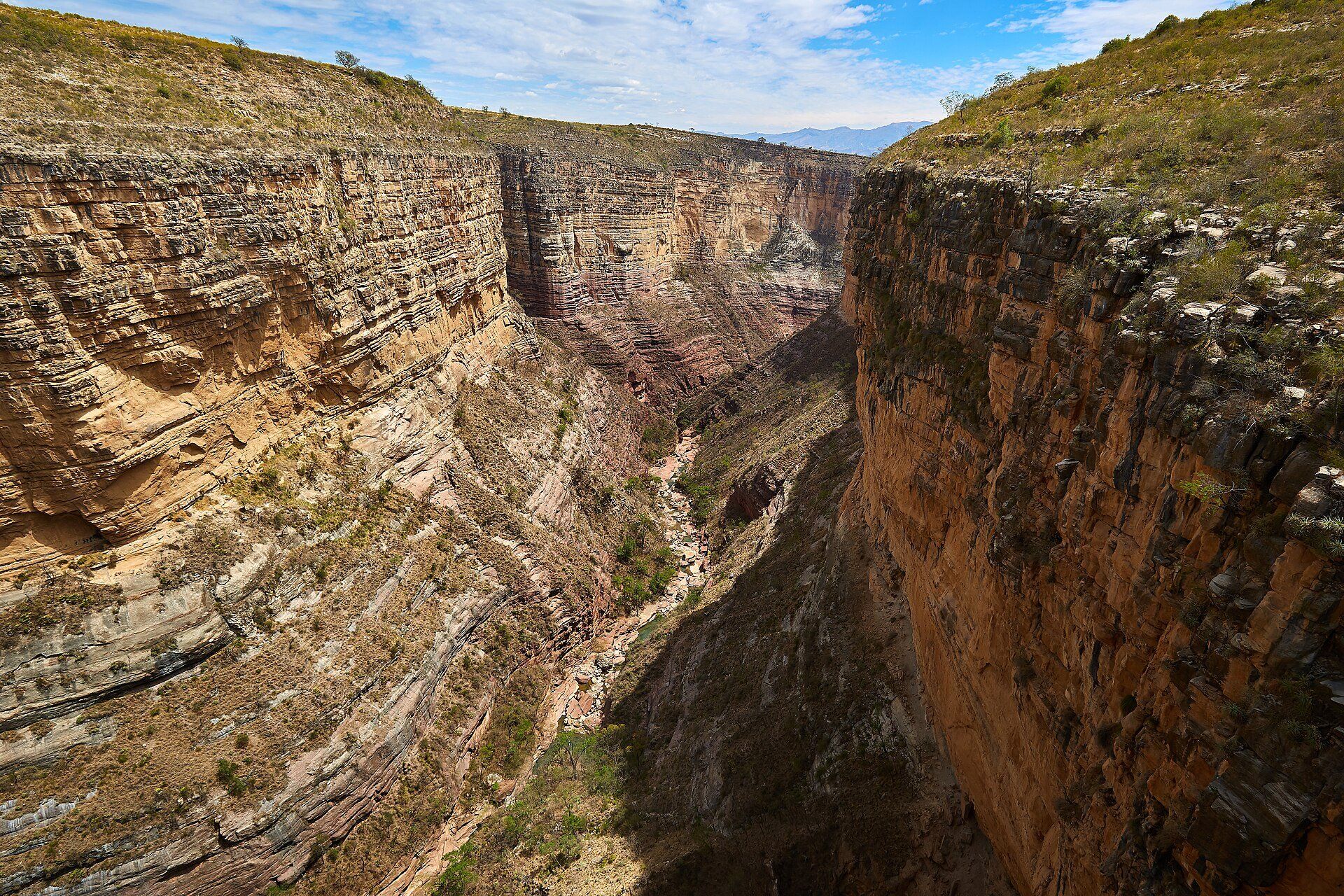
A canyon up to 300 m deep, the El Vergel waterfall, the Umajalanta cave and dinosaur tracks — lower valley country to start the trip, about 140 km from Cochabamba.
-
Sajama National Park 2 nights
Western Altiplano, Oruro Department, Bolivia, on the border with Chile
Nevado Sajama, at 6,542 m Bolivia's highest mountain, with hot springs, geysers and vicuñas on the wetlands around a village above 4,200 m.
-
Salar de Uyuni 2 nights
Altiplano, southwestern Bolivia
The largest salt flat on Earth, at around 3,660 m — white salt tiles in the dry season, a mirror after rain.
-
Laguna Colorada 1 night
Eduardo Avaroa Andean Fauna National Reserve, Sur Lípez, Potosí Department, southwestern Bolivia
A shallow red lake at 4,278 m with flamingos and white borax islands, usually reached on day two of the three-day tour from Uyuni.
Day by day
-
Arrive in Cochabamba
Base Cochabamba
Fly into Cochabamba, far lower than La Paz — a gentler first night than landing straight on the Altiplano. Check road conditions and any blockades on the route to Torotoro.
-
Torotoro National Park
Base Torotoro village
- Minibus or bus from the south of Cochabamba to Torotoro village, about 140 km — several hours by road
Three nights, because each site is a separate guided outing: look into Torotoro Canyon from the rim and descend the steep steps to the El Vergel waterfall; crawl through the Umajalanta cave; and walk among the dinosaur tracks and the rock maze of Ciudad de Itas. Guides are hired at the park office in the village, and park entry is paid separately.
-
Up to La Paz
Base La Paz
- Torotoro back to Cochabamba by road
- Fly Cochabamba to La Paz
A travel day. La Paz sits at about 3,650 m, so take the evening very easy.
-
Acclimatise in La Paz
Base La Paz
A gentle day in the city — US CDC guidance is to keep exercise mild for the first 48 hours at altitude. Arrange transport or a tour to Sajama and buy enough bolivianos for the park, where there are no banks.
-
Sajama National Park
Base Sajama village
- Bus from La Paz toward Oruro to Patacamaya, then minibus along the La Paz–Arica road to Sajama village — most of a day by public transport, quicker with a private vehicle
Two nights in simple family-run lodgings above 4,200 m. Walk or drive out to the hot springs, the geysers and the lagoons, with the snow cone of Nevado Sajama and the twin Payachata volcanoes on the Chilean border above the wetlands. Nights are bitterly cold. Climbing Sajama itself is a separate, guided mountaineering expedition.
-
Back to La Paz
Base La Paz
- Sajama village to La Paz by the same road, via Patacamaya
A long day back down to the city, with a hot shower at the end.
-
Fly to Uyuni
Base Uyuni
- Fly La Paz to Uyuni — about an hour
Meet your tour operator and check the details: vehicle, driver, what the price includes, the reserve ticket and the sleeping arrangements. Buy water, snacks and cash — there are no ATMs once you leave Uyuni.
-
Salar de Uyuni and the Lípez by 4x4
Base Simple lodges on the circuit (salt hotel, then near Laguna Colorada), then Uyuni
- Uyuni to the edge of the salt flat — around 30–45 minutes, then hours of driving each day on unpaved tracks that climb to about 5,000 m
The classic three-day tour: the salt flat on day one, the high lagoons of the Lípez and Laguna Colorada in the Eduardo Avaroa reserve on day two — the red water, white borax and flamingos from the viewpoint above the shore — and the drive back to Uyuni on day three. The lodges near Laguna Colorada sit at around 4,200 m. Alternatively, finish at the Chilean border and continue to San Pedro de Atacama.
-
Fly out
Base —
- Fly Uyuni to La Paz for your international connection
Leave a buffer: weather and schedule changes affect domestic flights.
What it costs
Indicative per person, two sharing, 13 nights. Public buses, hostels and a shared-vehicle Uyuni tour at the low end; private transport to Sajama, better hotels in the cities and a private 4x4 at the high end. Includes the domestic flights; excludes international flights.
| Category | Range (per person) |
|---|---|
| TransportDomestic flights, buses and minibuses; private transfers to Torotoro and Sajama at the high end. | $250–800 |
| LodgingHostels and family lodgings to hotels in Cochabamba and La Paz; lodging on the 4x4 circuit is basic at any budget. | $300–1,300 |
| Food | $200–500 |
| Fees & guidesThe three-day 4x4 tour from Uyuni, the Eduardo Avaroa reserve ticket, Sajama and Torotoro park entry, and the guides required at Torotoro. | $350–1,000 |
| Estimated total | $1,100–3,600 |
What moves the number
- Shared versus private 4x4 tour from Uyuni, and what it includes
- Public transport versus private vehicles to Torotoro and Sajama
- Domestic flight fares and schedules
Indicative ranges, October 2026; confirm park entry with SERNAP, Bolivia's protected-areas service, and at the park offices, and check exactly what your Uyuni tour price includes. Shown in US dollars for convenience; the local currency is the boliviano, and you will need cash in bolivianos outside the cities. These are honest ranges, not quotes — real prices swing with season, group size, and how you travel. Always confirm current fares, room rates, permits, and fees with operators before you commit.
Best season & getting around
🗓️ Best time to go
May to October, the dry season, suits the whole route: the salt flat is white, hard and easy to cross, Torotoro's road and trails are easier, and Sajama has its clearest skies — but nights on the Altiplano are bitterly cold, especially in June and July. The famous Uyuni mirror needs a thin film of water, roughly December to April, which is also when parts of the flat become impassable, rain can make the Torotoro road difficult and most of Sajama's rain falls. You cannot have the mirror and the full dry-season route on the same trip.
🧭 Getting around
Domestic flights link Cochabamba, La Paz and Uyuni. Minibuses and buses run from Cochabamba to Torotoro and from La Paz via Patacamaya to Sajama, though a hired vehicle or tour saves a lot of time. The salt flat and the Lípez can be visited only by 4x4 — there is no public transport and the salar has no landmarks, so go with a reputable operator.
Know before you go
- Altitude is the main risk on this trip: the route climbs from Cochabamba to La Paz at about 3,650 m, Sajama village above 4,200 m and tour passes near 5,000 m. Ascend slowly, take it easy for the first two days and learn the signs of altitude sickness.
- Nights on the Altiplano fall below freezing in every season; bring real cold-weather gear.
- Operator safety records on the Uyuni tours vary a lot — ask about vehicles, drivers and emergency plans before you pay.
- Road blockades can stop travel at short notice in Bolivia; keep a spare day.
- All distances, times and prices are approximate.
Bolivia’s great landscapes sit high — very high — and this two-week route is shaped around that. It starts low, in the folded valley country of Torotoro National Park south of Cochabamba, where a canyon up to 300 metres deep, a cave river system and thousands of dinosaur footprints fill three days. Then it climbs: two nights in La Paz, then two in Sajama National Park, Bolivia’s first protected area, under the snow cone of Nevado Sajama, at 6,542 metres the country’s highest mountain.
The finale is the classic three-day 4x4 crossing from Uyuni: the largest salt flat on Earth, then the high lagoons of the Lípez and Laguna Colorada, a shallow red lake at 4,278 metres where James’s flamingos breed. Go in the dry season, May to October, for white salt and open roads; come between December and April only if the mirror matters more than reaching everything else.
Bolivia: Dinosaur Canyons, Sajama & the Salt Flat: common questions
How many days is the Bolivia: Dinosaur Canyons, Sajama & the Salt Flat?
14 days — the plan is built around 13 nights. Long road days on the Altiplano plus two domestic flights; the 4x4 tour from Uyuni covers hours of rough, unpaved high-altitude track
When is the best time to do the Bolivia: Dinosaur Canyons, Sajama & the Salt Flat?
May to October, the dry season, suits the whole route: the salt flat is white, hard and easy to cross, Torotoro's road and trails are easier, and Sajama has its clearest skies — but nights on the Altiplano are bitterly cold, especially in June and July. The famous Uyuni mirror needs a thin film of water, roughly December to April, which is also when parts of the flat become impassable, rain can make the Torotoro road difficult and most of Sajama's rain falls. You cannot have the mirror and the full dry-season route on the same trip.
How much does the Bolivia: Dinosaur Canyons, Sajama & the Salt Flat cost?
A rough guide is $1,100–3,600 per person (Indicative per person, two sharing, 13 nights. Public buses, hostels and a shared-vehicle Uyuni tour at the low end; private transport to Sajama, better hotels in the cities and a private 4x4 at the high end. Includes the domestic flights; excludes international flights.). Indicative ranges, October 2026; confirm park entry with SERNAP, Bolivia's protected-areas service, and at the park offices, and check exactly what your Uyuni tour price includes. Main cost variables: Shared versus private 4x4 tour from Uyuni, and what it includes; Public transport versus private vehicles to Torotoro and Sajama; Domestic flight fares and schedules.
How do you get around on the Bolivia: Dinosaur Canyons, Sajama & the Salt Flat?
Domestic flights link Cochabamba, La Paz and Uyuni. Minibuses and buses run from Cochabamba to Torotoro and from La Paz via Patacamaya to Sajama, though a hired vehicle or tour saves a lot of time. The salt flat and the Lípez can be visited only by 4x4 — there is no public transport and the salar has no landmarks, so go with a reputable operator.
Which natural wonders does the Bolivia: Dinosaur Canyons, Sajama & the Salt Flat include?
Torotoro National Park, Sajama National Park, Salar de Uyuni, Laguna Colorada.
Added