🇹🇼 Natural wonders of Taiwan
A mountainous island on the collision line between two tectonic plates — more than two hundred peaks above 3,000 metres, marble gorges cut by fast rivers, and a landscape still rising a few millimetres a year.
🗓️ Best time for nature: Autumn (roughly October–December) is the most reliable window — drier, clearer and past the typhoon peak. Spring is pleasant; summer is hot, humid and the main typhoon season, when mountain roads close at short notice.
The lay of the land
Taiwan is being built upward faster than almost anywhere on Earth. The Philippine Sea Plate is driving into the Eurasian Plate directly beneath the island, and the result is an extraordinarily steep, young landscape: a central mountain spine carrying well over two hundred summits above 3,000 metres, compressed into an island roughly 400 kilometres long. Rivers running off that spine are short, steep and violent, and they cut downward about as fast as the land rises — which is how a gorge of solid marble comes to exist at Taroko rather than widening into an ordinary valley. The same tectonics bring frequent earthquakes, and summer typhoons deliver enormous rainfall to the mountains, so the landscape rearranges itself regularly. Between the peaks the island runs from subtropical lowland forest to alpine terrain within a few hours.
Where to begin
-
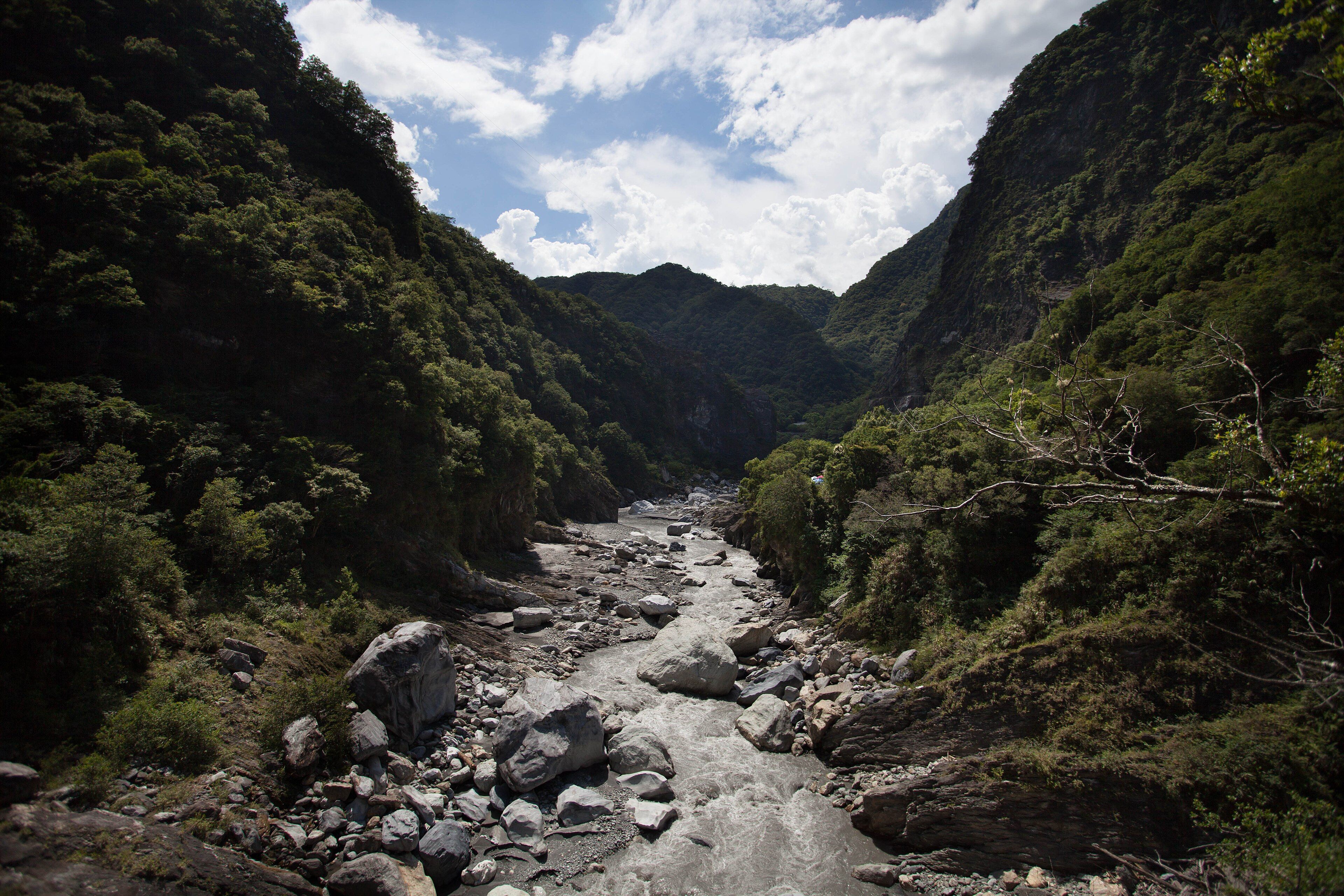
Taroko Gorge
A marble canyon with walls rising as much as a kilometre, cut by the Liwu River.
A taste of the place
Taiwanese cooking draws on Fujianese, Hakka, Japanese and Indigenous traditions — beef noodle soup, oyster omelettes, night-market small plates — alongside some of the world's most respected oolong tea, grown on the misty middle slopes of the central mountains.
Traveling responsibly
- Come in autumn; summer is typhoon season and mountain roads close without much warning.
- Check national park status before travelling — earthquake damage can close trails for years at a time.
- High-speed rail runs the flat west coast; the east, where the mountains meet the sea, is slower and far more scenic.
Taiwan is a young, steep island still being pushed upward by the collision of two tectonic plates, and almost everything about its landscape follows from that. A central spine carries well over two hundred peaks above 3,000 metres along an island only about 400 kilometres end to end, so the drop from alpine ridge to subtropical coast happens within a few hours. The rivers coming off that spine are short and ferocious, cutting down roughly as fast as the land rises — which is why the Liwu River has been able to saw a gorge straight through solid marble at Taroko instead of simply widening it into a valley.
The same forces make the island restless. Earthquakes are frequent and consequential: the 2024 Hualien quake closed much of Taroko’s trail network, some of it for years. Summer typhoons dump enormous rainfall on the mountains, reshaping riverbeds and severing roads. It is a landscape worth understanding before planning around it, and one where checking current conditions matters more than in most places.
Added
All wonders in Taiwan
1 places