Nature route · A week
Morocco: Atlas Mountains & the Sahara
Over the High Atlas to the Todra Gorge, the dunes of the Sahara, and the tiered Ouzoud Falls — a Marrakech loop.
A week-long loop from Marrakech over the High Atlas passes to the soaring Todra Gorge, a night on the Saharan dunes at Erg Chebbi, and back via Morocco's tallest waterfall at Ouzoud — mountains, desert, and oasis in one circuit.
- Length 6–8 days (loop)
- Stops 4 wonders
- Budget MAD 5,000–15,000 pp
- Region High Atlas & the south, Morocco
Trip map
The route
Stops in travel order — tap any one for the full wonder guide.
-
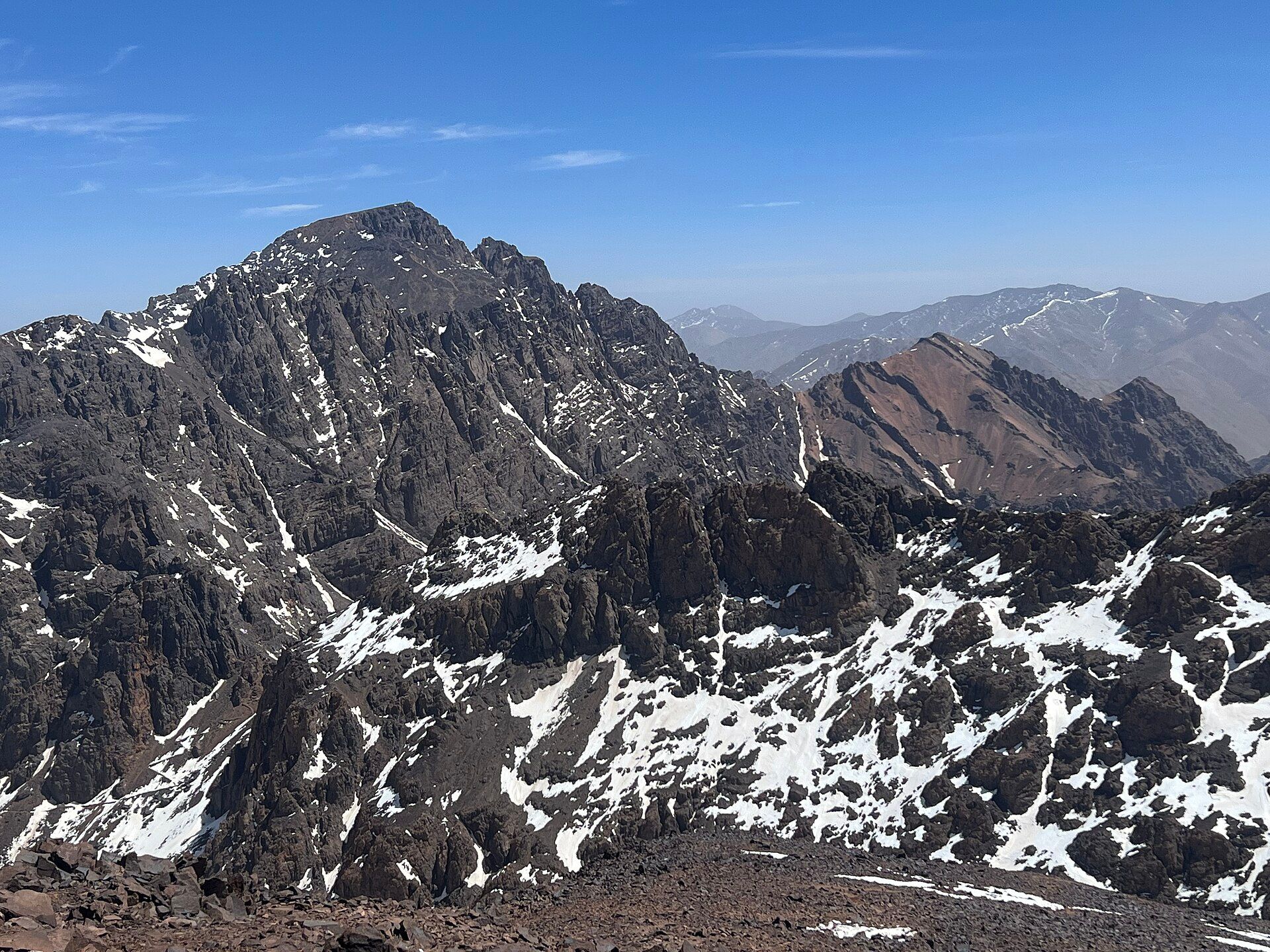
The High Atlas & Mount Toubkal 1 night
High Atlas, near Imlil and Marrakesh, Morocco
The High Atlas — Berber villages, terraced valleys, and the Tizi n'Tichka pass toward the desert.
-
Todra Gorge 1 night
Near Tinghir, Drâa-Tafilalet, High Atlas, Morocco
A sheer-walled canyon where the cliffs close to a few hundred metres apart above a palm oasis.
-
The Sahara (Erg Chebbi) 1 night
Merzouga / Erg Chebbi, southeastern Morocco
The great dunes of Erg Chebbi at Merzouga — a camel ride to a desert camp under the stars.
-
Ouzoud Falls 1 night
Tanaghmeilt, near Azilal, Middle Atlas, Morocco
Morocco's tallest waterfall, red-rock tiers with resident macaques, on the way back to Marrakech.
Day by day
-
Marrakech to the High Atlas
Base Imlil / Aït Benhaddou area
- Drive over the Tizi n'Tichka pass — a winding half-day
Leave Marrakech and climb into the High Atlas, stopping at Berber villages and viewpoints before overnighting in the mountains.
-
Across to the gorges
Base Todra Gorge / Dades
- Drive via the Dades valley to Todra — most of a day
Follow the 'road of a thousand kasbahs' east, ending where the Todra Gorge's cliffs soar above a cool palm oasis. An evening walk into the narrows.
-
To the dunes at Merzouga
Base Erg Chebbi / Merzouga
- Drive to Merzouga — a long day; camel trek into the dunes at dusk
Reach the edge of the Sahara and ride camels over the ridgelines of Erg Chebbi to a desert camp for sunset, stars, and drums.
-
Sunrise, then west
Base Dades / Skoura
- Dawn on the dunes; long drive back west
Watch the sunrise from the dunes, then begin the long drive back toward the mountains, overnighting in an oasis town.
-
Ouzoud Falls
Base Ouzoud
- Drive north to the Ouzoud Falls
Reach Morocco's tallest waterfall, walk the trails among the tiers and pools, and watch the resident Barbary macaques and afternoon rainbows.
-
Back to Marrakech
Base Marrakech
- Drive back to Marrakech — about 2.5–3h
Return to the red city for a final afternoon in the souks and gardens before flying out.
What it costs
Per person, two sharing, 6 nights. Excludes international flights; includes transport, lodging, the desert camp, and most meals.
| Category | Range (per person) |
|---|---|
| TransportShare of a private driver or small-group tour, or self-drive hire and fuel. | MAD 2,000–6,000 |
| Lodging6 nights in guesthouses, riads, and a desert camp; luxury camps cost far more. | MAD 1,500–5,000 |
| FoodTagines and street food are cheap; riad dinners raise it. | MAD 800–2,500 |
| Fees & guidesCamel trek, desert camp, and any guided walks or site fees. | MAD 700–1,500 |
| Estimated total | MAD 5,000–15,000 |
What moves the number
- Private tour vs self-drive vs small-group
- Guesthouses vs riads and standard vs luxury desert camp
- Group size (a private driver splits better among more people)
- Season and the dirham exchange rate
Indicative mid-2026 ranges; confirm current tour, riad, and camp prices before booking. Roughly US$500–1,500 per person at mid-2026 exchange rates, excluding international flights. These are honest ranges, not quotes — real prices swing with season, group size, and how you travel. Always confirm current fares, room rates, permits, and fees with operators before you commit.
Best season & getting around
🗓️ Best time to go
Spring (March–May) and autumn (September–November) are ideal: warm days, cool nights, and the desert comfortable. Summer is punishing in the Sahara and the gorges (well over 40°C), while winter brings snow to the High Atlas passes and cold desert nights — beautiful, but check the road conditions over Tizi n'Tichka.
🧭 Getting around
Most travellers do this as a private-driver tour or a small-group loop from Marrakech, which removes the strain of long mountain-and-desert driving; self-drive is possible but the passes are winding and distances long. The camel trek and desert camp at Erg Chebbi are arranged locally. Roads are paved but slow through the mountains.
Know before you go
- Distances are long and roads winding — a private driver or organised loop spares you the hardest driving and is often good value split between two or more.
- Dress modestly and carry cash for rural stops, tips, and the desert camp; card acceptance thins out fast outside the cities.
- Summer heat in the Sahara and gorges is extreme; spring and autumn are far more comfortable, and winter can close the high passes with snow.
- Agree camel-trek and camp prices clearly in advance, and choose operators who treat the animals and the desert well.
- All distances, times, and prices are approximate and shift with season, group size, and demand.
Few countries pack as much contrast into a week as Morocco: in one loop from Marrakech you cross the snow-streaked High Atlas, walk into the sheer Todra Gorge, sleep on the dunes of the Sahara, and stand beneath the tiered Ouzoud Falls. This route links the atlas’s Moroccan wonders into a single, classic southern circuit.
It’s a trip of long, scenic drives best handled by a private driver or small group, freeing you to watch the landscape shift from terraced mountain valleys to red desert and back. Go in spring or autumn for kind weather, carry cash for the rural south, and give the Sahara its full ceremony — a camel ride in at dusk, a night under a sky thick with stars, and sunrise from the top of a dune.
Morocco: Atlas Mountains & the Sahara: common questions
How many days is the Morocco: Atlas Mountains & the Sahara?
6–8 days (loop) — the plan is built around 6 nights. ~1,200 km of mountain and desert roads from Marrakech
When is the best time to do the Morocco: Atlas Mountains & the Sahara?
Spring (March–May) and autumn (September–November) are ideal: warm days, cool nights, and the desert comfortable. Summer is punishing in the Sahara and the gorges (well over 40°C), while winter brings snow to the High Atlas passes and cold desert nights — beautiful, but check the road conditions over Tizi n'Tichka.
How much does the Morocco: Atlas Mountains & the Sahara cost?
A rough guide is MAD 5,000–15,000 per person (Per person, two sharing, 6 nights. Excludes international flights; includes transport, lodging, the desert camp, and most meals.). Indicative mid-2026 ranges; confirm current tour, riad, and camp prices before booking. Main cost variables: Private tour vs self-drive vs small-group; Guesthouses vs riads and standard vs luxury desert camp; Group size (a private driver splits better among more people).
How do you get around on the Morocco: Atlas Mountains & the Sahara?
Most travellers do this as a private-driver tour or a small-group loop from Marrakech, which removes the strain of long mountain-and-desert driving; self-drive is possible but the passes are winding and distances long. The camel trek and desert camp at Erg Chebbi are arranged locally. Roads are paved but slow through the mountains.
Which natural wonders does the Morocco: Atlas Mountains & the Sahara include?
The High Atlas & Mount Toubkal, Todra Gorge, The Sahara (Erg Chebbi), Ouzoud Falls.
Added