🇧🇬 Natural wonders of Bulgaria
Three mountain systems, the highest summit in the Balkan Peninsula, and several hundred glacial lakes left in the cirques — plus a Black Sea coast and the Danube along the northern border.
🗓️ Best time for nature: July to September for the high mountains, when the lakes are ice-free and the huts are staffed. May to June and September to October are best for the lower country and the gorges. Winter is a serious ski season and closes most high trails.
The lay of the land
Bulgaria is a compact country carrying three distinct mountain systems. The Balkan range runs west to east across the middle and gives the peninsula its name. In the southwest, Rila and Pirin are high, glaciated granite and marble, holding the highest ground in the Balkans — Musala in Rila reaches 2,925 metres — and several hundred cirque lakes left behind when the ice retreated, of which the stepped group known as the Seven Rila Lakes is the best known. South and east of them the Rhodopes are lower, softer and heavily karstic, riddled with caves and gorges. Between the mountains lie the Thracian plain and the Danubian plateau, and the country is bounded by the Danube in the north and the Black Sea in the east. Around a third of Bulgaria is forested, and its brown bear, wolf and chamois populations are among the more substantial in the European Union.
Where to begin
-
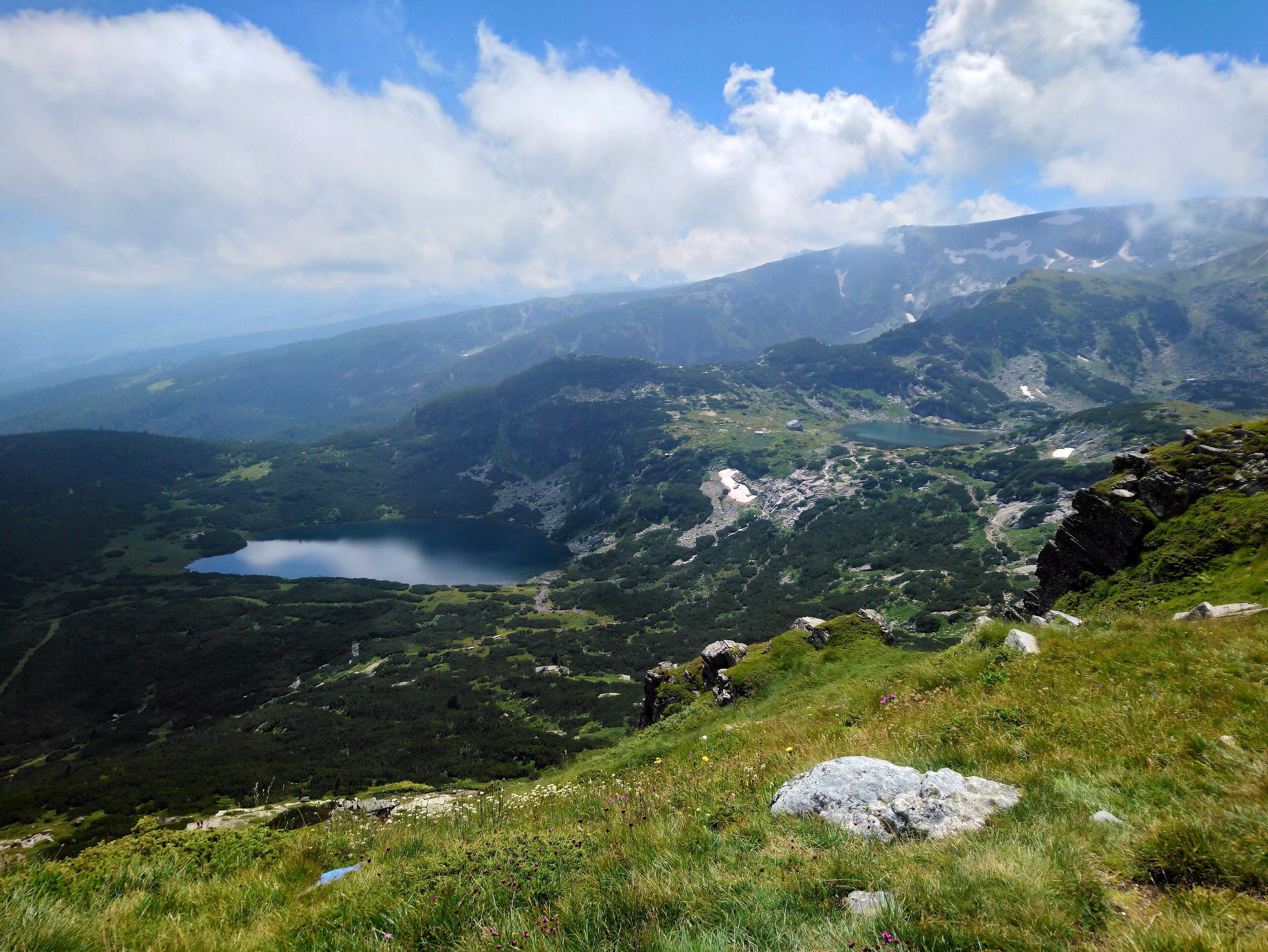
The Seven Rila Lakes
Seven glacial tarns stepped up a cirque between 2,100 and 2,500 m, each named for its shape.
A taste of the place
Bulgarian cooking is built on yoghurt, brined white cheese and vegetables: shopska salata, banitsa pastries, grilled meats, and bean soup with savory herb in the mountains. The yoghurt is a genuine speciality rather than a marketing line — the bacterium that makes it is named after the country.
Traveling responsibly
- The mountain huts are basic but well placed; book ahead for July and August weekends.
- Rila and Pirin are close together and very different — granite lakes in one, marble ridges in the other.
- Sofia is within two hours of serious high mountains, which few capitals can claim.
For a country of its size Bulgaria carries an unusual amount of mountain. Three separate systems run through it: the Balkan range across the middle, which gave the whole peninsula its name; the high granite and marble of Rila and Pirin in the southwest; and the softer, cave-riddled limestone of the Rhodopes to the south and east.
Rila is where the country goes highest. Musala reaches 2,925 metres — the highest summit anywhere in the Balkan Peninsula — and the massif around it was heavily glaciated during the ice ages, leaving several hundred lakes sitting in the hollows the ice gouged out. Rila National Park alone holds around 120 of them. The most visited group is the Seven Rila Lakes, seven cirque tarns arranged in a stepped sequence up the northwestern flank, each named for its shape rather than a person: the Tear, the Eye, the Kidney, the Twin, the Trefoil, the Fish Lake, the Lower Lake.
What makes all this practical is proximity. Sofia sits within two hours of genuine high mountains, the hut network is decent and cheap, and a chairlift puts the Rila lakes within a day trip of the capital. The trade-off is that on an August weekend a good part of Sofia has the same idea — so go midweek, and go early, before the afternoon cloud comes over the cirque.
Added
All wonders in Bulgaria
1 places