🇸🇰 Natural wonders of Slovakia
A small Carpathian country that is mostly mountain — the highest peaks in the whole range, several thousand caves, and gorges walked on ladders bolted beside the waterfalls.
🗓️ Best time for nature: June to September for the high mountains and the gorge routes, which close in winter and after heavy rain. May and October are quieter and still workable lower down. Winter is a full ski and ski-touring season.
The lay of the land
Around three-quarters of Slovakia is mountainous, all of it Carpathian. The High Tatras in the north form the highest part of the entire range — Gerlachovský štít reaches 2,655 metres, and the whole massif is compressed into a strip barely 19 kilometres wide, which is why it feels far more alpine than its size suggests. South of it the Low Tatras and the Slovak Ore Mountains are gentler and much more heavily karstic: Slovakia has several thousand recorded caves, several of them UNESCO-listed, and its limestone plateaux are cut by gorges deep and narrow enough that the walking routes through them are built from ladders and chains rather than paths. The forests still hold brown bear, wolf and lynx in numbers that most of western Europe lost centuries ago.
Where to begin
-
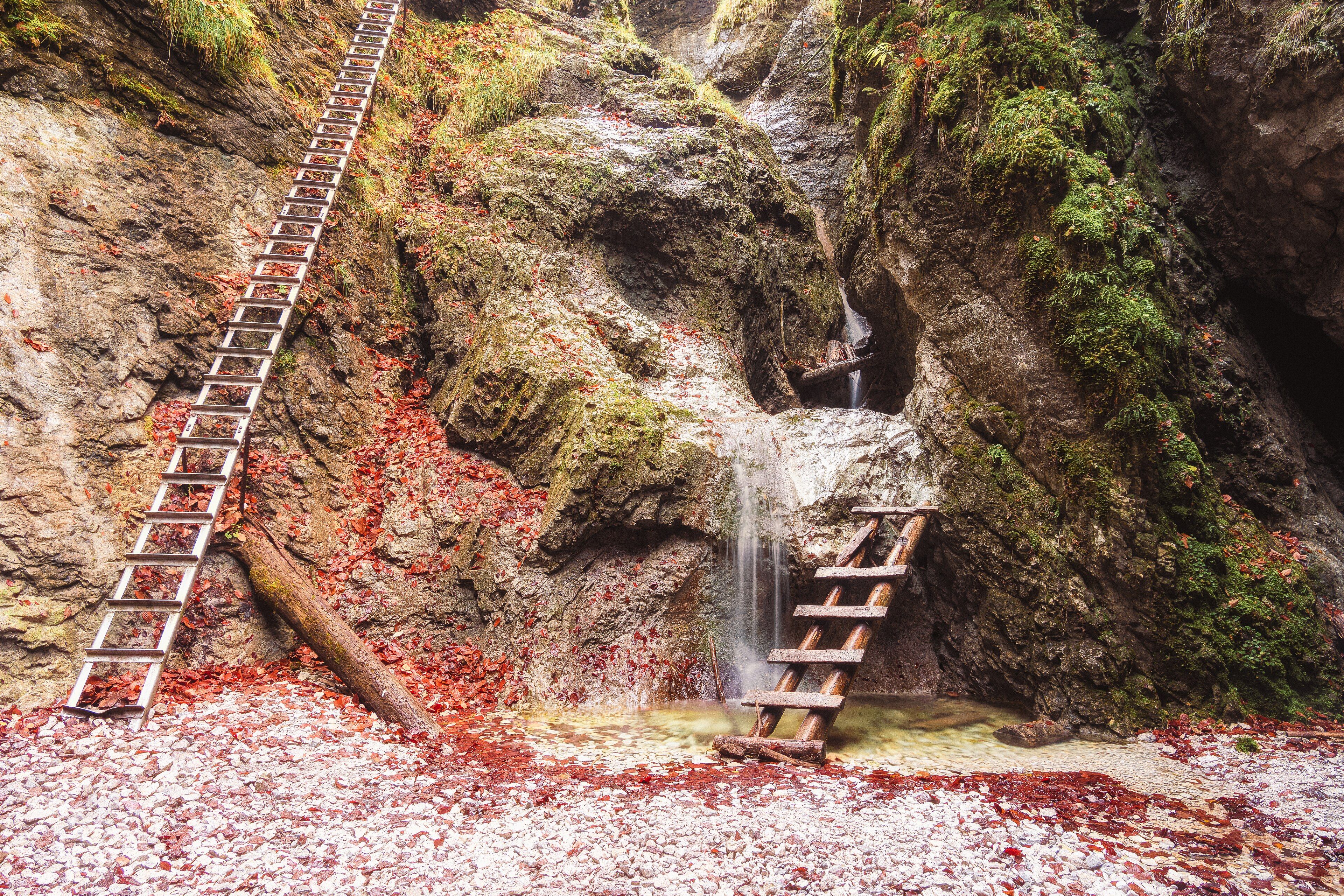
Slovenský raj
A karst plateau sliced into gorges climbed on steel ladders past the waterfalls — most of them one-way.
A taste of the place
Slovak food is mountain food: bryndzové halušky of potato dumplings with sheep's cheese, kapustnica sauerkraut soup with sausage and mushrooms, and žinčica, the sour whey left over from cheesemaking, drunk at shepherds' huts.
Traveling responsibly
- Gorge routes in Slovenský raj are strictly one-way and seasonal — check what is open before you drive out.
- The hut network in the Tatras is good and cheap but books out for summer weekends.
- Trains between the main towns are slow but scenic; a car is better for the national parks.
Slovakia is a small country that is mostly vertical. Around three-quarters of it is mountain, all Carpathian, and the northern edge holds the highest ground the entire range reaches — Gerlachovský štít at 2,655 metres, in a massif compressed into a band barely 19 kilometres across. That compression is why the High Tatras feel like the Alps rather than like foothills: granite spires, cirques, glacial tarns and steep valleys, all within a couple of hours’ walking of each other.
South of the Tatras the geology changes and the limestone takes over. Slovakia has several thousand recorded caves, a handful of them UNESCO-listed, and its karst plateaux have been sliced apart by streams into gorges that are hundreds of metres deep and sometimes only a few metres wide. In Slovenský raj — Slovak Paradise — the response to that was to build the trail into the watercourse: around 300 kilometres of route, much of it on steel ladders and chain handholds climbing directly past waterfalls, with several gorges usable in one direction only.
The other thing Slovakia has kept is its large carnivores. Brown bear, wolf and lynx all still range through the forests here in numbers most of western Europe lost centuries ago, which changes how you walk in them — food storage and noise on forest trails are ordinary precautions rather than exotic ones.
Added
All wonders in Slovakia
1 places