🇵🇦 Natural wonders of Panama
The isthmus that closed three million years ago and changed the world's oceans and animals — now a narrow country with two very different coasts and more bird species than the United States and Canada combined.
🗓️ Best time for nature: December to April is the dry season and the easiest time to travel, particularly on the Pacific side. May to November is wetter and greener; humpback whales pass the Pacific coast between roughly July and October.
The lay of the land
Panama's significance is structural. When the isthmus finally closed around three million years ago it severed the Atlantic from the Pacific, redirected ocean circulation, and opened a land bridge that let North and South American animals move into each other's continents — one of the largest faunal exchanges in the fossil record. The country that resulted is narrow, mountainous down its spine, and wet: Caribbean lowland rainforest on one side, drier Pacific forest and savanna on the other, with cloud forest along the cordillera and the Barú volcano at 3,475 metres. Because species from both continents overlap here in a very small area, Panama's bird list runs beyond a thousand species — more than the United States and Canada together. Offshore, Coiba in the Gulf of Chiriquí is the largest island in Central America, and the Darién in the east remains one of the least penetrable forests in the hemisphere.
Where to begin
-
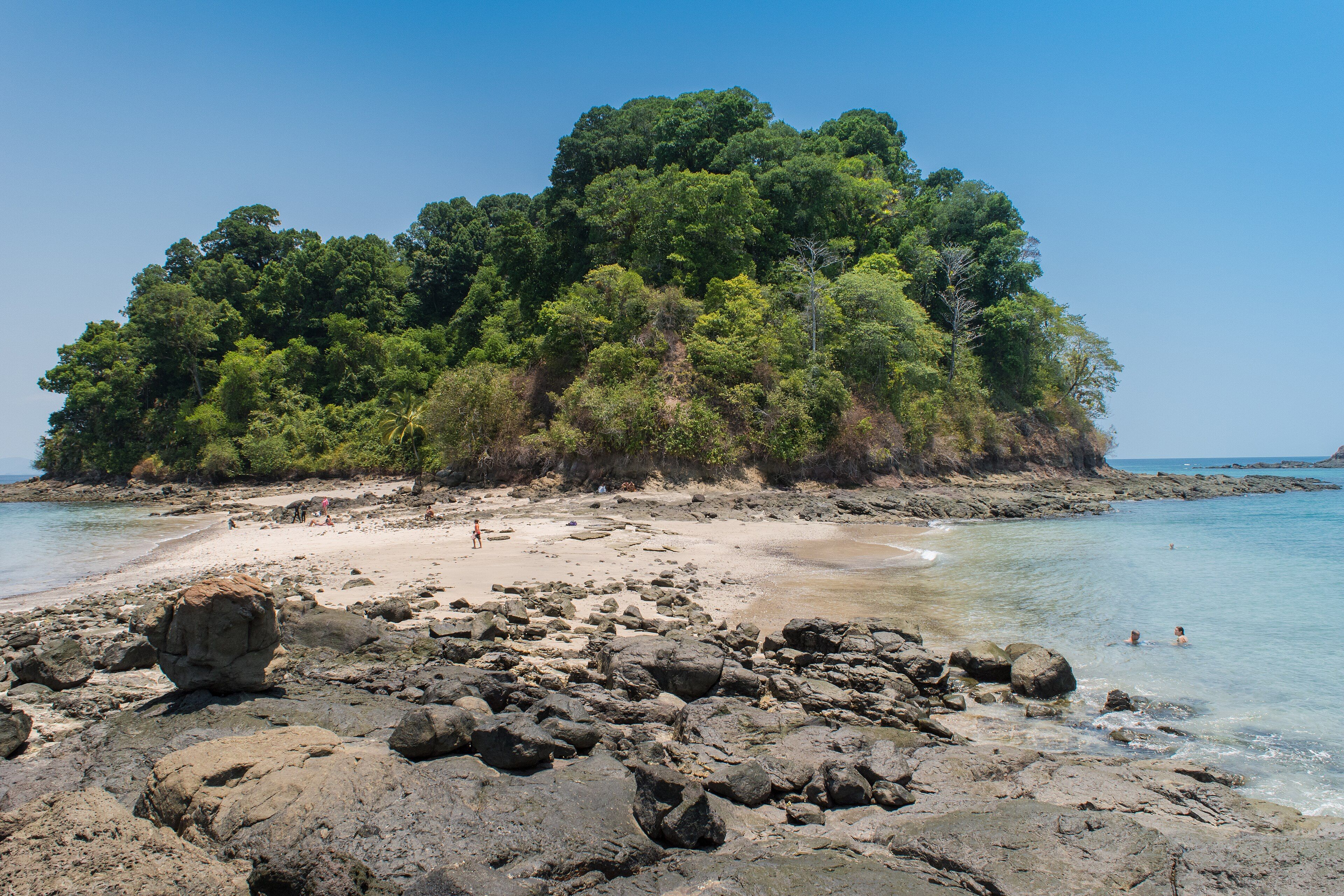
Coiba
Central America's largest island, left intact for eighty-five years because it was a penal colony.
A taste of the place
Panamanian cooking is coastal and Caribbean-inflected: sancocho of chicken and yam with culantro, ceviche of corvina on the Pacific side, coconut rice and fried whole fish, and patacones of twice-fried plantain with almost everything.
Traveling responsibly
- The country uses the US dollar alongside the balboa, which makes budgeting simple.
- Distances are short but mountain and coastal roads are slow; internal flights save real time.
- For Coiba and other marine parks, permits are handled by operators — book rather than turning up.
Panama matters out of proportion to its size, and the reason is geological. Around three million years ago the isthmus finally closed, joining North and South America and separating the Atlantic from the Pacific. Ocean circulation reorganised itself. And animals that had evolved separately on two continents for tens of millions of years started walking into each other’s territory — the Great American Interchange, one of the largest faunal exchanges in the fossil record.
The country left behind is narrow, mountainous and wet, with Caribbean rainforest on one side, drier Pacific forest and savanna on the other, and cloud forest along the cordillera up to Barú at 3,475 metres. Because species from both continents still overlap here in a very small space, Panama’s bird list runs past a thousand — more than the United States and Canada combined.
Offshore in the Gulf of Chiriquí is Coiba, the largest island in Central America, which broke away from the mainland when post-glacial seas rose and has been evolving separately ever since. It survived intact for an unlovely reason: from 1919 to 2004 it was a penal colony, and nobody went near it. When the prison closed, Panama had an accidentally preserved island on its hands, and made it a national park.
At the other end of the country the Darién still refuses to be crossed. It is the one break in the road system running from Alaska to Patagonia, and it stays a break because the forest there has never been made passable.
Added
All wonders in Panama
1 places